

Jennifer Laviolette
Mayuom awarded a Manitoba Mosaic Award
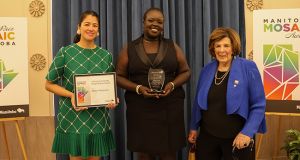
A resident from The Pas has been recognized at a provincial level for their efforts in tying in community and culture. Akech Mayuom was recently presented with a Manitoba Mosaic Award on September 18, 2026, in Winnipeg.
The Manitoba Mosaic Awards are part of Welcoming Week 2026, which runs Sept. 10 to 19 and brings together people and organizations to build connections among neighbours of all backgrounds and highlight the importance of welcoming and inclusive communities.
The Manitoba Mosaic Awards recognize the outstanding contributions of newcomers, immigrants, refugees and community partners who are helping build stronger, more inclusive communities in Manitoba.
Opasquia Trails hosts Trail Talks
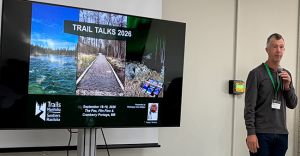
The Opasquia Trails hosted the fourth annual Manitoba Trail Talks on September 18 and 19, 2026. The event was organized by Trails Manitoba and brought trail enthusiasts north to check out the Opasquia Trails and all northern Manitoba had to offer.
“Trails Manitoba visited the Opasquia Trails in The Pas on September 19, 2026, as part of our annual Trail Talks event,” said Trails Manitoba Executive Director Tim Coffin. “The purpose of the visit was to bring together trail leaders, volunteers, partners, and stakeholders from across Manitoba to experience the local trail network firsthand, learn from the people who develop and maintain it, and share ideas and best practices.
“A big part of Trail Talks is getting people out of the meeting room and onto the trails. Visiting the Opasquia Trails gave participants an opportunity to see the incredible work being done locally, better understand both the opportunities and challenges facing northern trail organizations, and build stronger connections within Manitoba’s trail community. It was also a great opportunity to showcase The Pas and the quality of outdoor recreation experiences available in northern Manitoba.”
Establishing a career in helping others
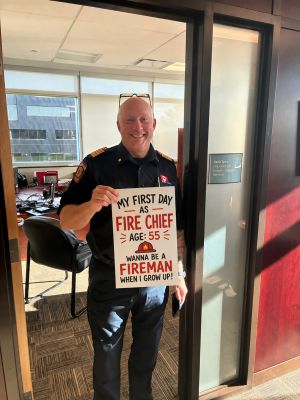
Finding a career that gives you the best of both worlds can be challenging to find, but former Valley resident Dana Terry, has been able to do just that. Terry is trained both as a paramedic and firefighter and combining those two positions has led him to take on a new leadership role as well as be of service to others.
“My parents are Marg and Gordon Terry and when we moved to the Valley, we lived in the Lenswood area,” said Terry. “Part of my years growing up were there and I attended Minitonas Junior High, and later on to the Swan Valley Regional Secondary School, where I graduated in 1989.
“I wanted to become a Fish and Wildlife Officer, so I moved to Lethbridge to take a college program there to be a Conservation Officer. Unfortunately, there were no jobs for those positions or very few and far between, with lots of competition for them. I finished the first year of the program and then met my wife.
“After I got married, I worked on a dairy farm because I was raised around working with cattle. That focused me on finding another career path,” said Terry. “My father-in-law was a Captain on the Lethbridge Fire Department and I asked him how I could get on the department. He told me I would have to become a paramedic first and go from there.
“So I quit the dairy farm and went to school to take my EMT course through the college in Lethbridge. I worked some rural ambulance shifts in Alberta. From 1995 to 1997, I went to paramedic school at NAIT in Edmonton. I took my Advanced Care Paramedic course, and at the same time I was working for the City of Edmonton as a paramedic.
“It was a really good experience to work in that field while upgrading in school,” said Terry. “As a new paramedic, I was really busy and saw a lot of different things. I got lots of experience from that and was eventually hired by the City of Lethbridge.”
Once Terry was set on his career path, he was able to merge his paramedic knowledge with firefighting. In the area that Terry lives and works in, the combination of firefighting and paramedic services comes in handy due to the environmental surroundings.
“Back then, the City of Lethbridge was a fire department and also an ambulance service,” said Terry. “Outside of Alberta, Brandon has an integrated system like this, where they cross-train firefighters and paramedics. One day you could be working on the ambulance, the next day on the fire truck.
“I stayed working with the City of Lethbridge for about 24 years and then I moved up into a Deputy Chief position. My career then took a little bit of a turn, as my position moved to a Deputy Chief position with Strathcona County in 2021, which is on the east end of Edmonton. Strathcona County is a specialized municipality that provides for the unique needs of a municipality that includes a large urban centre and a significant rural area and population.
“The challenge of being in a service like this is the number of refineries there are in the area,” said Terry. “There is a high risk involved in that. Then you have an urban side to provide fire protection services to that has about 88,000 people. There are also lots of rural properties and acreages in that mix too. It’s a unique system.
“Both services are focused on public service. That is what often brings people to work in this field. It attracts those individuals who are interested in the integrated service. There is a level of pride when someone can identify as a firefighter and a paramedic. When we respond to a call, it doesn’t matter which truck we show up on; we have kits on every one of our trucks and any of our staff knows what they need to do. We work as a team, so the team atmosphere is huge. There are times we get some pretty big incidents that we respond to, and we are able to switch from one task to another.
“There have been so many times throughout my career where I’ve used those skills interchangeably,” said Terry. “It’s very valuable, rewarding and what attracts people to the work we do.”
Terry notes that this kind of job can be heavy at times in terms of the things a person sees and experiences when getting called out. Fortunately, there are more mental health resources today geared to help first responders.
“We deal with people on the worst days of their lives,” said Terry. “I think that the hardest for me, over my career, is responding to incidents that involve children. Those are really tough calls to have to deal with. Sometimes, those children in incidents are the same age as my own children and that is really hard for me as a dad to come to terms with.
“The training I received helped to address those types of calls. I’m fortunate to have a good support system at home. In today’s emergency services, we have more mental health supports. In the service I have, we have a peer support team that is made up of other firefighter paramedics. They are trained to talk to their co-workers and address any issues that arise from a call. They can also refer them to our department psychologist. We have one on retainer that is available to us.
“We also have debriefings and meetings after the call and try to unpack challenges that we faced from that call,” said Terry.
Terry enjoys the line of work he is in because he really is focused on helping others.
“I’m very passionate about public service,” said Terry. “I like the ability to serve the public and think it’s a noble cause. It’s something to be proud of and you can certainly make a difference in people’s lives. I’ve seen this many times.
“Every so often, I will see people whom I remember from picking them up in the ambulance or responding to their emergency. Seeing that people do recover and become resilient is amazing. I’ve had some really good conversations with some of them after these types of incidents. I remember meeting a baby I delivered and she was in her 20s when I met her. That was a really cool experience.”
Terry has literally worked his way up in the department from the ground up. From there, he was able to build a foundation to set him towards more of a leadership role.
“When I first started, what I liked about the fire service and EMS was that you never knew what you were going to next,” said Terry. “It was always something new. You showed up to work and whatever came in, we responded to it. I really liked that, so I never thought of myself having to work in an office at some point.
“There was a point in my career where I needed to be challenged more. So I was part of the Union Executive for seven years and started expanding my leadership in certain areas. I had a discussion with one of the chiefs at the time, and he encouraged me to consider looking forward in my career and not just be content with what I was doing.
“He told me that if I wanted to really help influence direction within a department, he said I was going to need to do that from a higher position,” said Terry. “He coached me on which education to take, what courses to do, and what positions and responsibilities to take on to do that. I found it very rewarding to be able to see how much you can influence the direction of an organization by putting yourself out there and taking responsibility.
“That is where I have taken it. I’m ok to make decisions and taking care of people. I do care about the firefighters and paramedics we have and want them to be successful and taken care of. I remember what it’s like to be on that frontline, so I have a passion for the work and what they do on a day-to-day basis. I want to make it better for them and move our organization forward.
“It’s about how we improve and get better. I always tell people that they should always be coachable and teachable. I always tell my kids that too,” said Terry.
“I have recently been promoted to the position of Chief. I’ve only been in my current position for over a month, so I have some messaging I am sharing with my staff about the direction I want to see this department move towards. Over the next five years, there will be priorities we will focus on and set. It will be about understanding the needs and challenges our organization and community have, and how we can better serve them. My job right now is to set priorities and move us forward; it’s about progressing.”
Terry credits having some strong role models and supports in his life, while he pursued a career of helping others. It all started with his roots in the Valley.
“My dad, for sure, was the greatest influencer for the path I’ve chosen,” said Terry. “The work ethic he taught us and stuck with me. My parents raised four sons and we’ve all gone on to different careers, but I see the work ethic he put forward and encouraged us to work by. We grew up on the farm, so we raised our food, hilled potatoes, picked rocks, and did it all. I saw that in my dad and how he cared for and supported his family, which he continues to do today. He’s created a good legacy and I credit my dad for my drive and work ethic.
“My father-in-law certainly played a role by setting me on my career path. He was a good mentor and ended up being the Chief of the Lethbridge Fire Department for several years before he retired. He set a good example for me.
“Also, my wife, Marilee, has been my biggest partner and supporter throughout my career,” said Terry. “I wouldn’t be the person I am without her support and encouragement. Together we have raised four children into contributing members of society and now get to enjoy seven grandkids, so far.”
Helping others find purpose
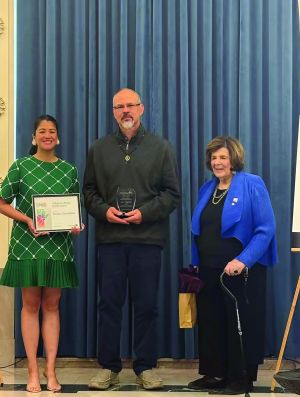
A local community member has recently been awarded a 2026 Manitoba Mosaic Award under the Indigenous Bridge Builder Award. Shawn Charlebois has dedicated his time and efforts to bridging gaps between different socioeconomic groups. This began with his vision for Red Road Compass: creating a safe place for marginalized people while connecting them to their culture and identity.
“Red Road Compass has been active in the community for about seven years,” said Charlebois. “Within that, I’ve really focused on four fundamental principles: affordable housing for people who are marginalized in our community, where I had two apartment buildings that were clean, safe, secure and low in rent. I’ve now left that fundamental because of the increased use of methamphetamines; the whole dynamic of the business wasn’t economically sound. I wasn’t charging more than I needed to; however, the damages were beginning to accumulate, and I could no longer afford it.
“The second fundamental was around food, and I felt that people wouldn’t think about healing if they were hungry. We started a soup kitchen in partnership with CMHA. We started it as an organization that we paid for out of our pockets. It was from contributions and my own personal earnings. All of a sudden it grew to a hundred meals a day. There was no way one person could sustain that. So CMHA stepped in and then that had to close because of certain circumstances around insurance.
“The third fundamental was land-based and how do we get people connected back to the land,” said Charlebois. “We placed them into an environment that just allowed them to breathe and relax, to feel safe, sit by the fire or water. The trees, clouds and water don’t judge people, so we did lots of that. However, this flood has impacted our setup, so now that is under reconstruction.
“The fourth fundamental was employment and training. One of the things I really wanted to do back in my previous role with PMH was to come up with creative ways to engage community members to seek employment in healthcare. I really tried my best, but there was so much opposition on so many fronts. When I retired in November 2025, I was able to find some freedom to sit down and reflect on our community and how do we help people in a more intimate way.”
The fourth fundamental is what led Charlebois to discover a way to help marginalized Indigenous people find employment, but also a sense of purpose and connection to the land.
“Employment is one of those things and it just so happened that many moons ago, working with WSFN Elder Buddy Brass, he took me up to The Pas and introduced me to an individual who came up with this initiative called The Non Timber Harvesting Initiative,” said Charlebois. “There are so many other things in the bush other than timber that have value on the international market.
“This person would go to communities and do an environmental scan to identify what plants had value on an international market and teach Indigenous community members how to harvest sustainably, process it, bring it to market and get fair market value. This was shared with me a long time ago, and then this person contacted me about three years ago and said he followed what Red Road Compass had been doing.
“He told me he was reaching a point in his life that he wanted to pass this initiative off and asked me if I wanted to do it,” said Charlebois. “After a whole bunch of conversations with him, I felt really interested in it. He had harvesters on the land coming to him, but I immediately thought of that population of people who were coming to the soup kitchen who would tell me they didn’t know what to do, so they did stuff that increased the probability of getting into trouble. These people would share this with me at the soup kitchen, where I would sit with them, listen to and counsel them. So often I would hear the same thing from many of them and that was that they were lost and didn’t know where to go.
“So he put me in contact with the international buyers, and they interviewed me to see if they wanted to do business with me in the same capacity.
“It was important to me that if I was going to do this, people would have meaningful employment, be paid what they were worth, as opposed to being taken advantage of,” said Charlebois. “Initially this company was paying $13 a dry pound for High Bush Cranberry Bark. High Bush Cranberry Bark is referred to as Cramp Bark, and it’s used as a women’s medicine for menstrual pains or urinary tract infections. I felt that it’s a lot of work to harvest this plant and that was not very much money.
“So I went into negotiations with this company and shared my vision with them. I pitched to them that there is a group of individuals in our community who are marginalized, good people with damaged spirits. My plan is to provide them with an opportunity to connect with the land and their culture, in a way that rekindles the Seven Sacred Teachings in them. As well, it would recognize the work they are doing and pay them accordingly that would allow them to feel pride and be able to support themselves. After negotiating with this company, they agreed to increase the price from $13 per pound to $31.47 per pound.
“What was interesting was that this company went to their buyers and told them about this initiative and how it would engage marginalized people who were underemployed, struggling with mental health issues, limited education, criminal charges that would have excluded them from employment,” said Charlebois. “These buyers then offered to pay more because they recognized the value in the community.”
The Non-Harvesting Timber Initiative has employed people who were often on the streets of Swan River, struggling to find the right pathway to supporting themselves and finding employment. Not only has this initiative helped these individuals earn an income, but it has also taught them a lot about respect and being stewards of the land.
“This is the third year the Non-Harvesting Timber Initiative has happened out of Red Road Compass,” said Charlebois. “The first year was a handful of us learning the process and making sure that we could meet the requirements of the buyers and get our shipping in order.
“When the second year came along, we got a few more harvesters, and then this year we just boomed. I suspect this year we had 15 harvesters and I think they harvested about 1,000 pounds of High Bush Cranberry Bark in a sustainable way.
“So how it works is that Red Road Compass is paid $31.47 per pound of High Bush Cranberry Bark by the purchaser, but Red Road Compass pays $26.47 per pound to the harvester,” said Charlebois. “Red Road Compass provides all the bags, and there are certain bags that have to be used, and then we do all the shipping. It removes the barriers for the harvesters to do this.
“We have had conversations with Natural Resources and High Bush Cranberry Bark is a plant that really does well when it’s trimmed. Red Road Compass teaches the harvesters how to use the tools and how to harvest the bigger stalk from the root site and leave the smaller ones. The smaller ones don’t have a thick enough bark yet and have less value.
“Then we teach them to snip off the little branches, which are like willows, and you stick them into the ground and it repopulates,” said Charlebois. “In essence, they are farming in a traditional way and are sustaining the land so they can harvest again next year. And if it’s done properly, they can harvest even more next year. The harvesters absolutely get it and Natural Resources loves this initiative.
“In talking with Employment and Training, they also support it because their clients are receiving employment training and skills. Then, Red Road Compass started working with Employment Income Assistance to help document what each harvester earned and got paid. Last year, an individual made $200 more than what they were getting on EIA.
“Some people will ask, well, what do they use the money for,” said Charlebois. “I have to say, I’m not naive and I’m sure they are using their money for whatever purposes they want. We can’t control that. Red Road Compass is providing support and we recognize that drug use is a coping mechanism for a deeper injury or trauma.
“We are providing this person an opportunity to remove themselves from a possible hostile environment, be on the land, harvest in a sustainable way, be surrounded by other people who are trying to make a positive change in their lives, follow guidelines and rules and then get paid fair market value. When we go through the process of making up their pay, we have scales and each harvester gets to see the weight of what they harvested. Everyone is part of the process in complete transparency.
“The other part of the win is here are people who are often not involved in business type transactions or conversations,” said Charlebois. “Now their opinions are being asked for and their words are being listened to. They are part of a community of harvesters and are being treated with respect and dignity. They connect themselves to memories of family who harvested and the feeling that comes with it, and that is hope.
“Now at the warm-up shelter, these individuals are no longer perpetrating lateral violence towards one another, but instead are sitting around, talking and healing, by sharing a common bond in harvesting. There is a sense of pride now within these folks and they feel like they are contributing to the larger picture.”
Charlebois knows how hard it can be when it feels like the deck is stacked against a person. This is an example of how building trust and adding kindness can go a long way in helping others to get back on their feet and find a sense of purpose.
“The very first thing that is the most difficult when working in community is establishing trust,” said Charlebois. “There’s a defence mechanism, especially with marginalized people because in many ways the system hasn’t been kind to them.
“They also take great satisfaction in knowing that the plant they are harvesting is helping people to get better. When we stopped harvesting the High Bush Cranberry Bark on Aug. 17, it was only a day later when these individuals came back to ask if there was something else they could do or another job they could work on.
“One of the misconceptions in our community is that people who are marginalized, homeless, dealing with addictions or mental health challenges are bad people,” said Charlebois. “I have been treated with nothing but kindness and respect by these individuals. I in turn show them nothing but kindness and respect back. I recognize they have value and they are not defined by their addiction. These people are human beings and extensions of my community.
“What I would love to see and find out is that in June, July and August, when our harvest was the most active, was there a reduction in shoplifting and minor crime in Swan River? Since we have stopped harvesting, there seems to be a slight uptick in those activities in Swan River in regards to break-ins and thefts.”
Whenever a new concept comes in and it is focused on helping individuals who are homeless or suffering from addictions, there is always criticism and skepticism of whether these initiatives are truly beneficial. Charlebois feels that despite some of the negativity this initiative has faced, there has been so much more positive that has come from it.
“We did have a couple of situations where someone in the community reported to the RCMP that harvesters going to the museum area,” said Charlebois. “The RCMP followed up on it and spoke to several of them.
“Another one of the criticisms I’ve received is that people shouldn’t be harvesting medicines for sale. I was raised that way too. Red Road Compass processes bear grease and other stuff away as gifts. It is all about what the definition of medicine is. I believe that harvesting in this capacity- giving people an opportunity to get away from critical environments, instilling purpose and meaning and creating part of a positive community- it all sounds like medicine to me.
“Never did I ever think that this cottage-industry could have the positive impact that it has had on people who in many ways have been deemed as hopeless by others,” said Charlebois. “The Non-Timber Initiative will resume harvesting of High Bush Cranberry in the spring.”
Waterbomber experienced in the north penned into a children’s book
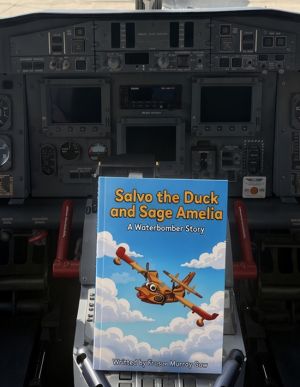
A Manitoba waterbomber has put his experience of fighting forest fires in northern Manitoba into a children’s book to help kids get a better understanding of what waterbombers do and why they do it. Shawn Cowan has had an extensive career in wildfire aviation and was recently up in northern Manitoba last summer to help fight one of the province’s worst forest fires on record.
“I grew up on a farm near Langbank, Saskatchewan — the kind of place where you learn to work hard, fix what’s broken, and keep an eye on the sky,” said Cowan. “These days I live in the Gimli / Winnipeg Beach area with my wife Julie and our girls.
“I’m a CL-415 water bomber captain with Manitoba Wildfire. I’ve been in wildfire aviation for a little over a decade. I started flying bird-dog aircraft in the Northwest Territories. A bird-dog is the small lead plane that gets over the fire first, sizes it up, and talks the water bombers onto the drop so they hit the right spot. After that, I moved on to the CL-415 Super Scooper as first officer and now fly it as captain. In summer, the Scoopers work out of Gimli, Thompson, The Pas and Flin Flon, and after that we go whe
Indigenous film brings out the horror in trauma

The Pas Arts Council is hosting a screening of an Indigenous horror film as part of Culture Days events on the National Day of Truth and Reconciliation. The film was written and produced by Tim Riedel, who has a connection to The Pas.
“I’m a Red River Métis filmmaker originally from Manitoba, although I’m currently based in Toronto,” said Riedel. “I spent much of my earlier career working in documentary, travelling internationally and helping tell stories about marginalized people living in remote communities. I've covered topics like rehabilitating child soldiers in Northern Uganda, child exploitation in East Asia, infant mortality in Myanmar, the war in Afghanistan and displaced Syrians in the Middle East. Over time, I realized I was travelling halfway around the world to share other people's stories while avoiding some of the difficult stories within my own family and community. Being confronted with that changed the direction of my work.
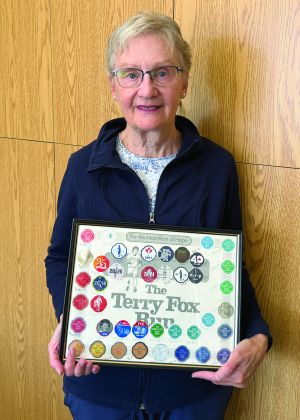
Dedicating over four decades of service to the Terry Fox Run
Low Budget Rock Star releases new single
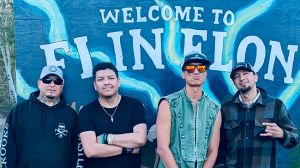
One of the tri-community’s talented groups of musicians, Low Budget Rock Star, have released a new single. Over the years, the band has changed some members, but the sound has always transitioned with the change. Low Budget Rock Star consists of frontman Kennie Henderson, Harley J.D. Whitehead, Terry Constant and Marshall Bignell.
“What I’ve come to understand is how it works sometimes in this business is that a song can take a life of its own and go a certain direction,” said Henderson. “It took a while and things have been a work in progress.
A new look in the works for The Pas Airport
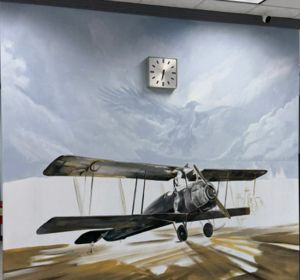
If you happen to be travelling through The Pas Airport, you might notice it is in the process of getting a new look about it. Two new murals will have found a home inside the airport and are being done by artist Nereo Zorro, who has done a few murals throughout the tri-community already.
“I started the murals in The Pas Airport in early August,” said Zorro. “I’m doing two murals in the airport. One is closer to the counter wall and the other is located on the wall with an old-style clock on it.
SVCC welcomes new general manager to the Valley
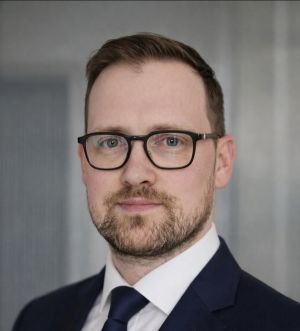
The Swan Valley Consumers’ Co-op (SVCC) has found the perfect candidate to fill the General Manager role, since former GM Colin Peters resigned after accepting another position. New GM Joshua Brecht grew up and spent most of his life living in the Prairies, thus making the Swan Valley a perfect fit for him and his family.
“I’m originally from central Saskatchewan and have spent most of my life across the Prairies, primarily in Saskatchewan and Alberta,” said Brecht. “I attended the University of Saskatchewan before moving to Calgary, where I spent about 10 years working in the building materials industry. From there, my family and I moved back to Saskatchewan, where I joined the co-op system and spent the last several years serving local co-ops and communities.
“Family is a huge part of my life. I have a wonderful and supportive wife, who is an Indigenous artist, and we have three children ranging in age from 19 to 11. They mean the world to me, and one of the things that drew us to Swan Valley was that it felt like a place where our family could put down roots and become part of the community.”
Brecht grew up around the co-op way of life. He is more than familiar with the cooperative system and how it works, which led him to become a part of it.
“In a way, co-op has always been part of my life; I grew up around it,” said Brecht. “From being a kid and running around many different co-ops that my aunt was a general manager in, to my dad working as both a bakery manager and later a lumber manager, to how my grandparents were long-time Co-op members, and going to the co-op was a daily staple. So even before I worked in the system myself, I understood that co-op was more than just a business.
“My first formal role with co-op was in 2021, when I joined Riverbend Co-op as a Home and Agro Location Manager. That role brought me back into the Co-op system and really confirmed for me that this was where I wanted to build the next stage of my career.
“While I was working at Riverbend Co-op, I had the opportunity to join Federated Co-operatives Limited (FCL) and saw a chance to serve the co-op system in a broader way,” said Brecht. “Moving to FCL allowed me to support multiple local co-ops across Western Canada, learn from different markets, and help teams work through operational, financial, and strategic challenges.
“I grew a lot during my time with FCL and I’m very grateful for that experience. At the same time, there is something special about living in the community you serve directly. That is a big part of why I’m so excited to join Swan Valley Co-op. I get to bring that broader CRS experience back into a local co-op setting, where the work is directly connected to members, employees, and the community every day.”
Brecht enjoys the connection between co-ops and the communities they serve. Co-ops not only provide goods and services to the community, but also build the community up in so many different ways.
“What I enjoy most is the community purpose behind the work,” said Brecht. “Before joining co-op, I worked in the independent building materials industry. I loved the business, the competition, and the people, but co-op changed how I thought about the work. In the co-op system, when the business does well, the benefit stays closer to home. It goes back to members, employees, local projects, community groups, recreation facilities, schools, and the places where families live their everyday lives.
“One moment that really stayed with me was taking my kids to the local pool in Outlook for the first time. As we walked in, there was a sign on the waterslide that said it had been supplied by Riverbend Co-op. My son looked at me and asked, ‘Is that your work, Dad?’ I told him, ‘Yeah, bud, we supplied the materials for that.’ Then my daughter yelled, ‘My dad builds waterslides!’ and ran straight for the pool. That moment has always stuck with me. It was a simple reminder that in co-op, the work we do shows up in real ways in the communities we serve. It is not just sales, operations, or financial results. It is helping build places where families live, gather, and make memories.
“That’s what I love about co-op,” said Brecht. “It is a business model that can compete, but it also has a purpose that is bigger than the business itself.”
Brecht is eager to be a part of the SVCC and loves the setting of the community as well. SVCC has built a reputation of being one of the flag stores in Manitoba, so this experience will be a very enriching one all around for Brecht.
“The opportunity itself was very exciting, but the Valley made a strong impression on us right away,” said Brecht. “The area is beautiful, with the forests, lakes, rivers, and the natural landscape. When I brought my family up while I was exploring the position, we really fell in love with the area.
“Beyond the scenery, there was a feeling here that mattered to us. The community felt welcoming, grounded, and real. It felt like a place where we could belong, not just a place where I would work. That was important to me and to my family.
“My first impression is that the team is incredible. I have only been in the role a few days, but every team member I have met has been warm, welcoming, and supportive. I already feel very fortunate to be joining this group.
The facilities across Swan Valley Co-op are also impressive,” said Brecht. “You can see the pride the team has in what has been built and how it has been maintained. It is also clear that this Co-op has invested deeply in the communities it serves.
“The community has been fantastic as well. I’ve already had people come up and introduce themselves, and I really appreciate that. I know I have a lot to learn about the Valley, the Co-op, the team, and the members, so every conversation helps me understand a little more.
“I officially started on Monday (Aug. 31),” said Brecht. “What I’m looking forward to most is getting back to living and participating directly in the community I serve. I’m excited to support the team, learn the business deeply, build relationships with members and community partners, and help Swan Valley Co-op continue creating value for the people and communities we serve.
“There is a lot to learn, and I’m coming in with a lot of respect for the team already here. My focus early on is to listen, learn, build trust, and understand the best way to support the organization moving forward.”