

Shawn Bailey
Zoning Bylaw under review
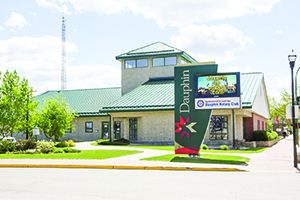
City administrators have decided it is time to review Dauphin’s Zoning Bylaw.
“Our last zoning bylaw is from 2015 and we are approaching the 10-year mark, so it’s definitely time, that is one aspect,” said city manager Sharla Griffiths.
“A second aspect is our city plan or development plan just got reviewed and approved this spring and that’s another good trigger, or another good indicator that says we need to review our zoning bylaw.”
It is important the two planning tools work together, she added.
The recently approved development plan builds at the main corridors in the city - Main Street, Second Avenue Northwest, Buchanan Avenue, River Avenue, Whitmore Avenue and Mountain Road - which connect and define different areas of the community. From the commercial area around Main Street to the surrounding residential and green space areas, it is important that allowed development makes sense, Griffiths added.
“The city plan, or the development plan talks about areas of our community and generally what should happen there. The zoning bylaw speaks specifically about lots,” she said.
“We need to make sure that each lot is zoned appropriately and that the things that one can do on the lot are consistent with the city development plan.
“We find that the 2015 review, our current zoning bylaw has been working reasonably well. But the city plan is a very different format and contains some different concepts than the last City plan. So it makes sense to review them both back to back, so that they work together nicely.”
Urban Systems, the consultant which helped the city with its development plan, has been contracted to assist with the bylaw review.
The process is in its early stages, Griffiths said, with just one introductory meeting held to this point. She does expect the consultants will be in the community this week to meet with City staff and council members.
“So they can gather our thoughts and our local knowledge and say from their perspective what are some of the things that we should look at,” Griffiths said, adding she expects the entire process to take up to one year to complete.
“There will be a public consultation component to it eventually, but there is no time frame set yet.”
There are more players involved than just the City and Urban Systems, she said, which can stretch things out.
“We also have to work with the province, so Community Planning, Transportation and probably Environment. The development plan was circulated through Culture and Heritage. Then it also has to get ministerial approval,” she said.
“They could say here’s some recommendations, or give it back to us and say please consider these issues or these items where we would have to go back and rework something.
“But as long as we make the zoning bylaw support the city plan we should be good.”
While residential lots are likely to remain residential and commercial will remain commercial, there are some current trends to be considered, such as intensive housing, infill housing and tiny houses, which are not adequately addressed in the current bylaw.
“Right now we say that on a single family lot you can build a single family home. If you want to build a two family home, you have to come to council for a conditional use.” she said.
“Sometimes we go through a building season, or leading up to a building season and it’s variance after variance after variance, people looking to build a couple feet closer to the property line. So if council almost always says yes to building it a couple feet closer to the property line, maybe our setbacks can be changed. It’s about seeing where we are in terms of comparables, what fits on a lot and what makes sense for our community.”
The new Zoning Bylaw will be implemented once approved sometime in 2025.
Back in Black's

Any time you can combine a passion with an opportunity and at the same time address a social need, you should count yourself lucky.
And that is what Melisa Stefaniw and Alex Man are doing after such a convergence allowed them to launch one of Dauphin’s newest businesses.
Back in Blacks, operating out of the former Blacks Cycle and Sporting Goods location on Main Street South, is a new consignment business focussing on redistributing used sporting equipment and apparel along with bike repairs.
“Alex and I have been heavily involved with Northgate Trails. We know there’s a huge need for sporting goods and cycle repairs in the community,” Stefaniw said, adding she was a founding member of the Dauphin Derailleurs Cycle Club Inc., while Mann was the trail designer working on the Northgate system.
“We are deeply, deeply tied to that sort of rec. asset in this community. Both of us have extensive backgrounds in outdoor recreation. Both of us have been coaches for a really long time and competitors in various different types sports, really across the board with what we’ve done, winter and summer sports, team sports. We want to be able to support youth and teams in the community through our passion for it.”
Find the full story in this week’s edition of the Dauphin Herald.
CPFF grant enables City to expand its surveillance camera system

A successful application to the Criminal Property Forfeiture Fund will enable the City of Dauphin to install additional security cameras at several of its facilities.
The $24,353.20 grant will allow the City to add 15 cameras to its existing system of 17 high-resolution video feeds already in place.
The new cameras will be placed on city-owned proprieties including one additional camera at the CN Station to cover a blind spot in the existing coverage.
“It is very much needed following a 1,000 per cent increase in vandalism to this building in 2023 over 2022, including a dozen incidents of windows being smashed, jeopardizing the safety of multiple office tenants,” deputy city manager Lisa Gaudet said.
“The RCMP have been unable to charge the suspect without video evidence.”
An additional camera will also be installed at Dauphin Public Library, Gaudet said, to provide an extra security measure in light of a troubling increase in loitering, mischief and threats to the safety of library patrons and employees.
The Dauphin Veterinary Clinic, while not a City-owned facility will also receive a camera to help deter people from abandoning animals at the building.
“The City does contribute to the Dauphin District Vet Services Board and vet services owns the building,” Gaudet said.
“Cameras will help to identify vehicles dropping off animals at the vet clinic.”
A fourth camera will be installed at the Dauphin Waste Disposal Site, while the remaining pieces of surveillance equipment are earmarked for the City’s waterworks facilities, to protect the assets, secure the City’s water supply, and provide surveillance for criminal activity in these areas.
Three of the cameras will be used to secure the water treatment plant south of the city, while the rest will be placed at entrances to the City’s three lift stations and at the Brown Avenue Reservoir.
Gaudet was surprised the City’s application this year was funded as Dauphin received approximately $45,000 in 2023 to upgraded seven existing cameras and install 10 new ones.
The Criminal Property Forfeiture Fund is capitalized by cash and proceeds from the sale of forfeited property seized from criminals.
Read the full story in this week’s edition of the Dauphin Herald.
City rolling out radon action plan

Dauphin has a radon problem.
Participating in the latest 100 Radon Test Kit Challenge through Take Action on Radon and BC Lung, the community had confirmed what was widely known, radon levels in the city are well above Health Canada guidelines.
Targetting communities where radon testing has thus far been limited, but where there is a potential for homes to have elevated radon levels, the 100 Radon Test Kit Challenge program provides municipalities the means to provide up to 100 test kits to citizens for free.
In Dauphin 200 test kits were distributed to monitor radon levels for a period of 90 days. A community report following processing of the kits showed that 92 per cent of the homes tested were above the Health Canada guideline of 200 becquerels per cubic metre.
And while that number might not mean much to people, radon - a naturally occurring radioactive gas found in every building in Canada as a result of the breakdown of uranium in the ground - is a serious problem, said deputy city manager Lisa Gaudet.
“Dauphin has been identified as having one of the highest rates of radon in the soil in Canada, not just in Manitoba, but in Canada,” Gaudet said.
“It is critical that we get the messaging out there. I think that because radon is odourless and you can’t see it, people don’t want to really face the fact that it’s a risk to their health. And it is a serious risk. Radon is the leading cause of lung cancer in non-smokers. More than 3,000 people in Canada die each year from radon-related lung cancer.”
To address the problem Gaudet has prepared a proposal for Health Canada’s Radon Outreach Contribution Program for $45,000 to support the roll-out of a three-year Radon Action Plan for Dauphin.
As radon levels vary, even between neighbouring houses, the only way for homeowners to determine their home’s radon level is to test for it.
Given that, the main thrust of the proposal is for the City to spearhead an additional 100 Radon Test Kit Challenges annually over three years, each November, which is Radon Awareness Month, Gaudet said.
Find the full story in this week’s edition of the Dauphin Herald.
2nd Ave NE pilot project options under consideration
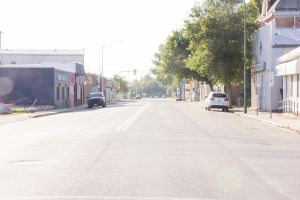
Dauphin city council is currently weighing its options when it comes to a pilot project on Second Avenue Northwest to create a craft district in the city’s core.
Dauphin Economic Development manager Martijn van Luijn began exploring the initiative at the request of council last year.
“They were looking to find a conceptual idea about how we can make Second Avenue Northwest as more of a destination, where people actually stop and hang out and play,” van Luijn said, adding with a craft brewery, a small butcher shop, a sign maker and a bakery already on the street, with a Creative Common set to open, the idea of a Craft District seemed to fit.
“So there’s a unique opportunity to create something and it’s the second busiest entrance to town. When you drive in . . . okay, this is who we are, this is our identity. Welcome to Dauphin.”
Urban Systems was contracted to help develop the plan, based on input from city administration, council and the public, through an open house held in April.
“Now it’s really up to council because (the plan) presented some low hanging fruit, easy solutions that don’t cost a lot of money,” van Luijn said.
Those options include things such as murals, planting more trees or creating temporary patios in the parking lanes.
“You give up one parking spot. You see them in other communities all the time,” van Luijn said.
“Or creating visual ways of slowing traffic. It doesn’t have to be an obstacle, it could be paint on the road, for example. There’s all kinds of solutions.”
The plan also includes longer-term strategies such as taking advantage of the extra width on the street to widen sidewalks.
“Which creates a much more attractive shopping street where you can plant more trees and have benches and that kind of stuff,” van Luijn said.
“Those are higher capital intensive, so that is presented as more of a long-term strategy.”
The options have been presented to council now as planning for 2025 is underway and van Luijn hopes some of the ideas are included in next year’s capital program.
The potential benefits of a successful pilot are tremendous, he added.
“I’m calling it a pilot project because if we can create an identity for this street, we could do it in other places, as well, and that just makes our downtown even more attractive,” van Luijn said.
“I follow a community economic development principle, which means let’s create a community in which we all choose to live first and everything else and will follow.”
Byelection set to fill empty seats at MVSD board table

A byelection is set for Oct. 30 to fill four vacant positions on the Mountain View School Division board of trustees.
The polling will seek to identify two trustees in Ward 1, which covers the Municipality of Roblin.
One trustee is to be elected in Ward 2, which encompasses the Municipality of Ethelbert, Gilbert Plains Municipality, Grandview Municipality and a portion of the RM of Mountain.
Finally one trustee will be identified in Ward 4 to represent the city of Dauphin.
The Ward 2 seat became vacant this past March when trustee Charlene Gulak resigned from the board to pursue a professional opportunity.
The other seats at the board table became vacant when trustees Scott McCallum, Floyd Martens and Liefa Misko stepped away from the board in early June after superindent/CEO Stephen Jaddock was fired without cause during a special board meeting, May 31.
For the three, the firing was the last straw in a series of events they considered “dark and repressive,” highlighted by a presentation on residential schools by trustee Paul Coffey, which was widely condemned as racist and prompted Manitoba Education Minister Nello Altomare to launch a governance review of the division.
Altomare eventually appointed a three-person oversight panel comprised of Manitoba Métis Federation vice-president Frances Chartrand, Brandon School Division trustee Jim Murray and Manitoba Teachers’ Society staff officer Andrea Zaroda, to assist in navigating board and staff turnover, strengthening governance practices, and community relations and to “ensure that MVSD progresses on key priorities, such as diversity, inclusion and reconciliation.”
Candidate packages for the byelection can be picked up at the Mountain View School Division office, beginning today.
All nominations need to be made in writing and be signed by at least 25 voters, or not less than one per cent of voters in the ward, whichever is less. In all cases, nomination papers need to be signed by at least two voters.
Each nomination must also be accompanied by the candidate’s declaration of qualification.
Nominations may be filed in person at the Mountain View School Division office, Sept. 18, 19, 20, 23 and 24, between 8:30 a.m. and 4:30 p.m. The papers may also be filed by fax or by a candidate’s official agent.
For more information contact senior election official Kirk Dawson at 204-621-7165 or the MVSD office by phone at 204-638-3001 or by fax at 204-638-7250.
City’s property tax collection slower in 2024

Dauphin city council reviewed property tax collection reports at its regular meeting, Aug. 19, which show 2024 with the largest outstanding balance in the days after the July 31 due date.
Compared to the previous eight years, the $1,786,975.30 of the $10,749,453.24 in 2024 assessed taxes as of Aug. 31, is the highest at 16.62 per cent.
The next highest percentage was in 2021 when 13.97 per cent remained outstanding at Aug. 3.
The reason for this year’s jump, city manager Sharla Griffiths said, is hard to pin down.
“Maybe the economy. People are just not able to pay,” she said, adding delays with tax bills being mailed out might also have contributed.
“We did have a challenge with the new system, the the new tax bills that came out from the province.”
Those tax bills included the entire school tax rebate rather than half of the rebate as in previous years.
“The province prints those those colourful pink and blue papers and they basically push to our accounting systems how much everybody has to pay, everybody’s outstanding balances,” Griffiths said.
“We usually mail our invoices out at the end of May, beginning of June. It gives a couple of months to pay. This year we mailed them out about one month ahead of time because the province had not given us that push for what people owed.”
While a few percentage points might not seem like lot, when you are working with a budget of several million dollars, it adds up quickly.
With as much as $.5 million or $.6 million in property taxes going unpaid from year to year, the more that can be collected the better, Griffiths said.
“We operate with a line of credit throughout the year, anyway. But we’re always happy when taxes are all paid, because we don’t have to go into that line of credit,” she said.
“However, between now and July 31, 2025, we might have to go into that line of credit earlier.”
Funding shortfall will change the face of recreation, says mayor

Expect recreation in Dauphin to look a little different in 2025 compared to the past.
In light of an RM resolution indicating “the RM of Dauphin has decided to terminate their participation in the Dauphin Recreation Services Board and terminate the Dauphin Recreation Services Agreement effective December 31, 2024,” city councillors, senior city managers and managers from Dauphin Recreation Services formed a special planning group to deal with impending funding shortfalls.
RM council has since affirmed its commitment to recreation and by resolution on July 23 provided $375,000 in funding to DRS for 2025 operations and capital expenditures.
While Dauphin mayor Daivid Bosiak is pleased RM council has provided some funding for recreation this year, the work of the special planning group will continue.
“We’re moving ahead with 2025 based on what we know and that’s going to mean changes to DRS operations, programs, facilities, those are still to be determined,” Bosiak said.
“There will be some kind of, I’m calling it at this point adjustments because even with the $375,000 that the RM has committed by resolution . . . that’s still a couple hundred thousand, short of what we need. The city, who has been backfilling since 2017, we’re at our max of being able to back fill. So the only other option is DRS has to find more money somewhere, raise more money, or reduce costs somehow.”
Bosiak added the special planning group is focused on the coming year and “will not be delayed or diverted by any issues.” The City, he added, is looking forward to productive talks with the RM about recreation in 2026 and beyond.
Read the full story in this week’s edition of the Dauphin Herald.
Kings camp starts Friday

While Doug Hedley has a good idea of what he has to work with for the coming Manitoba Junior Hockey League season, the Dauphin Kings head coach and general manager will get his first look at all of his options in one place when the club hosts its fall training camp, Aug. 30 to Sept. 2.
And while all aspects of the game will under scrutiny, Hedley will focussing on finding some offense. With players such as Aiden Murray, Brett Magarrell, Ty Pratte, Sam Swanton and Naaman Hofer set to return, defence is not Hedley’s firsat concern.
“The back end is probably one of our strengths. We have four or five solid returning kids, so we’re looking at being real strong on the back end, mobile and physical and heavy,” Hedley said.
“Then we throw in some guys that we had at prospect camps. We had some real good kids.”
It has been an up and down summer for Hedley. On one hand he has been able to add some quality prospects to the roster. On the other, he has had to deal with the departure of Trey Gnetz and Charlie Sandven who have joined teams in the North American Hockey League.
“There’s so many options for players now and all players have advisors,” Hedley said, adding the problem has been compounded with the British Columbia Hockey League and five Alberta Junior Hockey League teams recently choosing to operate outside of Hockey Canada’s system.
“They just come in and talk to your best players because they can.”
At one point this summer, Hedley was dealing with the idea of losing goaltender Cole Sheffield - arguably the top netminder in the league last season - to a BCHL club. However, he has since learned Sheffield will return to play for the Kings this season.
Read the full story in this week’s Dauphin Herald.
Clippers ready for RMFL season

The Dauphin Regional Comprehensive Secondary School Clippers football team has begun practising for the upcoming Rural Manitoba Football League season.
And while there will be some holes to fill from last year’s Murray Black Cup winning roster, head coach Gerald Lopez likes the way things are shaping up..
“I think we’ll be competitive,” Lopez said.
“We are probably getting on average about 25 players per practice. In the beginning there was a lot of younger players and now that the Summer Games is all done, all the veteran players are all returning.”
The team will have to adjust to the loss of graduating players Will Miner, Owen Tyschinski and Lars Gudbjartson, he added.
Miner was a a powerhouse running back who went looking for contact. Last season he had 87 carries for 828 yards with one touchdown and one fumble.
Tyschinski was an anchor on the Clippers’ offensive line and a force downfield on special teams while at six feet, five inches in height,
Gudbjartson was an imposing figure on the Clippers defensive line recording 18 tackles, six assists, three fumble recoveries and one forced fumble in 2023.
And while Tyschinski and Gudbjartson are now plying their trade with the Westshore Rebels in Langford, B.C., there are some talented players ready to fill the holes they left.
“Sully Fox will be returning to lead our club in this year’s campaign. His presence defensively will set the tone of our game. I have no doubt in my mind defensive coach Tomkins will transform his defensive group to be, once again, the top unit the RMFL. Blake Thacker, Jackson Cheater and Brendon Higgins are expected to be leaders on our defence,” Lopez said.
“Zach Perih and Kingston Sterling will anchor our matured offensive line while Chaynes Paziuk and Russell Pelltier will be the downhill runners.”
Lopez added there is also a good crop of rookies looking to join the program including Ronin Mouke, Chase Glover, Alex Thompson and Julien Lopez.
“They will be rookies on the football field but are standout athletes in other sports such as hockey and rugby,” he said.
“I have no doubt they will provide an immediate impact to our club.”
While the schedule is still being adjusted to account for the Transcona Nationals not being able to join the league as expected, as it stands now the Clippers will open the season at home Sept. 6, versus the Swan Valley Tigers.
“We’ll be competitive. They’ll be learning from the start, but we’ll bring it on as the season progresses,” Lopez said.