

Submitted
Runners-up
Dauphin’s Boyd White and Kevin Thiele lost to Anthony Lee and Souk Xoum of Winnipeg in the doubles final at a tennis tournament in Clear Lake, Sept. 10 and 11.
White and Thiele had finished first in their pool, including a win over Lee and Xoum.
In the playoffs, they defeated another Dauphn duo, Patrick Furkalo and Kent Wiebe in the first round, then defeated the defending champions, Katherine and Sam Lee in the semifinals.
Yardfringe anniversary highlights Culture Days 2022
By M.A. Nyquist
For the Herald
The Dauphin’s Culture Days (DCD) committee kicked off its celebration of the 10th anniversary of Dauphin’s Yardfringe and another year of Culture Days activities, with a creative presentation to city council, Sept. 12.
Dauphin’s Yardfringe turns community yards into venues for the arts, where participants travel around by bicycle to actively celebrate culture in unexpected and obvious areas of the community.
Committee member Jean-Louis Guillas noted the group is quite excited about the milestone, adding it has been over a decade the community has participated in the national arts and culture event.
“We are really proud of coming up with a genuinely grassroots festival and celebration of local culture and talent,” he said.
Using a pechakucha format of 20 images of Dauphin’s Yardfringe each projected for only 20 seconds, the presentation celebrated the many people who have been involved over the years, ranging from dance groups, and artists, to community groups and members of the Watson Art Centre (WAC), Dauphin Public Library (DPL) and Fort Dauphin Museum.
“It really was a great chance to celebrate the number of people involved with our organizing committee,” Guillas said.
While all members of council congratulated the committee for the work it has done highlighting art and culture in the community, councillor Kathy Bellemare noted it has a broader role.
“Art goes a long way to uniting people and bringing joy,” she said.
Guillas reminded council Dauphin’s Culture Days 2022 will begin with Yardfest, Sept. 24.
Described as a moving musical adventure where participants are invited to once again travel by bicycle, Yardfest begins at 7 MacLeod Ave. W for some smooth jazz by Johnathon Pacey and friends at 4 p.m. A cycle to 311 Wellington Crescent at 5:15 p.m. that same evening will offer The Fret Shredders with Gary Procyshyn and Chris Flett.
Inspired by Dauphin’s Yardfringe, the event is designed for cycling the city to enjoy musical talent in a casual venue.
“We go around to backyards and meet culture where it lives,” Guillas explained, inviting people to pay a suggested $5 per concert.
The music does not stop that evening, he added, as the WAC is hosting a tribute concert of George Harrison’s music by the Route 10 Collective, at 7 p.m.
This is the first time the Route 10 Collective has made it up to Dauphin, Guillas noted, pointing out the group has been offering great tribute shows in Onanole for a decade, featuring many different artists from the area. Two locally connected musicians, Marc Clement and Bill Acevedo, known as The Handsome Fatties, will be part of the show.
“It’s nice to have local boys featured in the Collective. It’s also a fantastic opportunity to hear great music. They had nearly sold out shows for three nights in Onanole and are also going to Brandon. For the first time, they’re bringing the show to Dauphin and people should absolutely catch that, because there’s amazing musicianship. And it’s a really, really good show. I saw it earlier this summer,” he said, noting the tribute to Harrison will feature some Beatles music, Harrison’s solo work and music he did with British-American supergroup The Traveling Wilburys. Tickets are $30 each and are available at the WAC.
This is the second year of Yardfest with musicians who have been active in the community in leading, or encouraging other artists.
“And we wanted to give them a feature for that and also just remind people that Yardfest leads into Yardfringe the next day, which is our signature event. People love the surprise of Yardfringe that brings some kind of new activity each year,” Guillas said.
Part of the enjoyment of Yardfringe, he noted, is to join the bike cavalcade, discover new and creative activities or events in the community, with a fun group of people. This year the cyclists will not be divided into two groups and will move together as one group.
Get the FULL STORY in this week's Dauphin Herald!
New arena a big deal for Dauphin
By Ed Stozek
For the Herald
On the evening of July 29, 1951, a fire of unknown origin burst into flames and burned Dauphin’s skating rink to the ground.
The fire broke out at 9 p.m. and in 15 to 20 minutes the rink was totally engulfed in flames. In less than an hour the structure was reduced to a mass of twisted steel girders.
The rink was located next to the powerhouse on Front Street. (former liquor commission site) Owned by the municipality, it had been constructed in 1927 at a cost of $19,000. With a seating capacity of 1,500 the arena hosted a variety of hockey games, carnivals and other rink associated activities.
Immediately after the fire, members of the Dauphin town council met in an emergency session to discuss the building of a new arena in time for use for the upcoming winter and the ways and means of financing the project.
“Resolutions were passed by the Dauphin Town Council and the Dauphin Agricultural Society at a special meeting on Friday and Saturday and have opened the way for placing $86,000 into a fund this year for the construction of a livestock and skating arena with the organization being responsible for the building of the Dauphin Memorial Community Centre property for the centralization of community activities including new agricultural fair grounds.” (Aug. 9, 1951, Dauphin Herald)
At this time the agricultural society decided to postpone the moving of the fairgrounds to the DMCC property for a period of two years in order to give priority to the building of the arena.
It was interesting to note the progress of construction of the arena as reported in the Dauphin Herald.
The laying of the foundation started in early September. By mid-September preparations were being made for the initial delivery of the 33 wooden laminated arch shaped trusses manufactured at a factory in Boissevain.
The first two shipments, each carrying four complete trusses, were shipped in halves and arrived on Sept. 18.
The unusual trailer used to bring in the trusses, itself was made of parts of the arches to fit its load.
To raise the heavy arches, a supervisor from Boissevain, Jack Harvey, noted tripods almost as tall as the building were constructed. Tractors were used to pull the arches up by means of the tripods. Harvey anticipated that under ideal conditions a crew could erect four arches per day.
Near the end of September, a snow storm impeded the building progress as it was too muddy and wet to work. On Oct. 18 the last arch was lifted into place as work continued in the interior of the arena.
An appeal was made in early November to raise an additional $20,000.
“If money was not raised only a few seats may be constructed and large portions of the crowd would have to stand.” (Nov.r 1, 1951, Dauphin Herald)
A report on Dec. 6 revealed workers busy at all sections of the arena. The 15-member DMCC board was confident that the arena would be ready for the Dec. 10 official opening with seating for 2,000 hockey fans.
Tickets for the opening night program were being sold throughout the district. Plans were to have one of the doors open for ticket holders to expediate not having to wait in line behind patrons buying tickets on game night.
Prior to the game, players lined up on their respective bluelines for the official opening.
Al McKee served as the master of ceremonies. For the cutting of the ribbon he introduced Mayor Bulmore, Reeve Potoski, Howard Campbell, the president of the Dauphin Agricultural Society, and William Cruise, the chairman of the DMCC board.
The fans were also treated to a skating exhibition by figure skating club instructor, Joyce Clinton. A moccasin dance was also performed following the game.
“Playing their third game of the young season, Dauphin’s new livestock and skating arena rang with the cheers of the largest crowd ever to see a hockey game here Monday night as 2,652 screaming fans saw the Brandon Wheat Kings skate to an exciting 9-5 victory over the Dauphin Kings in an exhibition hockey match which marked the official opening of the arena.” (Dec. 13, 1951, Dauphin Herald)
Safeway has a long history in Dauphin
By Ed Stozek
For the Herald
In 1929 Safeway opened its first five Canadian stores in Manitoba.
Stores typically encompassed 1,000 square feet and customers bought only several days’ worth of food as quick-melting ice blocks were the standard source of home refrigeration. Customers provided a list to the clerks behind the counter who selected the items and bagged them. The cashier would then ring up the total and hand the customer the groceries and a carbon copy handwritten bill.
In the July 11, 1929 edition of the Dauphin Herald and Press an announcement confirmed that Safeway Stores Limited, an American chain store with headquarters in Oakland, California and branches all over Canada and the United States, was in the process of negotiating the purchase of a vacant lot on Main Street between the Burrows and the Malcolm Blocks.
Safeway’s policy included the construction of its own stores, “standardized for service and convenience and ten contracts for such have already been let in the city of Winnipeg.” By mid-September excavation had commenced by local contractors, the Craig Brothers, as they had secured the $15,000 contract to build Dauphin’s first Safeway store.
The official opening of the new store occurred on Friday, January 31, 1930.
“They are large immaculate, conveniently arranged, ultra-modern and complete food stores. Business is transacted on a strictly cash and carry basis. Stocks are complete and widely varied, consisting of known brands of highest quality and every item sold carries a money-back guarantee should it fail to satisfy.” (January 30,1930, Dauphin Herald and Press)
It was interesting to note some of the prices with Chuck roast at 15 cents per pound., a 24-pound sack of flour at $1.14 and three cans of pork and beans sold for 23 cents. Orders amounting over $3 included free delivery. At this time Safeway was promoting the buying of Canadian products to help solve the unemployment problem caused by the Great Depression.
“A purchase in a Safeway store is your contribution toward keeping men and women of Canada employed.”
Ad Balcaen started his career with Safeway in his hometown of Selkirk in December 1929. One year later he transferred to Winnipeg where he worked for nine years as a store manager. In July 1939, Balcaen was appointed manager of the Safeway store in Dauphin.
In 1959 he left Dauphin and spent 10 months at the Portage la Prairie Safeway supermarket. This proved as a valuable time to gain experience before coming back to operate Dauphin’s new Safeway supermarket location.
An investment of more than $300,000 had been made into the construction of the building featuring “new store equipment with wide, spacious aisles, automatic opening and exit doors, equipped with six modern check stands to speed customers on their way.” (July 13,1960, Dauphin Herald and Press)
The grand opening of Safeway’s new store location on the northeast corner of Main Street and Fourth Avenue North occurred on Tuesday, July 12, 1960. Shoppers were welcomed at the store with free gifts and many advertised specials.
Some of the free gifts included penny banks, needle kits and balloons. As advertised, “savings galore” included 10 tins of Taste Tells peas, beans with pork or Townhouse corn for $1. The meat sale included t-bone, sirloin and wing steak at 79 cents per pound.
In December 1967, after 28 years as manager of the Safeway store at Dauphin, Ad Balcaen retired. He continued as a member of the town council, as well as being involved with community activities including association with the Rotary Club, the Boy Scouts, and an advisory board member for the St. Paul’s Personal Care Home.
Eugene Derhak, who had completed 14 years of service with Safeway, was appointed as the new manager and Nick Chita became the assistant manager.
There have been many changes since 1929 in shopping habits, however, during the height of the COVID-19 pandemic restrictions, many customers avoided in-person shopping and reverted to phoning in their lists to the grocery store. Store personnel filled the lists with the needed items and readied them for deliverey to the customer’s residence.
We even started using good old-fashioned recyclable paper grocery bags again.
Where's my carbon copy handwritten bill?
On the podium
Dauphin’s Breken Brezden, pictured with Canadian men’s champion Keegan Messing, has had a busy and successful summer.
After competitions in Kitchener and Montreal, Brezden won a silver medal at an event in Mississauga this past weekend, recording a personal best in the process.
She is now preparing for the Sask Skate competition in Regina in October.
Changes in photography developed over the years
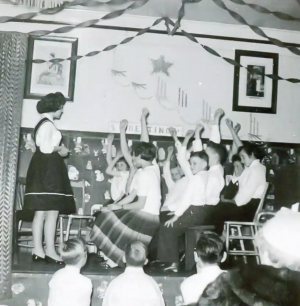
We live in an age where most of us have access to a cell phone. Along with providing a link to endless information we also utilize it to take photographs and videos and instantly post them on the Internet.
Many years ago, one had to load a camera with a roll of film, shoot the roll of film and then send it via mail to be developed. If everything went according to schedule the prints arrived several weeks later.
In 1888, George Eastman started the Kodak company and launched the first roll-film, hand-held camera. The camera had a small single lens with no focusing adjustment. It came preloaded with a roll of paper film with a capacity to shoot 100 photographs. Once finished, the camera was sent back to Eastman, who developed the used roll of film. This method revolutionized the market and turned photography into something many could enjoy.
In 1900, Eastman released the Brownie and introduced the snapshot to the masses. Constructed by using a basic cardboard box with a simple convex-concave lens it was cheap and easy to use. Over 150,000 cameras were sold in the first year of production. The introduction of this $1 camera and 15 cents for a roll of film allowed most anyone to capture photographic moments. Kodak’s goal included promoting the sales of its brand name film.
My parents had a Kodak Brownie camera and on special occasions they took some photographs. There is an old saying that a picture is worth a thousand words. The memories may have faded, but the photo images are still as clear as ever. Each photo tells a story associated with the past. Along with the usual family poses on the farm, my favourite photographs also include several taken at the annual Christmas concert at the Grade 1 to 8 one-room country school that I attended.
While on vacation in 1975, I accidentally dropped a Kodak Instamatic camera onto a cement sidewalk. Janice’s cousin suggested that we stop at Henry’s, Canada’s largest camera store in Toronto, where I acquired my first 35 mm camera. It sparked an interest in photography.
Several years later, a more advanced Nikon camera was purchased and along with a tripod and several different telephoto lenses the love of photography continued, encompassing family events, landscapes, close-ups of Manitoba’s wild flowers and wildlife. On one photographic venture exploring the shore of Edward’s Lake, three female elk and their calves walked in the shallow water near the shore towards me. After taking several photos it was time to leave the elk families behind. It was a priceless encounter.
Most of the photo collection of family and Manitoba’s nature was stored in albums or in slide carousels. When we had visitors we often brought out those albums or the slide projector and reminisced of past experiences.
Photographs make for great topics of conversation.
Whenever I interview someone for an article, it is always an honour and a privilege to hear the person’s story and see photos associated with their lives. While researching information for the sawmill industry and the Whitewater Lake Prisoner of War camp, it was always exciting to find photographs related to those topics. One highlight included locating approximately one hundred photos associated with Kippan’s Mill. All of them were taken with a Brownie camera. Since photographs were officially forbidden to be taken at the prisoner of war camp, it was always interesting to uncover “new” photographs from a variety of sources including a friend of a former guard at Whitewater Lake. Those photographs sure do help one visualize the history from the past.
This past winter, Janice and I came across a group of photographers armed with 35 mm cameras and telephoto lenses intent on photographing a Great Grey owl perched on a tree branch in the Riding Mountain National Park. Even though my Samsung phone serves as my primary photo and video camera, I missed not having a trusty Nikon and a telephoto lens. My photographic efforts resulted in a very distant image of the Great Grey owl.
Luckily, I didn’t have to wait several weeks to have the image developed.
Repping the province
Several Dauphin athletes represented Manitoba this past weekend at the 2022 Western Canada Rugby Championships in Kelowna, B.C.
Top row, from left, Sully Fox (U16 boys), Will Miner (U16 boys), Lars Gudbjartson (U16 boys), Joseph Lopez (U18 boys) and Oliver Dandeneau (U18 boys) and bottom row, from left, coach Aaron Miner (U16 boys), Chloe Fletcher (U18 girls), Brooke Miner (U18 girls), Emma Fox (U18 girls) and Kyle Lunsted (U18 boys). See next week’s Dauphin Herald for details on how they did.
Entertainment and dignitaries at No. 10
By Ed Stozek
For the Herald
Early in October 1943, Group Captain (G/C) John C. Huggard took over the command of No. 10. SFTS Dauphin from Wing Commander C.F. Newcombe.
A veteran flier, G/C Huggard had served in the Royal Air Force in France from 1916-19. He was shot down over Belgium and became a prisoner of war on Sept.r 5, 1917.
During the peace years he was attached to the No. 112 Winnipeg auxiliary squadron and became director of the Winnipeg Flying Club.
During WWII he was responsible in opening the RCAF recruiting centre in Winnipeg, served as chief instructor at No. 4 SFTS in Saskatoon, was commanding officer of conversion training squadron at Rockcliffe, and served as commanding officer at Moncton.
No. 10 turned out to be G/C Huggard’s last posting as he officially retired on Aug. 31, 1944. It was noted that the announcement of his retirement had been received with regret by the entire personnel of the station.
“He leaves behind tangible evidence of the welfare of those serving under him.” (Aug. 31, 1944, Dauphin Herald)
A “tangible evidence of the welfare of the men” occurred on May 26, 1944, with a stage show sponsored by Coca-Cola airing from No. 10’s drill station. The Coca-Cola Company of Canada bought two half hour shows a week on CBC radio to present “Victory Parade of Canada’s Spotlight Band.”
Beginning in February 1943 and ending in December 1944, 200 programs were broadcast.
On the first leg of the third trans-Canada tour playing war camps and war plants, the show featured Mart Kenney and his Western Gentlemen performing their program for the officers, air personnel and guests at No. 10. Travelling from the Atlantic to the Pacific in a private railway coach the 14-piece band also made stops in towns and cities between Coca-Cola broadcasts to play for the public.
The show was scheduled to start at 6:30 p.m. with the broadcast portion going on air on CBC at 7 p.m. The concert at No. 10 was the 138th stop for the Victory Parade. At this time 300,000 sailors, soldiers, airmen and war workers had been entertained. The tour had “rolled up 36,310 spotlight miles on the musical march across the country.” (May 25, 1944, Dauphin Herald)
In many cases the show played in out of the way places where top flight entertainment seldom reached the men and women there. Many letters of appreciation were received from Victory Parade audience members.
Mart Kenney and the Western Gentlemen were one of Canada’s big-name bands and were noted for their versatility and distinctive music.
At No. 10 a capacity crowd was in attendance and most stayed for the whole evening to dance to the music of Canada’s Spotlight Band. After the dance the band members were entertained at the officers’ mess before leaving by bus to Brandon. The program was a welcome relief from the usual daily activities involved in the training of personnel participating in the war effort.
Dignitaries also paid visits to the air base. On June 1, 1944, David Wilson, the New Zealand High Commissioner to Canada and his delegation were welcomed by G/C Huggard. Wilson initially was elected to New Zealand’s Labour party. Through membership of the Legislative Council he became a minister in the first Labour government and served as High Commissioner to Canada from 1944-47. In 1944, besides visiting Dauphin’s two airbases, High Commissioner Wilson also toured units where New Zealand airmen were stationed in Canada.
Of special local interest in Ochre-River, “On Thursday, May 18, the district was honoured by a visit from Hon. David Wilson, new High Commissioner from New Zealand at the home of his brother, Robert Wilson.” (May 25, 1944, Dauphin Herald) That evening, Robert and Selina Wilson entertained 13 friends in honour of their distinguished guest.
Entertainment and visiting dignitaries were always well received by the leadership at No. 10. as further evidenced at G/C Huggard’s retirement banquet with 150 officers and 40 citizens representing Dauphin in attendance.
Just prior to his retirement, G/C Huggard’s leadership skills were rewarded with an official pennant for station efficiency. The pennant was proudly flown on the headquarter’s mast.
Food for fun
Parkland Campus Kids Daycare held a successful fund-raising barbecue at Dauphin Consumer’s Co-op, July 20.
The group managed to raise a total of $1,155 to go towards a shade structure for the children to enjoy at the natural play space outdoors at the daycare on the grounds of Assiniboine Community College Parkland Campus.
Beach life

Regional Connections Immigrant Services hosted a beach safety evening at Rainbow Beach, July 18. After learning about drowning prevention and the Life Jacket Loaner Station, families enjoyed a swim and an evening of visiting on the beach.
While it was the first visit to Rainbow Beach for many attendees, most said they will return soon.
To learn more about services and activities for newcomers to Canada, contact Regional Connections at 204-647-0693, or follow Regional Connections Dauphin on Facebook.