

Jennifer Laviolette
Giving, no matter how big or small, can save a life

One never knows the true power of giving, until one is faced with a life altering challenge or medical need. Margaret Lathlin knows all too well about when a loved one is faced with a great need or health challenge. In 2015, one of Lathlin’s granddaughters, Tameka, suffered from Mitochondrial myopathy, Encephalopathy, Lactic Acidosis and Stroke (MELAS), which is a rare combination of medical conditions that lead to her having several seizures a day, some which lasted hours.
Local fundraising took place to help Tameka’s family with their needs during their most challenging times.
Now Lathlin has another granddaughter who faced a severe medical condition and needed treatment immediately.
“My granddaughter has autism and is non-verbal, so we didn’t know anything was wrong or that she was really sick, until we took her to the doctor,” said Lathlin. “She was taken by medivac from The Pas to Winnipeg and that’s when we learned she was having heart complications. They put her in a coma in Winnipeg, due to her having a hard time breathing, so they had to relax her heart. The operation couldn’t be done in Winnipeg, because they didn’t have the equipment, so from there she was taken to Edmonton.
Call out for OID Princess Pageant this year
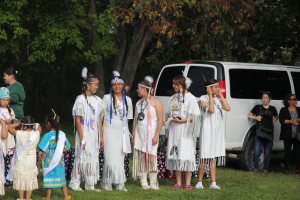
Organizers and directors are already making plans for the 58th Opaskwayak Indigenous Days, (OID) which will be held this year on August 12 to 18. A big part of the events is the OID Princess Pageant and directors have put out a call for all Indigenous girls interested in running.
“It’s really exciting and I’m super pumped to be a part of it,” said OID Senior Princess Pageant Director Jett Bignell. “I ran when I was 17 years old and it was one of my most favourite experiences. I graduated high school and then I ran. It was exciting for me, because I got to be around our elders and involved with the youth kind of like a big sister role model. For the most part, I still talk to many of those women today.
Town of The Pas hosts special budget meeting
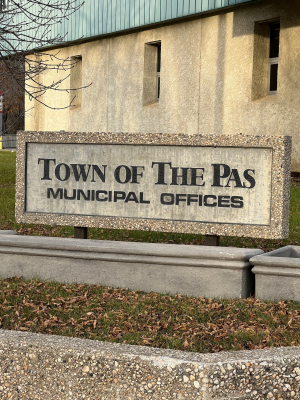
The Town of the Pas held a Special Meeting for the 2024 Budget on March 25.
Council received the final amount from the Kelsey School Division, which results in a slight increase from what was indicated in previous discussions and leads to a 0.66 mill rate increase. The total amount which the Town of The Pas is required to levy under Section 188 of The Public Schools Act for 2024, is $2,981,347. Town council has no control over school tax portion.
Some additional expenses were also added to the 2024 budget. The Tri-Com Recycling forklift final amount was $7,850 that the request was for.
Initially, there were some expenses for truth and reconciliation were added to the amount of $10,000.
As well, the clean-up costs for 220 Edwards Avenue, The Lido Theatre, is put at $50,000 in the budget, but the controller felt that is a low amount to budget for this expense. Two quotes have been received so far. Mayor Murphy said it’s just a starting point to work toward and didn’t feel it had to be done all at once. He said council should work towards that budgeted amount rather than the scope of the work that needs to be done, and go from there.
Spending a lifetime on a cattle farm
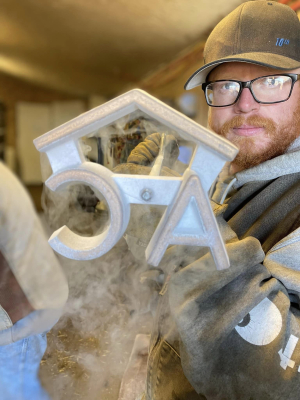
Swan Valley cattle rancher Bruce Anderson is coming close to watching his family’s way of life hit a milestone in celebrating 100 years of breeding cattle. Anderson can remember his time growing up on the family farm, how very different it is from today’s generation and way of doing things.
“When I was growing up on the farm, there was a lot more manual labour back then,” said Bruce Anderson.
“It was really hard to balance any sports or school activities with farm responsibilities. We had outside chores before and after school from the time I was ten or so.
“We made over ten thousand square bales each year for use in the barns and for the cattle shows.
Working on the show cattle in very cold barns and travelling to the shows across Canada and U.S. without cell phones is something I think about a lot.
“Things have gotten a lot more automated and our equipment and infrastructure has improved considerably,” said Anderson. “The requirement of off-farm income to support the family farm has added a lot of pressure and time constraints.”
Anderson’s father learned to manage money very early in life and passed that skill on to Bruce. He grew up knowing that there would be years where things would fluctuate and that it was important to have some extra in waiting, for those times. Anderson also embraced the advances that came with cattle breeding, which helped with the succession of not only the breeding of cattle but operations in general.
“My dad was very frugal and taught me to be careful with my money and that has helped us through the tough years of growing our farm,” said Anderson. “We implanted some of the first embryos in the early seventies and that technology has improved our herd considerably through the years.”
Cattle farming was something that was in Anderson’s blood, so it was no surprise that he would continue on with the family farm and breeding cattle.
“Our family had been raising Angus since 1933, so it was all I knew, and in my heart,” said Anderson.
“I purchased my first Angus cow when I was nine and now almost 50 years later, she is still the breed of momma cow I want to have on my farm.”
There are a lot of factors to consider when breeding cattle, particularly when establishing a purebred line such as Anderson has done.
“You need patience to watch the animals develop, it takes 36 months from conception to the first calf off a female you bred to see the results of your matings,” said Anderson.
“There have been fads in the purebred industry through the years, but we have always strived to produce a consistent product as our customers are the commercial cattleman and whatever we produce has to work for them. We source genetics from across North America to constantly improve our herd, through the use of artificial insemination and embryo transplant. “
Anderson has heard from his father and experienced the impacts of what a drought year can do to cattle operations. His father experienced one of the worst droughts in history in 1930s and then Bruce himself recalls the drought from 1960.
“I remember my dad talking about his mom walking the cattle up to the Roaring River to water daily, where our farm is located now,” said Anderson. “This would be a two-mile walk with small children and literally a hill both ways. We were fortunate in the Valley to not feel the effects of the severe drought like the southern parts of Canada.
“Dad and his brother also cropped land and were somewhat diversified so that helped.”
Anderson can recall the work put into their first bull sale in the Valley and now the event has grown both in size and work involved in putting it together. In 2014, the Andersons began hosting their bull sale directly on their farm.
“We started out in a group sale called the All Breeds Bull Sale with other local breeders,” said Anderson.
“Their efforts and cooperation improved our marketing options and helped make Swan Valley known as a place to purchase bulls. We always deal with distance living here, and over the years technology has helped bridge the miles. We have sold bulls by private treaty as well and established our own sale in 2010, and holding it on the farm required facility for the sale.
“We advertise through a lot of different venues and now produce our own catalogue, taking videos and pictures ourselves. Technology has broadened our target markets and we often have bulls go across the prairie provinces and into the US; however, the majority are within a 100-mile radius. We always wanted to keep our sale local as we are firm believers that supporting your local community is the secret to keeping it thriving.”
Bruce is now watching as his children carry the torch and looks forward to watching the family legacy reach the milestone of 100 years.
“At times it is hard to let go of the reins, but I’m very proud of the integrity and work ethic our kids have,” said Anderson. “My dad would have been also. He loved the cattle industry and the Swan Valley, and both Austen and Breanna respect the legacy he left. I hope that I have helped to instill that in them. Watching our grandchildren grow up and knowing our love of this industry is my greatest reward. I look forward to our 100-year milestone in 2033.”
Wabano brings Indigenous representation through fashion

Last week Opaskwayak Cree Nation (OCN) held their OCN Youth Gathering over three days for for youth ages 12 to 30 to discuss and engage the Wahkotowin Tawastak, as part of developing new C92 legislation. Some keynote speakers and presenters were brought in to work with the youth and they were Scott Wabano, Jackie Traverse, Adam Beach, Brett Mooswa, Kairyn Potts and James Jones.
Scott Wabano has made a name for themselves as an award-winning fashion stylist and designer; creative director and content creator. Wabano grew up as a two-spirited Cree from the Mushkegowuk and Eeyou Istchee territories and has always had a passion for bringing Indigenous representation to the fashion industry.
Head and Constant collaborate talents with Island Dreams

Two talented artists from Opaskwayak Cree Nation (OCN) are earning international recognition for their work. Rhonda Head and Gabe Constant teamed up together to create a music video called Island Dreams, which represented not only an experience of being in another country, but gave the opportunity to showcase Indigenous people from that area as well.
“I went to Belize for Christmas two years ago, and it’s such an amazing country with beautiful lands and people,” said singer and songwriter Rhonda Head. “I was about seven days into my trip, when I was sitting in my room alone and all these images came to me of my trip. I grabbed a piece of paper and began writing about all the images that came to me. Before I knew it, I wrote a song.
M30 Athletics to hold grand opening this month

The first ever Indigenous owned athletics store in Manitoba is housed right in Opaskwayak Cree Nation (OCN). M30 Athletics opened up shop in the Otineka Mall before Christmas and is providing sporting goods and equipment to the tri-community area.
“M30 Athletics decided to open up in the mall simply because Opaskwayak Cree Nation, The Pas and surrounding communities needed a sports store,” said M30 Athletic Manager Glenn Young. “It is also the first 100 percent Indigenous owned sports store in Manitoba.
The Pas hosts MB Northern Juried Art Show

It was The Pas’ turn to host the Manitoba Northern Juried Arts Show this year and artists from the north submitted their works to be evaluated in this year’s judging. The pandemic has slightly impacted the event, as it has been eight years, since The Pas hosted an in-person show for this event.
“Each year the Northern Juried Art Show is hosted by a different community,” said Manitoba Northern Juried Arts Show Volunteer Shauna Ponask. “The Pas last hosted an in-person show in 2016, where we had 220 entries. We hosted a virtual show in 2021, and had 110 entries. This year had 47 adults and 23 youth entered 145 pieces of art.”
Sam Waller Museum welcomes new curator

The Sam Waller Museum is welcoming and eager to introduce their new curator to the community. Kristen Fader started her role as museum curator last Monday. Fader comes to the job with an extensive post-secondary education and bilingualism.
“I hail from Dartmouth, Nova Scotia, where I spent the entirety of my childhood braving East Coast winter storms and spending summer days at the beach,” said Fader. “My mother is from Québec, and so my first language and schooling, up until undergrad, was in French allowing me to be bilingual, which I’m continuously grateful for. Like my father, grandfather and as my siblings have now done, we Fader’s have all gone to Saint Mary’s University in Halifax.
Mahihkan Bus Lines partners with WSFN to provide bus service to Brandon
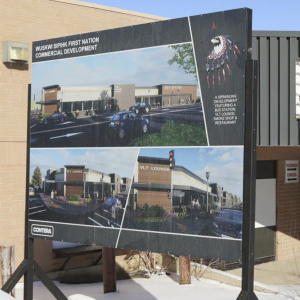
Soon northern Manitoba residents will have bus service that travels to western Manitoba. Recently Wuskwi Sipihk First Nation (WSFN) purchased the old Greyhound Bus Depot in Brandon and formed an agreement with Mahihkan Bus Lines to have part of the building as a bus terminal/depot.
The former Greyhound Bus Depot is about 10,734 square feet and located on the southeast corner of Sixth Street and Rosser Avenue. It closed its doors when Greyhound ended service in October of 2018.
Also in that same time frame, First Nation owners of Aseneskak Casino in Opaskwayak Cree Nation, received approval from the Manitoba Motor Transport Board for its Kelsey Bus Lines division to conduct public transportation throughout Manitoba. The Kelsey Bus Lines division was sold and transferred the new partnership to form Mahihkan Bus Lines as of April 1, 2019.
The name Mahihkan, in Cree, means wolf, hence their slogan ‘Travel with the pack’. Currently Mahihkan Bus Lines travels to and stops in Flin Flon, The Pas, Wuskwi Sipihk, Swan River, Neepawa, Dauphin and Winnipeg.
WSFN’s new acquisition will result in not only further expansion for the First Nation community but also expansion of travel and shipping services for northern Manitoba. WSFN also plans to incorporate some economic spin-offs with a VLT lounge, smoke shop and restaurant within the building as well.
“We had a look at this property a while back and had a good opportunity to buy it,” said WSFN Chief Elwood Zastre. “We got it for a good deal. Brandon doesn’t have anything downtown for First Nations, so we are going to convert it into reserve land. Then we will be putting some businesses in there with it being a depot for the Mahihkan Bus Lines, and then some VLTs and possibly a pharmacy, with some space for office or business rentals as well.
“There are several great benefits for our people in this new venture. It’s going to employ our people in Brandon and get the bus line going into Brandon. Now people can take the bus from The Pas to Swan River to Brandon or Winnipeg.
“This will provide affordable transportation for people with medical appointments to go to the city and back home,” said Chief Zastre. “It will also help with freight and having things sent out and arriving to the north.”
“With a trusted partner in Brandon, we will be able to offer services between Brandon to Dauphin, which will connect with our current six days a week, from Sunday to Friday, that travels between Winnipeg and Flin Flon,” Mahihkan Bus Lines Operations Manager Aynsley Smith. “We are in the planning stages, but we are hoping the run will include more small towns that had bus service before the closure of Greyhound.
“The start date for these services really depends on when WSFN finishes their renovations and upgrades to the site. Currently, Mahihkan Bus’s Fleet includes seven motor coaches, four minibuses and 4-15 passenger vans. We will be offering the same six-day-a-week service that is offered on our current routes.”
Meetings have been held between WSFN and the City of Brandon and renovations are expected to commence soon in the very near future.
“We finished the deal and are in the process of starting renovations,” said Chief Zastre. “We met with the City of Brandon last month, and as a result, we have the permits and everything ready to go.
“This venture is all for our people and our future going forward.”