


Submitted
Volunteer efforts

Heather Kindret’s Grade 9 Life/Work class from the Dauphin Regional Comprehensive Secondary School visited Dauphin Regional Health Centre and the personal care home as part of their career exploration.
The class was appreciative of facility staff for the great tour of the facility and the snacks provided.
The career development program is divided into five themes - Personal Management, Career Exploration , Learning and Planning, Job Seeking and Job Maintenance and Career and Community Experiences.
The program provides students with an overview of career development outcomes with emphasis on building positive self-esteem, exploring self-assessment, locating work information, and selecting high school courses.
Anniversary shirts
As 2022 draws to a close, the Dauphin Rail Museum commemorated both the 110th anniversary of the completion of the Dauphin Rail Station and also the 20th anniversary of the formation of the museum itself.
The occasion was marked by the creation of a limited edition CN inspired T-shirt. Here, museum president Jason Gilmour, right, presents one of the shorts to Dauphin mayor David Bosiak.
Shirts were also presented to CN Police Const. Joe Jardine and Dauphin MLA Brad Michaleski.
The life of a student at a country school
By Ed Stozek
For the Herald
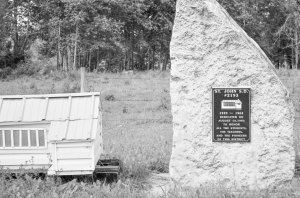
Attending the St. John one-room country school from 1958-64 resulted in a variety of life-learning experiences. Our daily routine always started with the singing of “Oh Canada” and reciting “The Lord’s Prayer.”
Having eight different grades in one room provided exposure to a wide range of events. Occasionally I took a break from working on my assignments and listened to Mrs. Kowalchuk teach Egyptian history to the Grade 8 class. Visions of pyramids and a sphinx spurred my interest.
Throughout my tenure as a student at St. John, recess and noon hour provided an avenue for a variety of games and tested the strategy of tag, hopscotch, dodgeball, soccer, baseball and cricket. We improvised playing cricket by using a baseball and a baseball bat. A piece of cordwood functioned as a wicket. If inclement weather occurred we stayed indoors for recess and noon hour and honed our crokinole and checkers skills.
When classes resumed after lunch Mrs. Kowalchuk read to us for 15 minutes. During my Grade 5 year we followed the storyline of Anne of Green Gables. As four o’clock approached it was time to clean up the classroom. Running water literally meant running to the well to get a pail of water for classroom use. Washing the blackboard, going outside to clean the chalk from the brushes or taking down the flag were all part of our school routine. There were certain rules to follow associated with flag protocol. We also followed the rule of law in Manitoba to sing “God Save the Queen” before we were dismissed.
A highlight of the school year included the annual Christmas concert. We practiced singing carols and perfected our acting skills for a variety of skits and plays. In Grade 5 we became the proud owners of a red tonette, an instrument similar in principle to a recorder. As an ensemble we learned to play “Jingle Bells” and “Twinkle, Twinkle, Little Star.”
On the evening of the concert the school was “packed to the rafters.” The annual concert was equivalent to performing at Carnegie Hall. Weeks of rehearsal paid off as we presented the program on the stage constructed for the special occasion.
Our reward was thunderous applause from an appreciative audience followed by Santa Claus giving us a brown paper bag filled with an assortment of candy, nuts and an orange.
After the concert the parents and children filed out of the school and made their way to their cars, one horse open sleighs or cabooses. Under the stars on a cold winter night the Chevys and Fords moaned and groaned before their motors finally started. For the patrons who had arrived using actual horsepower, the horses were hitched up to the sleighs. Most had unhitched the horses prior to the concert and left them some hay and oats to munch on.
My sister noted that on the way home from one concert, she found out that it was not fun to ride in an open sleigh. She personally experienced the lyrics from Jingle Bells. “We got into a drifted bank and then we got upsot.”
‘A caboose or van was generally shaped much like a modern day Boler camper except that it was made from lumber. Instead of wheels, sleigh runners were used. A small box heater fueled with wood kept the inside of the caboose warm for the passengers. A set of small round holes beneath a sliding window at the front of the caboose enabled the driver to handle the reins and communicate with the horses. The horses didn’t need much guidance as they instinctively knew their way home where they would enjoy some hay and a well-deserved rest in the comforts of the barn.
The St. John School was the last school in the area to be consolidated into the Pelly Trail School Division.
It closed its doors on June 30, 1964. That September I boarded the school bus and started Grade 7 at the Oakburn Elementary School. I now had 32 classmates in one grade. During the course of my six-year experience at St. John my grade always consisted of only three students.
A new era had begun.
Foreman at Kippan’s Mill a wealth of history
By Ed Stozek
For the Herald
In 1936, Henry Edwards spent two weeks cutting and skidding logs at Hilton’s camp located west of the Kippan’s Mill site. It was hard work as there was a great deal of snow that year.
The next winter he went to work at Kippan’s Mill. Edwards had his own men who were either paid by the month or by lumber planed from the logs that they cut. Initially. For every 5,000 feet cut, Edwards got 1,000 feet of planed lumber. He stayed at the camp all winter long.
“I never had a written agreement, never had an argument. Kippan made contracts with some people, but I never had a contract with him. Kippan’s word was good and mine was good, too,” Edwards said
A team of horses was essential for work in the bush. Edwards always kept a spare horse at camp in case of injury. Since the logs were skidded down to the bottom of ravines a horse could step on or be impaled by a limb and become lame. There were times when a horse was not able to work for more than a month.
Typically, the day’s work started at 7 a.m. with the goal to get back to camp before dark and get the logs scaled so that the men were ready to go again the next morning.
During Edwards’ second year at the camp, Kippan built a row of shacks for the men to stay in.
“There was no paper on the outside, just rough lumber. You could see the stars through the cracks in the roof,” he said.
Several years later Edwards built his own cabin. He made several additions and added wallpaper and linoleum.
“It was just like home,” he said.
“During the early years of operation there was an abundance of labourers. If you didn’t do your share of the work you were asked to leave. His word was law, don’t buck him. There was an incident where someone was stealing hay. Kippan erected a pole in the middle of the camp and said that if he caught the culprit, he would hang from that pole. The men didn’t know if Kippan was serious or not, but the stealing of hay came to an end.”
The men loved to play pranks on one another. They unhitched horses, hid saws and axes and sometimes ran into a shack and made off with someone’s cooked food.
For leisure time on Sunday many of the men visited or went fishing at Edward’s Lake. Some rode in Tom Winder’s truck box and attended dances at Crawford Park or caught a ride to Dauphin.
“I rode on that truck, I nearly froze to death.”
Edwards was promoted to bush foreman taking over from Dan Menzies. During the summer his job included scouting which ravines to cut in. When winter came he allotted these specific areas for farmers to cut.
He also ensured that the scrub was cleaned up and burned. If farmers did not follow the correct procedure then he went to the office and they did not get their lumber until the area that they had been responsible for was cleaned up.
One year, after a wind went through the park, park officials wanted the downed trees cleaned up. To prevent confusion, farmers went to Warden Bob Hands for a permit and he then sent them to see Edwards who directed them where to haul the logs from. The logs were planed at Kippan’s Mill and then the farmers picked up their quota.
By 1944, when the need for lumber diminished and labourers were hard to get, Kippan scaled down his mill operation and installed a portable steamer. Instead of 22 men he only needed half that number. Production was about 95 per cent less than in the heyday years.
For the last year of the mill’s operation, Edwards scouted the areas to be cut and that fall he did not go up to work at the mill site.
For Henry Edwards, “The minute the fall work was done I headed for the bush until seeding time.”
(Quotes from taped interviews by T. Tabulenas courtesy of the RMNP archives)
Remembering
Smith-Jackson School held a Holodomor service, Nov. 22, to remember and pay respects to the estimated 10 million Ukrainians who died in the 1932-33 genocide as a result of a manmade famine.
Here, Grade 3 student Ivanna Chetyrbok, and teacher Jennifer Chetyrbok, light candles to show that they will remember the events of the Holodomor and pay respect to the families whose loved ones suffered and died as a result of the horrific events.
Hard work and determination made dream come true
In the years following WWII the economy was booming and people had money to spend.
Cars and family vacations were becoming more affordable. Gas stations and motels soon popped up along highways to cater to the travellers.
For many years in Dauphin's south end, Sticky’s Service and Drive-Inn provided gas fill-ups and a place to have a “nip” to eat. Next door, the Highland Motel offered accommodations for the travellers.
Motels offered a basic level of accommodation and simple amenities designed to meet the needs of people who might only be staying one or two nights.
Located just off the main highway, room doors typically faced the parking lot and were easily accessed from outside of the one-storey buildings.
In 1945, Peter Perchaluk was united in marriage with Frances Koverzin. After the couple moved from Sclater to Dauphin, Peter gained employment working at various construction sites including remote locations in northern Manitoba. After honing his carpentry skills, he became his own independent contractor. With determination and a hard work ethic he began constructing residential buildings in Dauphin.
Located at 214 Main St. North, Peter also constructed a commercial building that became the location for a Simpson's catalogue order office in 1949. In 1950 he also built the store for Fred Chaykowski at the corner of Main Street and Seventh Avenue.
In 1951 Peter erected a home on Fifth Avenue Southeast where the Perchaluk family lived until 1959 when the dream to start a motel business venture was fulfilled. Peter used his knowledge of construction to build the Airport Motel located at 2050 Main Str. S. After operating the business for several years, Peter and Frances decided that building a motel closer to Dauphin's town centre would be a wise business move. After purchasing an empty lot next to Sticky’s, construction began on the Highland Motel.
As advertised in the Dauphin Herald, the official opening of the Highland Motel was scheduled for Monday, Aug. 31, 1964. The public was cordially invited to attend the ribbon cutting at 1:30 p.m. and along with coffee and doughnuts, tours were offered of the rooms in the attractive brick-finished L-shaped 18-unit motel.
“The eighteen units included single and double rooms, rooms with kitchenette facilities and executive suites. The rooms were electrically heated with thermostatic controls for each room, wall-to-wall carpeting and matching furnishings.”
Several years later, four more rooms were added to the original structure.
The 1960s and 1970s proved to be busy times in the motel business. Peter was kept busy with the work associated with the motel maintenance and Frances handled the office, reservations, bookkeeping and other business-related tasks.
The majority of the guests checked in the late afternoon or early evening, however, it was not uncommon for someone to ring the buzzer at two in the morning even if there was a “No Vacancy” sign posted on the office door.
The office was a hub of non-stop activity as once the guests registered they utilized the ice-machine, bought soft drinks or stocked up on potato chips and chocolate bars. They also came to the office when they checked out in the morning, paid their bill and returned their room key.
The whole family took turns to answer the switchboard, as guests made many phone calls at all hours of the day. To make a telephone call from the room, one had to call the motel office switchboard. Once the call was received, the number was dialed of the person who the guests were trying to reach.
On weekdays, travelling salesmen representing their companies regularly reserved a room at the motel. Summer months tended to be busy with tourists, especially during the fair and the Ukrainian Festival when getting a room without a reservation proved to be difficult.
The business landscape in Dauphin’s south end has changed since the 1960s and the 1970s. In 2006 Sticky’s was replaced with a modern Co-op convenience store and gas bar.
In 2021 the Highland Motel was demolished and today the Dollar Tree is the main tenant of the new mini strip mall.
Currently, only the Highland Motel sign still stands as a testament to the once thriving motel location.
Striking gold at provincials
The top skaters from Manitoba and Saskatchewan competed in Stonewall at the Junior/Senior Sectionals over the weekend.
Dauphin’s Breken Brezden finished first in the short skate and first in the free skate to captured the gold medal in the junior ladies event.
This earns her a spot at the Skate Canada Challenge the first week in December, where the top skaters from across Canada will compete to earn a spot to the Canadian Nationals in Oshawa in January.
“I have a dream” an inspiration for local educator
By Ed Stozek
For the Herald
On Aug. 28, 1963, approximately 250,000 people participated in the March on Washington for Jobs and Freedom. The event concluded with Martin Luther King Jr.’s speech, “I Have a Dream.”
With an appeal to end economic and employment inequalities, King outlined the long history of racial injustice in America and encouraged his audience to hold their country accountable to its own founding promises of freedom, justice and equality.
Originally slated to speak for four minutes King went on to address the crowd for 16 minutes delivering one of the most iconic speeches in American history. The March on Washington and King's speech became turning points in the Civil Rights Movement.
One of the March on Washington participants, Ivan Innerst, had grown up in Los Angeles where it was common to interact and be friends with 90 miles from Washington, D.C., and early on the morning of August 28, along with members of the York Action for Peace group, Ivan and his father boarded a chartered bus and headed to their destination.
At the grounds of the Washington Monument, participants greeted each other with handshakes and hugs. Waving their protest signs and singing songs such as “We Shall Overcome”, they began the one-mile march down Constitution Avenue from the Washington Monument to the steps of the Lincoln Memorial.
On that sunny and hot August day Ivan noted that it was a beautiful experience to stand shoulder to shoulder with thousands of other freedom marchers.
A state-of-the-art sound system greatly contributed to the peaceful protest.
Along with the speeches, music played a vital role in the March on Washington. Ivan was moved by the folk and spiritual songs performed by artists including Joan Baez, Odetta, Mahalia Jackson, Marian Anderson, Peter, Paul and Mary and Bob Dylan.
Bob Dylan had written “Blowing in the Wind” the previous year and in 1963 the song was made famous in a recording by Peter, Paul and Mary. Dylan’s lyrics echoed about fighting for the rights and equality of people in society.
“How many years can some people exist, before they are allowed to be free? The answer my friend is blowing in the wind.”
Music was one of Ivan’s passions. Billed as Freeberg and Friend, Jim Freeberg and Ivan performed many of those familiar folk and spiritual songs as a duo at social functions at the Jamestown campus in 1962-63.
Near the steps of the Lincoln Memorial, Ivan stood fairly close to the podium where the musicians performed and civil rights leaders spoke for almost three hours issuing urgent calls to action.
Then the “Queen of Gospel,” Mahalia Jackson, sang two spiritual songs and was followed by Martin Luther King Jr. who delivered his iconic speech, “I Have a Dream.”
As one of the participants in the March on Washington, Ivan Innerst experienced an important event that he will always remember.
Years later at the Dauphin Regional Comprehensive Secondary School, he used “I Have a Dream” as a teaching tool in his Grade 11 English class.
The students listened to and analyzed the effectiveness of this timeless speech and how it could move an audience of 250,000 people.
“I have a dream that one day on the red hills of Georgia, the sons of former slaves and the sons of former slave owners will be able to sit down together at a table of brotherhood.” (Martin Luther King Jr.)
Parkland Ukrainian Family Fund supporting 20 families relocated from Ukraine
Submitted by
Jim Perchaluk
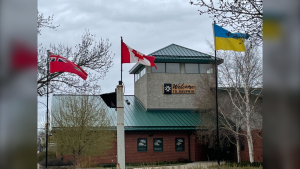
On behalf of the Parkland Ukrainian Family Fund, I am pleased to provide a positive update on our support for Ukrainian families in Dauphin.
The fund is now directly supporting 20 families from Ukraine. In addition to these 20 families, there are a number of citizens from Ukraine who have relocated to the Parkland to work on farms or reside with family.
Our support to 20 families has definitely exceeded our initial expectations when the fund first started last April at which time we had planned to assist two or three families.
With the generosity of the people throughout the Parkland and province of Manitoba, we have received cash donations along with many donations in kind, such as housing, household furniture, clothing and bikes to support 20 families.
Our support group of volunteers have provided transportation from the airport in Winnipeg to Dauphin, along with rides to the grocery store, bank, work, medical appointments, English classes, etc.
A great example of the excellent support services provided by the fund, with a financial contribution from the Dauphin and District Community Foundation, is the set-up and funding of English classes two evenings a week to assist in the learning of our language.
As families arrive there are some that have good English language skills and those that cannot speak any English, so the classes are adapted according to the individual needs.
They are quick learners, so even the beginners progress well within several months, which helps in developing their employment skills.
With our volunteer support we have, therefore, been able to welcome and support 56 people from Ukraine who have fled the war.
Of the 31 adults who have arrived, and are able to work, most are finding jobs in our community. There are 25 children who are either in our schools or day cares and many participating in dance or swimming lessons.
All are quickly adapting to our Canadian life and are very appreciative of the support and opportunities that are being provided by the fund and community.
As these families integrate into our community, they are making a great addition economically, educationally and socially as new citizens of Dauphin.
When the fund first started accepting families, we made a commitment to the first 12 families to provide financial support for 12 months of housing, six months of transportation, and three months of food and incidentals.
Once we went beyond acceptance of the first 12 families, we had to scale back our financial support to stay within our financial means, therefore, our financial commitment to the latest families were for three months of food and housing, plus support services. Total expenses to date from the fund for the families in the Parkland have been $133,000 and another $142,000 has been allocated to complete our commitment to the 20 families.
The war in Ukraine rages on today and many more Ukrainians are continuing to flee to countries like Canada. Many however, arrive in cities and are left to fend for themselves with little or no support services. Our community, on the other hand, has welcomed those who wished to come to Dauphin, and we can be proud of the support which we have provided through the generous donations and countless hours of volunteerism in support services.
As I have said in the past, the Parkland Ukrainian Family Fund will assist as many families as the generosity of Dauphin and Parkland communities will support through donations and volunteering.
At this time our fund has maxed out financially in its commitment to assisting the 20 families which are here now. Support to additional families will depend upon new donations to the fund.
On behalf of the Parkland Ukrainian Family Fund, I thank all those who have already generously donated to the fund and encourage those who still wish to help, to donate to support additional families.
Receipts for income tax purposes will be provided in the next several weeks to all those who have made cash donations.
For more information call Larry 204-648-5904.
Fire education
The Swan River Fire Department hosted an open house on Wednesday evening (Oct. 19), inviting all age groups to visit the fire hall as well as the public education trailer, where everyone could learn what to do in the event of a fire.