
Young receives award from Red Cross
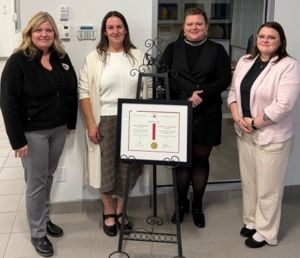
A local volunteer with the Red Cross has been identified for her years of service and dedication to helping others during a time of crisis. Melanie Young was presented with the Order of Red Cross, the organization’s highest honour, on October 7, 2026, in The Pas, surrounded by family and friends. Young has spent over a decade helping others through the Red Cross.
“I’ve been a volunteer with the Red Cross for 14 years and am going into my fifteenth year,” said Young. “Initially, a friend who was working with the Red Cross was trying to build up a team and asked me if I would participate.
Progress is being made at DRHC, says Slate
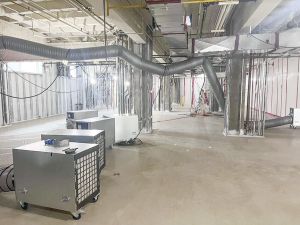
While there is still no timeline in place for the complete reopening of Dauphin Regional Health Centre, Prairie Mountain Health CEO Treena Slate was in Dauphin, last week, meeting with engineers and contractors trying to nail down something more definite.
“We’re meeting with our clinical folks, the engineering company, and our construction company, and working on developing a schedule and a set of priorities based on what the clinicians see are the priorities,” Slate said, adding all options are being explored should systems such as HVAC and other infrastructure or medical gases become available.
“So we are hoping for some overarching, high-level timelines or estimates in terms of what the public can expect in the coming months. But with what we know right now, we want to try to plan with what systems we have, so we can open sooner rather than later.”
Slate added some announcements are expected soon around cancer care, hemodialysis and the expansion of lab services to support patient care.
“Around some of the tests that will be offered. That’s important. We want to make sure that we’re supporting physician practice and clinic practice,” Slate said, adding more lab services will also benefit the public in tangible ways.
“Because people are right now having to travel for some of those tests, and we want to limit that as much as we can.”
With the emergency department open and other services increasing, the need to get more support departments up and running is more urgent.
“We are working on also getting some mobile trailers in to support some of the services that are going to be shut down for a long period of time. We’re not going to have a sterilizer for a long period of time. We’re not going to have a pharmacy for a long period of time,” she said.
“So we’re working on getting some mobile supports for those services in, so that we can get things up and running as soon as we can.”
Those services which can be offered, such as emergency medical services, have been operating well and have been busy, Slate added.
“The volume, the number of patients we’re seeing in the Dauphin emergency room, are pretty close to what we normally saw in the Dauphin emergency room. So that’s a good sign that people are accessing that service,” Slate said, adding PMH is constantly looking to tweak operations to make things more streamlined.
(The ER) has actually been working okay. I mean, it’s not the same as it always was, so we’re working on improving accessibility to spaces in the emergency department. Those are things that we can expand sooner rather than later in the emergency department to get it a little bit more functional and accessible.”
From the beginning, much of the remediation work has focussed on the hospital’s crawl space, which houses many of the mechanical systems and was completely filled with silt from the flood waters. Meaningful progress on that work has been made, Slate said.
“They’ve done a tremendous job of cleaning out that silt. After that’s cleaned out, they still have to do soil testing and some remediation work in there, and then they can at least get at some of the infrastructure to start replacing it and get working on that,” she said.
“It’s not completely done, but they’ve made really good progress on it.”
Throughout it all, feedback has been positive, Slate said, from the public and from PMH staff.
Patients and staff are pleased things are getting closer “normal” and ensuring critical services such as cancer care and hemodialysis back close to home before the snow flies is really key, she said.
“The staff that can be home and working, I think are, for the most part, happier to be here. But really, everybody wants everything back up and running just as it was. We want that, too, of course,” Slate said.
“We just have to work with the project teams on getting things done as soon as we can, and making sure that the clinicians and the frontline staff are involved in that planning, so that they can inform what makes sense in terms of their workflows and providing the most appropriate care for patients.”
Mayor hopefuls tackle crime issue in the city
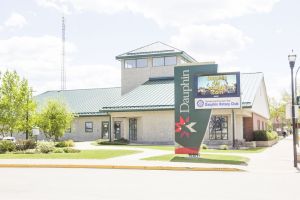
To continue disseminating information to voters as they make their decision about who will serve as Dauphin’s next mayor, the Herald posed another question for candidates to answer.
This week we asked, “Crime continues to be a major issue for local voters. Considering the municipal government has no power to legislate criminal laws, has no influence over the courts and no real control over RCMP operations, what role do you see for the City in the fight against crime?”
Answers were received from two of the three candidates. They follow:
Steve Sobering
Crime and public safety are major concerns for our residents and local businesses, and they deserve practical action. While criminal law, the courts and the operational control of the RCMP fall largely outside municipal authority, the City still has an important role to play through effective local policing, safe public spaces, and collaboration with the organizations responsible for treatment and support services.
Policing is one of the City’s largest annual expenses, costing approximately $3 million, with the Province providing a rebate of about $1.2 million. Unlike many smaller municipalities, the City has a significant responsibility for funding its local RCMP service. One of the most important things we can do is make Dauphin an attractive place for officers to live and work. For the first time in many years, our local RCMP detachment has a full complement of officers, many of whom are recent graduates. Mayor and council also meet regularly with RCMP leadership to discuss local concerns and policing priorities. The introduction of street patrols, an RCMP initiative supported by council and welcomed by the community, is one example of this collaboration.
We must also recognize that crime, addiction and mental illness are related issues, but they are not interchangeable. Criminal activity, drug dealing, trafficking and behaviour that threatens public safety must be addressed. At the same time, people struggling with addiction or mental illness need access to appropriate treatment, mental health services and housing suited to their circumstances. Enforcement alone will not solve these challenges, nor will providing shelter without access to the right supports.
The safe warm space established through the Manitoba Métis Federation was an important initiative to help people get out of the cold during winter. However, an emergency warming space cannot be expected to replace specialized mental health care, addiction treatment or appropriate transitional housing. We also have a responsibility to residents, customers and business owners who have experienced threats, vandalism and disruptive behaviour. We need a model that provides compassion and support while maintaining clear expectations for public safety and cleanliness.
I will strongly advocate for greater provincial investment in organizations such as the Addictions Foundation of Manitoba, Echo Housing and appropriate mental health facilities. People dealing with mental illness and addiction deserve access to treatment and support based on their needs. We need more trained staff, appropriate spaces and consistent funding.
I also believe we should work with the relevant health authorities and local service providers to explore establishing the safe warming space at our health centre.
With appropriate staffing, security and sustainable funding, a seven-day service could help assess people’s needs and connect them with the right providers. Co-ordinating services in one location may also reduce duplicated costs and allow more resources to be directed toward care.
As mayor, I would continue working with the RCMP, local businesses, community organizations and other levels of government to identify problems, support effective solutions and measure progress. Where programs are working, we should advocate for their expansion. Where they are not, we must be prepared to make changes.
Residents deserve safe streets, businesses deserve to operate without fear of threats or vandalism, and people struggling with addiction or mental illness deserve appropriate care.
We can work toward all three goals through practical action, collaboration and accountability.
Keith Durston
I have to disagree with you, we do have local control on policing. We pay the police costs so we have the say.
With that being said it requires a multi-disiplinary approach utilizing local stakeholders and commuting our concerns to the local police. Why are we double paying for lower quality of policing with implementation of security guards?
I plan to be an effective communication for the people of Dauphin and to listen and implement the ideas and concerns from the citizens.
The potential for this city is astronomical due to the amenitiies available within 15 to 20 minutes, community spirit, and volunteers. The rec centre, the cinema, summer games just to name a few accomplishments of the people of the City of Dauphin.
I am in no way going to infer youth are responsible for the crime influx by suggesting more recreational and constructed participation. A good thing for sure in the upbringing. Crime is not transferable to one sector. Crime is a choice one takes to make and must be stemmed by all means necessary.
Clippers sail to preseason tournament title

The Dauphin Clippers hockey team won the Glenboro Wildcats Preseason Tournament, this past weekend.
The Clippers opened the tournament with a 5-2 win over the St. Thomas Aquinas of Kenora, Ont.
Ethan Zalischuk with two, Riley Durston, Josh Beyette and Forrest Karlson scored for Dauphin, while Ben Miner picked up the win in goal.
In the semifinals, Dauphin beat Boissevain, 9-0, behind a three-goal effort from Brayden Budolowski.
Samson Bourgouin added a pair, while Loden Campbell, Larson, Brandon Wood and Carter Smigelsky had singles. Xander Perih earn the shutout in goal.
Dauphin clinched the title with a 6-2 win over the host Wildcats.
Budlowski led the way with three goals, with Wood, Jordan Height and Axel Dunning adding singles. Miner earned the win in goal.
Clippers coach Drew Kulcheski felt the Clippers were strong in all aspects of the game.
“Even when we had a little bit of adversity in some of the games, we were able to rally around each other and find a way every shift to create some energy and make something happen,” he said.
Kulcheski feels there is a lot of potential for this team, noting they are working on new systems.
“But I think once we get going and we develop later in the season, we’re going to be a team to look out for,” he said.
The Clippers open the season, Saturday, when they host Glenboro at 8 p.m.
Noting the tournament final was Glenboro’s second game of the day, Kulcheski expects a much tougher game from the Wildcats.
“I’m expecting them to come out with a little bit more energy than they did (Saturday). But our guys are also going to be playing on a little bit bigger ice and I think they’re going to have the chance to use their speed and their skill and create a lot of opportunities for themselves and keep the momentum going all the way to March,” he said.
The goal for the season is simple.
“Given the last couple seasons we’ve had, I think it’s championship or bust,” Kulcheski said.
“We’ve got a team here that’s really hungry to win. We’ve got some Grade 12s that have lost in back-to-back finals and they don’t want to lose three. We’ve got a couple new guys that really want to have a winning season behind them. I think it’s finals or bust for us this year. That’s our expectation. That’s what the players want. That’s what the coaches want. So we’re looking forward to it.”
Dauphin will complete the opening weekend by traveling to Boissevain, Sunday, to play the Broncos at 3 p.m.
Gridiron Clippers look to end the season strong
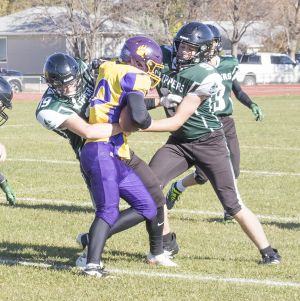
After forfeiting a game in Moosomin, the previous weekend, the Dauphin Clippers football team returned to the gridiron to host the Virden Golden Bears, Sunday afternoon.
In a defensive battle, the Clippers fell 21-14, dropping their record to 2-3 on the season.
Given the blustery weather conditions, Clippers head coach Nathan Thacker felt neither offence would have much of a passing game.
“You’re going against the wind, you’re going to have to run the ball and teams wanted to throw the ball a little more with the wind,” he said.
Both of Dauphin’s touchdowns came from the defence when Virden tried throwing into the wind.
The forfeit was due to a lack of players.
“We were short enough bodies and had enough health issues that we couldn’t take a chance on going,” Thacker said, adding the Clippers are sharing athletes with the Gilbert Plains and Grandview volleyball teams, as well as some hockey players.
The Clippers end the regular season in Souris against the Southwest Sabres, Saturday, at 1 p.m.
Thacker hopes to continue to see the Clippers grow as a team.
“Despite the loss, our defence played so solid and our offence had the best series late in the game. The growth of a bunch of young players is what we’ve been aiming for all year. And we’ve got a chance here, if we can perform against Southwest, to potentially host a playoff game on the consolation side,” he said.
“And that’s something that I think is a great thing for our kids to get extra games, no matter if they’re on the A-side or the B-side, would go so much towards their development.”
The race is on for Town mayoral candidates

The Star and Times held a question-and-answer session with the two town mayoral candidates: Ainslie White and Lance Jacobson.
Q1. What qualifications and experience do you feel you have to be mayor of the town?
White: The role of mayor is for an individual who can lead while creating a positive culture both within administration and council, where decisions are made as a group with everyone’s best interest at heart. The last 16 years of my professional life provided me with extensive training and experience through leadership, associated training, leading meetings, presenting to large organizations, opportunities to liaise with governing bodies, and legislation interpretation. My professional experience has prepared me to lead our council and staff as mayor of our town. I would use my experience to encourage council to gather information, consult subject matter experts, and include those directly involved in the outcomes, while making educated decisions for the betterment of our town and Valley.
Jacobson: First, my knowledge of the true responsibilities of the mayor’s office. I have learned policies and regulations, and the procedures required to build and enforce them. I understand municipal finance documents, a key requirement for managing municipal funds and operations. Through my experience in governance from councillor to Mayor, I realize the importance of prioritizing professional representation. I possess the ability to lead the town in defining its strategic vision and acting on long-term development and infrastructure needs. Additionally, remaining professional during times of crisis and relying on my past experiences keeps me well-prepared.
I am accustomed to working closely with the public. A commitment to good communication helps me in negotiations and in bridging gaps between different community organizations and fellow council members.
Q2. What are your top three priorities or focuses in town and why do you consider them priorities?
White: Safety – Safety is at the top of the list. As the General Investigation Section (GIS) unit continues to advance with arrests and enforcement, I feel strongly that we need to keep that momentum. I remember when there were picnic tables out front of businesses where folks could have a cup of coffee or sit on a public bench. Many of these have been removed with the intent to protect worker and public safety. I want to restore the general feeling of safety in our town where residents can leave the grocery store without fear, and store owners don’t feel they need to lock their doors during hours of operation.
Healthcare - Access to healthcare in Swan River affects everyone in the Valley regardless of age or specific location. With continued collaboration with valley communities, this must remain a priority. Our hospital has maternity ward equipment; however, we currently don’t provide maternity services. This is a priority to me as a mother, and it is directly involved in our economic development and the growth of our town. We need our ambulances fully staffed and all care home beds to be available for use. Our precious aging community cannot stay in the valley without consistent access to healthcare.
Senior Support – Approximately half of our valley residents are a part of the senior community, yet we have not prioritized their support services to enable these folks/ourselves to stay and age here at home in the valley. We need to collectively fund Service to Seniors, provide support for operating costs, and regulate costs for transportation within and outside of Swan River for access to services. I want to work with Service to Seniors and the Age Friendly Committee to access available funding, ease the financial burden currently being experienced, and increase time/resource support with volunteers.
Jacobson: Public Safety – To continue the hard work and collaborative efforts that resulted in our local RCMP detachment receiving a General Investigative Section (GIS). I vow to stay on this front by continuing to lobby other levels of government to ensure permanent funding for the GIS in Swan River. Furthermore, I will continue to lobby for bail reform at the provincial and federal levels to stop the proverbial revolving door.
Economic Development and Medical Services – I will focus on retaining and attracting businesses to Swan River by providing further incentives for them to thrive within our limits. A priority is to continue to review and adjust our incentive planning, focusing on a vibrant Main St. to ensure storefronts are revitalized and inviting. Regarding healthcare, the province has proven that Swan River is a regional hub. Having successfully secured a CT scanner, I will now focus my time on ensuring Swan River becomes a regional stroke center.
Partnerships – First, I believe communication among local levels of government is vital in rural Manitoba. No matter how difficult, I will continue striving to ensure our council fosters strong relationships through mutual understanding and agreements on topics like shared services, a rural water agreement, and recreation. Second, regarding partnerships with stakeholders on large capital projects, I know firsthand we cannot do everything alone. I will pursue grant opportunities and collaborate with federal, provincial, and local levels of government, along with First Nations and the Manitoba Metis Federation, to build the consensus and communication needed to achieve our community goals.
Q3. What level of knowledge and experience do you have about governance, budgeting and infrastructure?
White: Governance is defined as “…the system of rules, practices, processes, and structures by which a country, corporation, organization, or project is directed, controlled, and administered”. I have years of experience directly involved in the establishment, implementation and training of processes within large organizations and small businesses of the aforementioned.
Intertwined within the governance is budgeting. Basically, how can we continue to improve and achieve outcomes with the funding available? This is completed in conjunction with professional accountants & making good decisions with the money we have. Regarding infrastructure, we have a large window of opportunity within the town. I have much experience developing and implementing preventative maintenance and management programs for infrastructure in corporate and municipal capacities. Low-hanging fruit for improvement in this area includes establishing a full list of town assets, defining their specific preventative maintenance programs/schedules, and implementing effective systems to ensure the town protects our assets in a proactive manner, rather than reactively.
Jacobson: I have a strong foundation in good governance, having served on council for 16 years—eight as a councillor and eight as mayor—as well as spending the last four years as a board member of the Association of Manitoba Municipalities. The strongest quality I bring to the table is a commitment to transparent communication and public accountability. I promise to maintain professional conduct at council meetings while always respecting the public voice.
Municipal budgets are complex and take time to dissect. I have consistently encouraged councillors to prioritize the short- and long-term financial health of the town. I welcome challenges and debates to ensure taxpayer dollars are spent as efficiently as possible. I also believe in strategic planning, a responsible process where projects are approved based on merit, community input, and financial feasibility. This experience ensures we can maintain existing assets while delivering the new services our taxpayers deserve.
Q4. How would you implement partnerships and demonstrate a good working relationship with RM Swan Valley West and other municipalities in the Valley?
White: I am committed to working in partnership with all municipalities and communities in the valley. I do not have any historical relationship barriers built with communities to tear down, whereas I am in a position only to build relationships. This includes building relationships with the leaders and councils in our valley to increase our reach with provincial and federal leaders. Presenting requests as a united valley will strengthen our lobbying efforts and associated outcomes.
Jacobson: I believe in a strong Swan River Valley; the success of our rural areas only makes the town stronger, and vice versa. While relations have proved difficult in recent years, I will continue leading our council’s efforts to enhance partnerships with all our municipal neighbours. While it takes two to tango, I can promise that I will always be eagerly waiting on the dance floor.
My approach remains consistent with how I have always entered negotiations: willing to listen and meeting colleagues with respect, while fiercely representing the taxpayers of Swan River.
Q5. What ideas would you bring to the council table to look at attracting new business and building economic development in Swan River?
White: I suggest that council review by-laws and procedures that are outdated or misaligned with our current needs. Identify what the barriers are for developers and investors through discussion and direct involvement of developers and investors. Council needs to understand why some investors are looking to build outside of Swan River and how we can bridge those gaps. Our local Chamber of Commerce needs to be reignited with businesses on the board, involved in decision-making for promotion, programs and growth. Council needs to look further than only business expansion and include the expansion of housing complexes for all levels of income. I want to encourage the council to work with developers and streamline applications and approvals so developers want to build and invest here.
Jacobson: I believe in the need for an economic development officer, and not just for the town; I would support this position to be inclusive of the entire Swan River Valley. I would be very open to partnering with other municipalities for the opportunity to sell the Swan River Valley.
To achieve this, the work behind the scenes demands a great deal of time. From grant writing, local incentives to business retention, federal and provincial advertising, and industry-specific marketing.
Maintaining a high standard is essential, as good business attracts good business. To properly sell Swan River, we must be realistic and professional in developing our town, particularly within a competitive rural market.
Q6. How do you propose to help Swan River with the issues surrounding homelessness, addiction and crime? And which local agencies would you like to see council work with to achieve goals?
White: In many cases, a lack of housing is the underlying root cause of crime and addiction. While building relationships with ministers, I want to collaborate with communities in the valley and apply pressure using bylaws to hold Manitoba Housing & Homelessness accountable for the dozens of homes in our community that are in a derelict condition. The province must take responsibility for the condition and livability of the homes they have provided in the town, which are no longer inhabitable and boarded up. I would like to encourage council to work with our already embedded organizations such as Teen Challenge and the Canadian Mental Health Association. Organizations such as those have many connections and resources available, as well as experience with what has worked and what hasn’t. We need to reach out to other municipalities that have successfully made improvements in these areas and gather information to continue moving forward in Swan River.
Jacobson: Regarding homelessness and addiction, this is a complex issue spanning multiple layers. We must acknowledge the difficult reality that some individuals choose this lifestyle, while focusing support services on those willing to accept help. I propose lobbying for supports ranging from housing to addiction and crime intervention to directly assist those ready for change. This is a far-reaching issue; therefore, I believe this initiative should be led and funded by the province and organizations outside of Municipal Government.
On the crime front, we will continue lobbying the provincial and federal governments to secure the GIS program permanently for the Swan Valley RCMP detachment. Regardless of personal situations, everyone has the right to feel safe in our community, period.
Q7. What lessons can be learned from the flooding that took place this summer and how could council be more emergency-prepared for the future?
White: In my experience, from a professional health and safety standpoint, the town should continue with the land survey and professional consultation currently underway, along with the provincial assessment. As the assessment hasn’t yet been completed, my opinion of high-level lessons learned includes, but isn’t limited to;
-Water level forecasting, communication tool assessments and implementation
-Evaluate building a dyke around Swan River and other water routing options for prevention
-Clearly establishing direct contacts provincially and within municipalities to ensure the most efficient use of resources during an emergency
-Public education for property protection and emergency response
-A formal process established for post-emergency timely reviews by council and the province
-Tabletop reviews/discussions of various flood scenarios to find gaps in planning and preparation
-All potential emergencies must be practiced to ensure those with responsibilities understand what those are and how to act on them efficiently
Jacobson: First, we need better funding relief for affected properties. I will encourage our council and utilize my position as an AMM board member to lobby the province to establish a fund that delivers real-time support to affected properties. While federal disaster relief exists, it can take years for people to see assistance when they need help immediately after losing their homes. People needed help immediately!
Second, communication requires improvement. While the Town of Swan River has solid disaster control systems, communication among large governments, external organizations, and private entities can be enhanced. I commend the hard work done during the recent flooding, but optimizing the timing of critical decisions through good communication systems will improve future outcomes.
Q8. Swan River is in need of a new or upgraded arena. What is your personal take on what needs to be done and what methods would you pursue to make it happen?
White: I have recently had the opportunity to review the assessment and recommendations presented in 2018 by WSP out of Winnipeg with respect to the Centennial arena. The report clearly states that this facility can certainly be upgraded and maintained to a level to provide use to the community for many more years based on the upgrades detailed herein. In 2018, it was noted that a new arena would easily cost upwards of 20 million dollars. In 2027, I would imagine that number to be significantly larger. I would encourage council to pursue an updated assessment inclusive of the upgrades recently completed/invested in, for continued use of the arena with the goal of protecting our assets while promoting economic development. The arena is used by all communities in the valley in various capacities. I would propose we move forward with the inclusion of the perspectives and ideas from all involved as part of the data-gathering effort, towards an informed decision. This includes input and involvement from all valley communities and the Swan Valley School Board.
Jacobson: A vibrant and growing town requires recreation facilities that serve the community and promote healthy lifestyles. Swan River and the Valley have always been at their best when our communities could gather in places to meet, play and respect each other.
The Town of Swan River realizes this is a large and complex project that requires the community and its residents to work together so we can be successful.
Replacing a 60-year-old arena with something new takes a tremendous amount of planning, work and caution. It also takes volunteers who are dedicated to making our Valley and town a better place.
The Town of Swan River has partnered with the Swan Valley Legacy Committee (SVLC). It consists of dedicated residents from all over the Valley who have approached this project with a determined pioneer spirit. SVLC has committed to applying for grants, fundraising, and consulting with community groups to ensure we have a successful plan that has the least impact on local taxpayers.
We continue to talk to the federal and provincial governments and understand that this project can only proceed with their involvement.
Screaming good time

The Northwest Regional Library held their annual Spooktober celebration this past weekend (Friday and Saturday, Oct. 16 and 17), at the Swan Valley Historical Museum. Hundreds of Valley residents, of all ages, attended the event and many left trembling. Pictured here, Lee and Blake Evans doing their best to leave a lasting mark, scaring the locals...More on A9
Blizzard to host Northern Manitoba Impact Tour

By Derek Holtom
No one can say the Manitoba Junior Hockey League is averse to trying new things to help grow the league.
Case in point – a pair of upcoming games for the Northern Manitoba Blizzard will not take place in The Pas, or even Opaskwayak Cree Nation, the birthplace of the franchise. In fact, they’ll take place in Cross Lake and Norway House, two communities who not only love hockey but have produced many MJHL stars over the years. The Blizzard are dubbing it the Northern Manitoba Impact Tour.
“As an organization we believe our responsibility goes beyond winning hockey games,” said Blizzard President of Hockey Operations and Head Coach, Josh Gratton in a press release. “We have an opportunity to use the Blizzard to bring people together, inspire youth and create opportunities across Northern Manitoba. This tour is a big step toward making this a team that the entire North can call its own.”
As noted, these two communities have produced some very talented MJHL players through the years – players such as Brady Keeper, Justin Nachbaur, and Tony Apetagon (who played for both the Blizzard and the Blues ironically). But now fans there can see the league these players starred in, rather than having to drive hours to see them elsewhere.
“For some of these kids, seeing a Junior A Hockey game may be something they’ve never experienced in their own community,” Gratton explained in the press release. “The Northern Manitoba Impact Tour is about more than hockey. It’s about bringing our team to the communities of the North, building relationships, inspiring young people and show them they have a place in the game.”
• The MJHL Manitoba Liquor and Lotteries three stars are headlined this week by forward Brody Green from the Dauphin Kings. He earned his honour in three games, scoring twice and adding four helpers for six points.
Next up is two-time MJHL champion Marlen Edwards from the Niverville Nighthawks. The high-scoring forward had three goals and three assists for six points in two games last week. In just five games this year Edwards has been averaging three points a game. At that pace he’ll easily win the scoring race.
The final winner is forward Treycen Wuttnee from the Waywayseecappo Wolverines. In three games he scored twice and added four helpers to earn his nod.
• After a bit of a dry spell, the MJHL trades started flowing again recently.
Starting us off is the Selkirk Steelers sending a player development fee (PDF) to the Weyburn Red Wings of the SJHL for forward Jacob Morrison. The Surrey, B.C. native had a goal and an assist in six games this year.
The Winnipeg Monarchs sent forward Shea Chronley to the Soo of the NOJHL for a PDF.
The Virden Oil Capitals traded netminder Adam Courchesne to the Dauphin Kings for a PDF. He only appeared in one game this season.
The Northern Manitoba Blizzard sent defenseman Ashton Dzeba to the Winnipeg Blues for a PDF. He was held pointless in 30 games last season with the Blizzard.
The Winnipeg Blues sent defenseman Mason Millerto Red Lake of the SIJHL for a PDF. He only appeared in one game with the Blues this year.
The Swan Valley Stampeders shipped defenseman Cade Bolding to Calgary of the AJHL for a PDF. Bolding had 13 points last season with the Stamps, but did not suit up with them this year, after requesting a trade to play closer to his Alberta home.
And finally, the Northern Manitoba Blizzard shipped forward Gavin Winterstein to Smith Falls of the CCHL for a PDF.
Larson named Canadian Rodeo Bareback Champion

For more than 50 years, the Canadian Finals Rodeo
(CFR) has stood as the pinnacle of professional rodeo
in Canada. Established in 1974, the CFR was created
as the championship event of the Canadian
Professional Rodeo Association (CPRA), bringing
together top rodeo athletes to compete for national
titles, championship buckles, and their place in
Canadian rodeo history.
Today, the CFR is recognized as Canada’s national
rodeo championship and one of the premier western
sporting events in North America. Each fall, the country’s
best competitors battle for championship glory
across rodeo’s most iconic disciplines, including bull
riding, saddle bronc, bareback riding, barrel racing,
steer wrestling, team roping, tie-down roping, and
breakaway roping.
The road to the CFR is earned, not given.
Throughout the season, competitors travel thousands
of kilometres competing at rodeos across Canada in
pursuit of a coveted qualification. Only the sport’s elite
advance to the championship stage, where careers are
made and legends are born.
Since 2008, competitors have carried their season
earnings into the finals, with money won during the
CFR contributing to the overall championship race.
This format ensures every ride and every run can
impact the final standings, creating unmatched drama
and excitement inside the arena.
Beef and Barley 2026 King and Queen

Major Pratt School’s largest and only high school fundraiser is the King and Queen Competition. It runs from the first day of school in September until the Friday before
Thanksgiving, culminating in the Beef and Barley Pageant. Throughout this time, the entire high school population is divided into 6 areas: Russell South, Russell North,
Inglis, Binscarth, Waywayseecappo and Russell Rural. Students from each group choose a king and queen candidate to represent their area and begin fundraising by
selling tickets for cash prizes provided by student council as well as other unique fundraisers that have included movie nights, beauty days, car washes and detailing,
silent auctions, bingo nights, paint and craft nights, fall suppers, volleyball clinics and tournaments, and so much more! The winning group is the area that brings in
the most money. Their king and queen are crowned at the high school Beef and Barley Pageant and fulfill various duties for the town during the Thanksgiving weekend.
Money raised throughout these five weeks is equally divided between extracurricular and academic initiatives. These include: class field trips, offsetting the cost of the
yearbook, grad, grad bursaries, school sports and student council activities – including gym blasts, multimedia presentations, dances, guest speakers, artists in the
school, spirit weeks, etc.
This year’s area groups went above and beyond in their efforts, raising a total amount of $38,136.05!
Congratulations to the 2026 Beef and Barley Queen and King, Ava Melnyk and Aiden Chuchmuch, who represented Russell Rural. Their group raised $11,525.45! Second
place went to Waywayseecappo with a total of $6396.00 and third place went to Inglis, raising $5562.00.
The winners of this year’s cash prizes are: 1st prize - $500 – Linda Genaille, Russell, MB, 2nd prize -$300 - Irving Galang, Russell, MB, 3rd prize - $200 – Levi Derkach,
Silverton, MB
Big shout-out to the king and queen candidates and the managers from each area for all their hard work in organizing events. Major Pratt School would like to give a
special shout out to Adam Bunn and Erika Schappert, the 2026 Beef and Barley student council reps as well as Arianna Ruiz-Valadez and Ty Laycock, this year's student
council secretaries that were responsible for counting the money during their free time. Major Pratt School would also like to acknowledge the communities of Russell,
Binscarth, Waywayseecappo, Inglis, Russell Rural and other surrounding areas for their tremendous support once again.