

Establishing a career in helping others
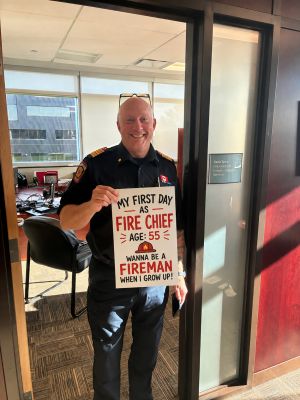
Finding a career that gives you the best of both worlds can be challenging to find, but former Valley resident Dana Terry, has been able to do just that. Terry is trained both as a paramedic and firefighter and combining those two positions has led him to take on a new leadership role as well as be of service to others.
“My parents are Marg and Gordon Terry and when we moved to the Valley, we lived in the Lenswood area,” said Terry. “Part of my years growing up were there and I attended Minitonas Junior High, and later on to the Swan Valley Regional Secondary School, where I graduated in 1989.
“I wanted to become a Fish and Wildlife Officer, so I moved to Lethbridge to take a college program there to be a Conservation Officer. Unfortunately, there were no jobs for those positions or very few and far between, with lots of competition for them. I finished the first year of the program and then met my wife.
“After I got married, I worked on a dairy farm because I was raised around working with cattle. That focused me on finding another career path,” said Terry. “My father-in-law was a Captain on the Lethbridge Fire Department and I asked him how I could get on the department. He told me I would have to become a paramedic first and go from there.
“So I quit the dairy farm and went to school to take my EMT course through the college in Lethbridge. I worked some rural ambulance shifts in Alberta. From 1995 to 1997, I went to paramedic school at NAIT in Edmonton. I took my Advanced Care Paramedic course, and at the same time I was working for the City of Edmonton as a paramedic.
“It was a really good experience to work in that field while upgrading in school,” said Terry. “As a new paramedic, I was really busy and saw a lot of different things. I got lots of experience from that and was eventually hired by the City of Lethbridge.”
Once Terry was set on his career path, he was able to merge his paramedic knowledge with firefighting. In the area that Terry lives and works in, the combination of firefighting and paramedic services comes in handy due to the environmental surroundings.
“Back then, the City of Lethbridge was a fire department and also an ambulance service,” said Terry. “Outside of Alberta, Brandon has an integrated system like this, where they cross-train firefighters and paramedics. One day you could be working on the ambulance, the next day on the fire truck.
“I stayed working with the City of Lethbridge for about 24 years and then I moved up into a Deputy Chief position. My career then took a little bit of a turn, as my position moved to a Deputy Chief position with Strathcona County in 2021, which is on the east end of Edmonton. Strathcona County is a specialized municipality that provides for the unique needs of a municipality that includes a large urban centre and a significant rural area and population.
“The challenge of being in a service like this is the number of refineries there are in the area,” said Terry. “There is a high risk involved in that. Then you have an urban side to provide fire protection services to that has about 88,000 people. There are also lots of rural properties and acreages in that mix too. It’s a unique system.
“Both services are focused on public service. That is what often brings people to work in this field. It attracts those individuals who are interested in the integrated service. There is a level of pride when someone can identify as a firefighter and a paramedic. When we respond to a call, it doesn’t matter which truck we show up on; we have kits on every one of our trucks and any of our staff knows what they need to do. We work as a team, so the team atmosphere is huge. There are times we get some pretty big incidents that we respond to, and we are able to switch from one task to another.
“There have been so many times throughout my career where I’ve used those skills interchangeably,” said Terry. “It’s very valuable, rewarding and what attracts people to the work we do.”
Terry notes that this kind of job can be heavy at times in terms of the things a person sees and experiences when getting called out. Fortunately, there are more mental health resources today geared to help first responders.
“We deal with people on the worst days of their lives,” said Terry. “I think that the hardest for me, over my career, is responding to incidents that involve children. Those are really tough calls to have to deal with. Sometimes, those children in incidents are the same age as my own children and that is really hard for me as a dad to come to terms with.
“The training I received helped to address those types of calls. I’m fortunate to have a good support system at home. In today’s emergency services, we have more mental health supports. In the service I have, we have a peer support team that is made up of other firefighter paramedics. They are trained to talk to their co-workers and address any issues that arise from a call. They can also refer them to our department psychologist. We have one on retainer that is available to us.
“We also have debriefings and meetings after the call and try to unpack challenges that we faced from that call,” said Terry.
Terry enjoys the line of work he is in because he really is focused on helping others.
“I’m very passionate about public service,” said Terry. “I like the ability to serve the public and think it’s a noble cause. It’s something to be proud of and you can certainly make a difference in people’s lives. I’ve seen this many times.
“Every so often, I will see people whom I remember from picking them up in the ambulance or responding to their emergency. Seeing that people do recover and become resilient is amazing. I’ve had some really good conversations with some of them after these types of incidents. I remember meeting a baby I delivered and she was in her 20s when I met her. That was a really cool experience.”
Terry has literally worked his way up in the department from the ground up. From there, he was able to build a foundation to set him towards more of a leadership role.
“When I first started, what I liked about the fire service and EMS was that you never knew what you were going to next,” said Terry. “It was always something new. You showed up to work and whatever came in, we responded to it. I really liked that, so I never thought of myself having to work in an office at some point.
“There was a point in my career where I needed to be challenged more. So I was part of the Union Executive for seven years and started expanding my leadership in certain areas. I had a discussion with one of the chiefs at the time, and he encouraged me to consider looking forward in my career and not just be content with what I was doing.
“He told me that if I wanted to really help influence direction within a department, he said I was going to need to do that from a higher position,” said Terry. “He coached me on which education to take, what courses to do, and what positions and responsibilities to take on to do that. I found it very rewarding to be able to see how much you can influence the direction of an organization by putting yourself out there and taking responsibility.
“That is where I have taken it. I’m ok to make decisions and taking care of people. I do care about the firefighters and paramedics we have and want them to be successful and taken care of. I remember what it’s like to be on that frontline, so I have a passion for the work and what they do on a day-to-day basis. I want to make it better for them and move our organization forward.
“It’s about how we improve and get better. I always tell people that they should always be coachable and teachable. I always tell my kids that too,” said Terry.
“I have recently been promoted to the position of Chief. I’ve only been in my current position for over a month, so I have some messaging I am sharing with my staff about the direction I want to see this department move towards. Over the next five years, there will be priorities we will focus on and set. It will be about understanding the needs and challenges our organization and community have, and how we can better serve them. My job right now is to set priorities and move us forward; it’s about progressing.”
Terry credits having some strong role models and supports in his life, while he pursued a career of helping others. It all started with his roots in the Valley.
“My dad, for sure, was the greatest influencer for the path I’ve chosen,” said Terry. “The work ethic he taught us and stuck with me. My parents raised four sons and we’ve all gone on to different careers, but I see the work ethic he put forward and encouraged us to work by. We grew up on the farm, so we raised our food, hilled potatoes, picked rocks, and did it all. I saw that in my dad and how he cared for and supported his family, which he continues to do today. He’s created a good legacy and I credit my dad for my drive and work ethic.
“My father-in-law certainly played a role by setting me on my career path. He was a good mentor and ended up being the Chief of the Lethbridge Fire Department for several years before he retired. He set a good example for me.
“Also, my wife, Marilee, has been my biggest partner and supporter throughout my career,” said Terry. “I wouldn’t be the person I am without her support and encouragement. Together we have raised four children into contributing members of society and now get to enjoy seven grandkids, so far.”
A walk to remember
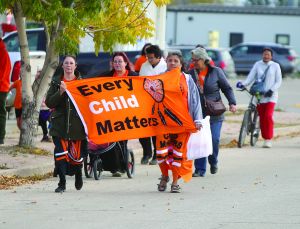
National Day for Truth and Reconciliation walk took place last Wednesday (Sept. 30) in Swan River. Hosted by the Elbert Chartrand Friendship Centre (ECFC), the day included a march down Main Street in Swan River, followed by a lunch back at the hall. The day honours residential school survivors, while remembering the children who never returned home, and to confront the painful history and lasting impacts of the Canadian Indian residential school system. The event started with an opening ceremy inside the ECFC with the walk following. Pictured is a large group of local residents that took part in the walk, who made the trek down Main Street wearing orange and holding up flags in honour of survivors.
Editorial: It’s your chance to ask the questions

It’s time again. The time when we all decide who is going to make decisions around our council tables about general day to day things in your town and municipality that affect your lives. Now and over the next four years.
I was pleased when I found the post by Courtney Kostecky on Facebook that you see printed just to the right of this column. As a CAO and former councillor in two Manitoba municipalities, I thought she brought up some really good points that are good to consider when you’re looking at where to cast your votes. After all, like I always say, no one ever knows the behind the scenes of anyone’s job. This one is no different.
This time around, there’s a pretty good mixture in both the Municipality of Russell Binscarth and the RM Riding Mountain West of new folks looking to represent you around the table.
Of course, with the incumbents, you’ll know what’s gone on over the past four years and with some people, longer than that. And now is your time to ask questions you might have over decisions they’ve made – even if they happened to the folks on the other side of the RM, you might want to ask if your property and peace might be at risk sometime in the future too.
For instance, at this point, I’m going to think that most people saw what happened to the village of Shellmouth with the approved gravel pits there and how, relatively quickly that became an issue for the people who owned property at the Cottage Cove development. The RM of Riding Mountain is huge - also including Silverton and Angusville and do you need to have some assurance from the incumbents who made that decision and the new people running what, in the future that could mean for you. And, Lord knows, the councillors do have difficult decisions to make.
The same applies in every place in the province. and prior to the October 28th election is the time to ask those questions.
For both the incumbents and the new folks who are letting their names stand ask them what their vision for the next four years is. How do they feel about things like Economic Development for instance, what do they foresee coming here and what would they like to happen and how might they see that happening.
How might they see their councils dealing with huge issues like housing and health care and what challenges you might see and think need to be dealt with.
By the time you read this, the meet and greet for the candidates as part of the Beef and Barley volunteer night will have passed.
But there’s another chance to hear the views of the candidates and to ask questions.
We’re hosting more of a public meeting style event moderated by Randy Moffit from Roblin (He and his wife Lori (Tibbatts) used to live in Binscarth and must have been very well liked because every time I mention this name, everyone seems to know them and have great memories of both of them.)
We’re going to first have every candidate speak for a few minutes and then have a question period. In the interest of avoiding chaos, your questions can be submitted to me - here via my email - This email address is being protected from spambots. You need JavaScript enabled to view it. or just by giving me a shout at the office - 204-773-2069. Anyone who wants to have a specific questions added can also track me down at the meeting. I plan to be there about 6 pm. So even if you have a question and have submitted it to me prior to the meeting, it will be asked. We’ll have gone through the questions to ensure they’re polite and we’re asking that candidates show up about 6:30 pm so you’ll have a chance to ask them questions privately too before the 7 pm meeting.
The evening will run from 7 - 9 pm thanks to the generosity of the Leisure Centre board.
If you can, bring a handful of change as there will be a collection at the door to help pay for Randy’s travel taking the now longer trek from Roblin to Russell.
We hope to see you and all the candidates there.
Public meeting with the election candidates
Monday Oct. 19th at 7:00 pm at the Russell Leisure Centre
529 Main Street North
New equipment for the RFR
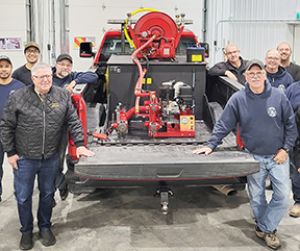
Roblin Fire & Rescue recently took delivery of a new Wildland Firefighting skid unit thanks to a very generous donation from a local philanthropist.
The unit came in at a cost of almos $27,000.
Read all about it and check out the picture in this week’s Review.
Candidates set for October vote

The candidate list for the Oct. 28 general municipal and school board election has been set and ballots are being printed.
City of Dauphin
In the City of Dauphin, three people are vying for the mayor’s chair left vacant by the retirement of David Bosiak. Hopefuls include current councillor Steve Sobering, along with Keith Durston and Carter Taylor-Luke.
There are 10 people attempting to secure six council seats on the next City council. Incumbents Christian Laughland, Devin Shtykalo, Ted Rea and Randy Daley are all seeking relection and will be joined by new candidates, including Amanda Novak, Michelle Nyquist, Jason Alf, Michael Winters, Scott McCallum and Richard Mitchell.
RM of Dauphin
Voters in the Rural Municipality of Dauphin will not have to make any decision regarding the municipal council as all candidates are acclaimed.
Ernie Sirski will return for a second term as reeve, while incumbent councillors Ken Plustwa, Ken Shewchuk, Tammy Koshowski, Todd Boguski and Midge Sametz are also all acclaimed.
The RM will be short one councillor, however, as no one stepped up to take the seat left vacant with the retirement of councillor Ron Ryz.
MVSD
The creation of a new board of trustees for Mountain View School Division will involve elections in three of four wards.
Incumbents Floyd Martens and Scott Lynxleg have been acclaimed in Ward 1, while Ward 2 will see Kyle Lylyk and Mindy Rickards compete for one seat on the board.
In Ward 3, five candidates are hoping to secure one of two seats on the board. They include incumbents Sonia Blanc, Gabe Mercier and Jason Gryba, along with newcomers Wanda Sime and Matthew Bayduza.
With four seats open in Ward 4, incumbent Jarri Thompson is joined on the ballot by Dan McKay, Rigby Devos, Michelle Smigelski and Rodney Juba.
Lakeshore
In the Rural Municipality of Lakeshore, Richard Kachur has been acclaimed reeve and three councillors - Cherie Robertson, Diana McIntyre and Michael R. Brunen - have been acclaimed in Ward 2.
Voters, however, will have to choose three councillors in Ward 1 from a list of candidates, which includes Claude Hykawy, Crystal Charlebois-Fiddler, Teddy Sraybash and Rick Paradis.
Ste. Rose
In Ste. Rose, Robert Killam has been acclaimed as mayor, but there will be an election for council with six people looking to fill four seats.
Candidates include Shari Maillard, Julie Peloquin, Darrel Deslauriers, Joey Frobisher, Steven Hopfner and Ivan Worrall.
Mossey River
Mossey River Municipality will see elections held for reeve and urban council positions, while three rural councillors - Greg Boyko, Alden Zurba and Leon Bergen - have been acclaimed.
Reynold Sahulka and John (Jack) Fleming are vying for reeve, while Justin Barsewsky, Angel Johnson, Rodney Grahn, Sherry (Harrison) Lytwyn, Roger Pilon and Ivan Fleming are squaring off to become urban councillors.
Gilbert Plains
Election interest in the Gilbert Plains Municipality is high with numerous candidates in the running.
James Manchur and Larry Malowski will square off for the reeve chair, while council positions will be contested by Raymond Rodgerson, Craig Von Bargen, Carsten Dykun, Aaron Klepak, Lyall Bates, Kristen Rubeniuk, Brett Ewanyshyn, Charles Jeffers, Leanne McKay, Grant Pope, Aaron Dykun, Drisen Harapiak and Vern Ellis.
Ethelbert
Voters in the Municipality of Ethelbert will have some choices to make on polling day with a full slate of candidates seeking election.
Mike Semeniuk and Kevin Boese are seeking to become reeve, while hopeful councillors include Bruce Podolsky, Greg Woytkiewicz, Cory Chymy, Dusty Rushinka, Debbie Jodouin, Wayne Pitura, Richard Evans, Randy Hancharyk.
Voting day in the 2026 general municipal election is Oct. 28.
CCC successful in secure much-needed funds
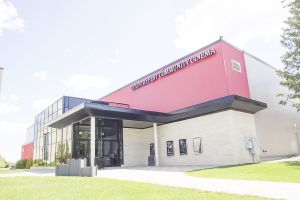
A successful fund-raising campaign has brought Countryfest Community Cinema back from the brink of financial disaster and has the organization excited about the future.
With customers slow to come back after the pandemic Countryfest Community Cinema launched a plan to raise urgently-needed capital, through a GoFundMe effort and a corporate fund-raising campaign, raising about 80 per cent of its $100,000 goal, said board chair Ron Hedley.
“We again got such good support,” Hedley said.
“I just appreciate how people have come and stepped up to help with the theater every time we ask.”
Hedley said the theatre has paid off in excess of $1.4 million from it’s mortgage in the 15 plus years it has been open, however, pandemic restrictions meant the organization had to drain its reserves to stay afloat during COVID. Getting the crowds back to not only cover operating cost, but to also build those reserves back up has been difficult.
“This is the second time where we said we’re kind of desperate right now,” Hedley said.
“It’s a tough market. We’re pretty self-sufficient, but we also know that we’re at the mercy of Hollywood and the movie quality. It’s going to be a struggle for a while, but we are holding our own.”
To help shepard the organization through the rebuilding, a new manager has been hired.
Angelena Neely brings a wealth of experience in the service industry, with staffing and running businesses.
“She’s been incredible so far,” Hedley said.
“So that combination, along with her excitement, has us feeling good.”
That does not mean the organization is resting on its laurels, Hedley said.
Although plans are still being worked out, Countryfest Community Cinema is planning a membership drive, selling monthly subscriptions to the theatre.
“Ask people to step up. That won’t be any big fund-raising campaign, but more about the same way you pay for Netflix or Amazon or whatever. That would be $20 to $25 a month that goes to the theater,” Hedley said, adding he would hope to sign up 200 to 300 people.
“I think it’s very attainable, because people have always stepped up to help.”
Paralympian’s perspective a gift for local trail developers, users
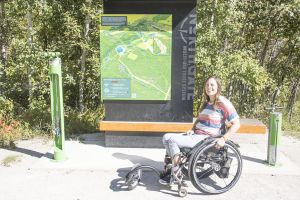
A Canadian paralympic world record holder spent the last two weeks at Northgate Trails, helping to assure the trails are wheelchair accessible.
When she was 14, Lisa Franks was diagnosed with arteriovenous malformation, a condition that caused clusters of blood vessels to prevent blood from properly passing by her spinal cord. As a result, Franks lost the use of her legs.
But that didn’t keep her down, as Franks began training as a Paralympian and went on to set world records in the 100m, 200m, 400m, 800m, 1,500m, 5,000m, and marathon events, winning six gold medals and one silver medal in her career.
Prior to her spinal injury, Franks was active in sports.
“And when I was going through rehabilitation, I actually met a bunch of Paralympians and got to try out different sports. And wheelchair racing, it turns out I had some skills in wheelchair racing,” she said, adding she participated in two Paralympic Games in 2000 and 2004.
After her success in wheelchair racing, Franks decided she needed a different challenge and turned her attention to wheelchair basketball, making Team Canada in 2006 and competing in the Paralympics in 2008.
“I would have kept going with that, but I had a pretty severe injury at the end of 2008 and just couldn’t. I had four shoulder surgeries and wasn’t competitive at that same level anymore. And then I discovered outdoors, and that’s been my new passion,” Franks said.
Franks is willing to do anything when it comes to outdoor activities, but her favourites are mountain biking, surfing, kayaking and hiking.
“I’ll try anything, like sky diving, paragliding, zip lining, snowmobiling, downhill skiing. I’m always looking for something new to try,” she said.
Franks was contacted by Parks Canada through Riding Mountain National Park (RMNP) to assist with the trail system in partnership with Northgate Trails.
“A few people with Parks Canada had heard me speak at a conference in the spring and it was all about accessible experiences and facilities are just better for the community overall,” she explained.
“And they were wonderful. They just realized that could really benefit the new trail system they were working on, so they asked me to come out and view the trails as an adaptive mountain biker and adaptive wheelchair user and see what advice I could give and what insights I could offer. I’m really excited that they’re being really inclusive right from the start. It makes their job that much easier in the long run.”
Franks rode the Northgate trails with the trail designer and volunteers using her own mountain bike, which gave them an idea of the capability of her equipment.
“They’re going to apply a lot of what they saw going into that. There’s an organization that has an adaptive mountain bike standard that they can fall back on,” she said.
Most of the trails are already wheelchair accessible, with a couple of areas that just need some tweaking.
“The boardwalks were pretty narrow, but I could make it across them, but don’t have much room for error on those. But it’s very much meeting in the middle between what the equipment we ride can do and what the trails offer. And when you get that in sync, there’s usually minimal changes that need to be done to make it more inviting,” she said.
Franks was impressed with the trails she has been on, noting a lot of upkeep has been done to rework some of the older trails in RMNP.
“I went to the Boreal Trail and then the bog trail or the boardwalk in there. It’s amazing that they’re just even thinking about it and trying to be more inclusive,” she said.
Franks used her regular wheelchair on the family loop at Northgate, which was flat and easy.
“But still a workout, just because you can add length with the different segments on it,” she said.
Franks has one wheelchair for every day use, with accessories that can be added to make it easier to use on the trails.
“There are lots of options for hiking wheelchairs. I just can’t travel with them all at the same time. In the summers I have my personal bike,” she said, adding she lives in a camper van, which is outfitted around her bike.
“I also have another bike on the outside on a bike rack that I let other people ride.”
Franks encourages anyone with disabilities that require them to use a wheelchair to get out and use the trails, especially the family loop.
“That family loop is really neat. There’s a lot of these different little nodes where you can see little things. There’s one clearing that has all these beautiful little tree houses. And even just getting out to the firepit in the communal area and watching everybody ride around or cook some hotdogs. It’s been a neat experience,” she said.
Franks sent a video of the Northgate Trails to people who work on trails in and around her hometown of Moose Jaw, Sask., to showcase what the Northgate trails are like.
While regular wheelchairs can be used on the family loop, more specialized wheelchairs would be needed for other trails.
Franks pointed out Parks Canada has a hiking wheelchair that people can borrow to use on the trails and enjoyed her time at Northgate.
“It’s wonderful Everyone here has been so excited about inclusion. What benefits myself might also benefit someone with a stroller or towing their kids in a trailer behind their bike. The wider boardwalks and things like that would also benefit everybody, I think,” she said.
Freedom and mobility, one tab at a time
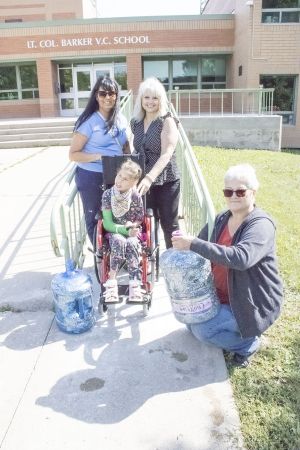
For more than a quarter century the humble little tab found on the top of aluminum drink cans has meant freedom for young Manitobans facing mobility challenges.
The Tabs for Wheelchairs program began in the spring of 1998 when Holy Cross School in Winnipeg began saving tabs. By fall of that year, there were another seven schools that joined the cause.
The first specialized wheelchair was presented in the spring of 2000 to Carly, a five year old with cerebral palsy, who needed a specialized wheelchair to attend Kindergarten.
After the presentation was picked up by media outlets, participation in the program exploded and now there are approximately 200 schools and 300 business and organizations which collect the tabs across the province.
Locally, the Tabs for Wheelchairs initiative is championed by Rachel Goy
“For myself, I know personally how important it is for a child to have the proper equipment to meet their daily challenges, so I have been collecting tabs for this program for a very long time,” Goy said.
“Over the years, I didn’t always know where to leave them, so while I was employed with Dauphin Co-op, I decided to become more actively involved in the program. I started promoting the Tabs for Wheelchairs program through Co-op and I asked that collection bins be located at two of the stores. Then I began bringing bags of tabs to Winnipeg whenever I was making that trip.”
Recently, Goy accepted a sizeable donation of tabs from the family of eight-year-old Olivia Morrisseau, who lives with cerebral palsy.
The condition, Olivia’s grandmother Connie Morrisseau said, means that things most people take for granted, such as walking, talking or even putting on shoes takes Olivia a little longer to accomplish. She added the challenges have taught her granddaughter creativity and perseverance.
As Olivia grows, those challenges will increase, and that is why Connie decided to get more involved with the program.
“Five years ago I decided that I would collect tabs for a wheelchair,” she said.
“My thought then was that someday Olivia may need one to keep up with her friends when there is outings at school. Olivia loves being around her friends.”
Just recently, Olivia received her first wheelchair, a loaner from Specialized Services for Children and Youth (SSCY) through the Manitoba Possible Wheelchair Program.
“So Olivia and I would love to give back. Although she didn’t receive her wheelchair through tabs, it’s something we wanted to do,” Connie said.
“We collected two water jugs full of tabs. So many people have cheered Olivia on, family, friends and teachers, now Olivia and I want to be the people doing the cheering for someone else. Kindness doesn’t require running fast, or lifting heavy boxes. It just requires an open heart and this describes Olivia to a tee.”
The collection was not something the two undertook on their own as an army of family and friends joined the effort.
In fact, Olivia’s great aunt Talinna Kuchma from Sydney, B.C., was home for a visit and paid extra for her flight in order to transport a suitcase full of tabs.
“Last summer, I had the privilege of my granddaughters Leia and Amelia visiting from Europe. When they watched me removing the tabs from all the cans that came through the house, they asked why I was taking them off. I explained that I had a great niece, Olivia, who had cerebral palsy. I explained to them that what they find easy to do, she struggles with,” Kuchma said.
“I also explained that at some point there was a very good chance she would need a wheelchair and by saving these tabs it helped to supply wheelchairs. The girls are both very loving and empathetic, and immediately took on the cause on Olivia’s behalf. They are collecting them in England and Germany and sending them to me whenever somebody comes to visit. So some of the tabs that have been brought today are from them.”
Goy explained payment for the tabs has varied from 30 cents to 65 cents per pound, depending on the value of aluminum at the time.
There are approximately 1,500 tabs in a pound. The purchase of a $6,000 wheelchair requires approximately 14 million tabs, or about 9,500 pounds. For a $10,000 wheelchair, it’s approximately 24 million tabs, or about 16,000 pounds, she said.
Despite those large numbers, almost 70 chairs have been presented since the program began. The chairs are presented in June each year during an assembly at the Holy Cross School gymnasium.
Goy was lucky enough to attend the ceremony in 2024 where she met the two recipients and their families.
“It was an incredible and heartwarming experience,” she said.
“The bags of tabs are lined up along the walls. There are stacks of them everywhere and it is a pretty impressive sight to see.”
While Goy is no longer employed at Dauphin Co-op, the business remains as a drop off location for tabs for those wanting to contribute at both the Food Centre in Dauphin, and the Home and Agro Centre in Ste Rose. There are also collection containers at all schools in Dauphin, as well as Ste Rose School and the Watson Arts Centre.
Tabs can be removed from drink cans, canned fish, canned pet food and other food products. Any color of tab can be used, Goy said.
Since October of 2022, Goy has delivered more than 1,400 pounds of tabs to the Tabs for Wheelchairs Program. That’s approximately 2.1 million tabs.
“Removing and collecting the tabs is such a simple thing to do. I really appreciate that so many people are helping out, because every tab counts,” Goy said.
“So if you are having a gathering, a wedding, a backyard bonfire, please remember this important program and save those tabs.”
Anyone wanting more information on the program, or wanting to arrange a dropoff of tabs, can call Goy at 204-572-5102.
Fun facts about the program
• Donations of $20 or more can receive tax receipts.
• Tabs drop-off location and where all the tabs are bagged by the individuals at the Day Program is at Trailblazers Life Choices Inc. (1069 Autumnwood Drive).
• Western Scrap Metals Inc. (18 Sutherland Ave.) has a running account, so that any scrap brought in (any size from cans to old refrigerators) can be donated directly to Tabs for Wheelchairs.
• Wesman Salvage in Brandon (855 49th St. East) does exactly the same thing as Western Scrap Metals Inc.
• Average prize of wheelchairs is $4,000 - $6,000.
• YRC Freight transports all tabs from Holy Cross School to Western Scrap Metals Inc. every June at no cost to the Tabs for Wheelchairs program
• In 2018, the program received a generous donation of $30,000, which was used to purchase extra specialized wheelchairs for seven young people in Manitoba
• St. Boniface Bag Co. donates all the white bags.
• HT Mobility Medical (451 Henderson Hwy) is where all the wheelchairs have been purchased.
• Record single-year haul - a recent single-year drive brought in 23.5 million tabs (460 bags) collected by 188 schools.
Mavericks are one win away from rugby championship
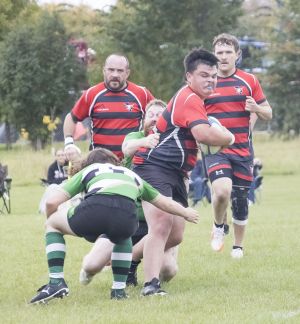
The Parkland Mavericks have already had a historic season, posting the best record in team history. Now they are on the verge of capping it off with the club’s first ever championship.
Joseph Lopez had two tries and Ronin Mouck had a try and three converts to lead the Mavericks to a 43-14 win over the Winnipeg Wanderers, Saturday, in the Manitoba Rugby Union Division 2 semifinal.
Daniel Evans had a try and one convert, while Matt Keena, Julien Lopez and Shawn Sarkonak also had tries.
The Mavericks had to overcome penalties in the early going, but Mavericks captain Jordan Campbell felt most of the team played a disciplined game.
“Everyone knows their role on the team. The veterans won us the game. Even though our speed got us a lot of tries, the veterans made the plays on defence to get us the ball back. It was really well played,” he said.
Playing as a unit was key to the team’s success, with every player sticking to the plan.
“Knew where they were supposed to be on offence and on defence. Guys were sacrificing their bodies. I’ve never seen Bundy (Sarkonak) so beat up before. Willi Budzinski, he was banged up,” Campbell said.
“It’s been a long season. We’re a hurting group of guys. We had 37 registered this season and right now we’re down to 20 guys that are able to play.”
The Mavericks will need all 20 players when they travel to Winnipeg, Saturday, to face the Winnipeg Assassins in the final at 11:30 p.m.
The Assassins upset the first-place Winnipeg Wombats, 43-7, to advance to the final.
“The guys that are coming are going to be ready,” Campbell said.
“I’m super proud of this group. A lot of guys put their egos aside. Coming off the bench sometimes isn’t easy. Sometimes coming off the field isn’t easy. But everyone was willing to sacrifice themselves for the betterment of the team.”
Kings earn a split with Stampeders with road win
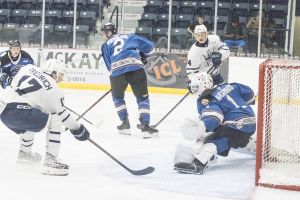
The Dauphin Kings earned their first win of the young Manitoba Junior Hockey League season on the weekend.
After the Swan Valley Stampeders scored four power-play goals en route to a 6-2 win, Friday in Dauphin, Collin Freidrich continued his hot start as his fifth goal of the season midway through the second period stood up as the winner in a 3-2 Kings victory, Saturday, in Swan River.
Kings head coach and general manager Bryan Kromm was pleased with the team for finding some success together.
“I think it brought them all on the same page and helped them understand what kind of group we have in the locker room. So it was kind of nice,” he said.
Dauphin’s lineup was bolstered by the return of Aidan Malone, Kale Pratte and Noah Smigelsky from injury, as well as Dylan Miko from a suspension.
“Having some of those guys that were injured back in kind of helped tighten the ship quite a bit. So I was pleased with all the guys that came back in and what they brought to the table,” Kromm said.
After the Stampeders scored four times on the man advantage, Friday, the Kings made some structural adjustments that they hadn’t quite dived into in Saturday morning’s skate prior to heading north. It resulted in Swan Valley going 0-2 on the power play.
“We’ve been focused more on five-on-five. I wanted to give them some more pieces to the PK, so I did that with them on Saturday morning and it helped,” he said.
Bryson Yaschyshyn had quite the bounce back game, Saturday.
He was pulled from Friday’s game after allowed four goals on 16 shots in 20:57 of action. On Saturday, he stopped 54 of 56 shots.
“He knew that he was off on Friday. He came and chatted with me after that game. I trust him. He’s been in the league, he’s got experience, so I knew he was going to bounce back and have a good game and he did (Saturday) night,” Kromm said.
Kromm added to his staff with Tyler Carefoot joining the team as an assistant coach.
Kromm felt he needed someone from the community to add a veteran presence on the bench.
“His name came across my desk, so I asked around, asked Scotty (McCallum) and a couple other guys and everything checked out,” he said.
“So I reached out to Tyler and he was able to make it work within his schedule. So that’s how that happened.”
The Kings are back on the road, Wednesday, against the Wolverines in Waywayseecappo at 7:30 p.m.
On Friday, Dauphin will host the Winnipeg Blues at 7 p.m., before heading to Portage, Sunday, for a game at 6:30 p.m.
Kromm said the focus this week will be rest and recovery, noting the schedule will be a bit busier in the coming weeks.
“Trying to work out our schedule and what works best for us is going to be imperative to keep us healthy and going on the right track,” he said.
Sunday’s game in Portage will be the first of six straight on the road for the Kings. That, Kromm said, will help with the team’s bonding.
“It’s been fun for them. When we played in Selkirk, it was a good atmosphere there and (Saturday) night in Swan, it was another good atmosphere,” he said.
“I think our guys actually relish when our backs are against the wall on the road. So I’m really excited to show what we can do coming up here.”
Kings court: With five goals in his first four games, forward Collin Freidrich is tied with three other players for the league lead and is 10th in scoring. Sam Swanton leads all defencemen in scoring with six points, all assists.