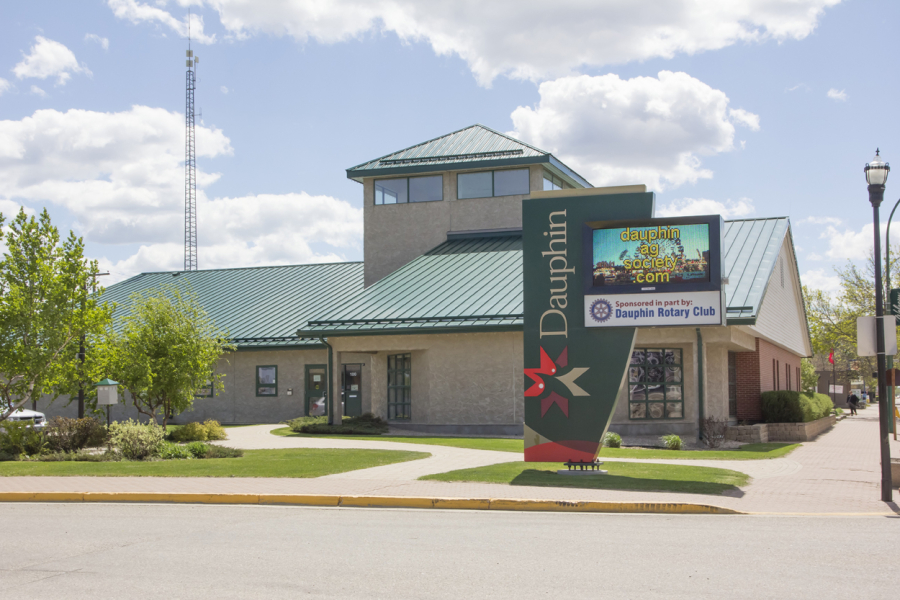
Dauphin is one of 30 communities across Canada taking part in this year’s 100 Radon Test Kit Challenge through Take Action on Radon and BC Lung.
Targetting communities where radon testing has thus far been limited, but where there is a potential for homes to have elevated radon levels, the program provides municipalities the means to provide up to 100 test kits to citizens for free.
“After learning about this program, I thought it was a great opportunity to help families test their homes for radon for free,” said deputy city manager Lisa Gaudet, who is co-ordinating the program on behalf of the community. “We are all spending more time at home, and so it’s an important step for families to take to reduce their radon levels to protect their health.”
There is reason to think that radon testing in the city of Dauphin is necessary given the results from neighbouring municipalities.
Taking part in the 2020-21 challenge, 50 homes were tested for radon gas in the Rural Municipality of Lakeshore with 48 per cent of those testing above Health Canada’s guideline of 200 Bq/m³.
As part of the 2019-20 program, 87 homes in the Rural Municipality of Dauphin participated in the program with 71 per cent testing above Health Canada’s guidelines.
Radon is a naturally occurring radioactive gas found in every building in Canada and comes from the breakdown of uranium in the ground.
Radon levels vary, even between neighbouring houses, meaning the only way for homeowners to determine their home’s radon level is to test for it.
Long-term exposure to high radon levels is the leading cause of lung cancer after smoking, and accounts for more than 3,000 lung cancer deaths in Canada each year.
“Radon is a well-established human carcinogen, and testing and reducing radon levels is an important method of lung cancer prevention,” said Dr. Anne-Marie Nicol, a researcher from the Faculty of Sciences at Simon Fraser University. “Residential radon is marked as Canadians’ primary exposure to radon; preventing radon exposure will reduce the number of Canadians dying of lung cancer.”
Despite that knowledge, public awareness remains low and a vast majority of homeowners in Canada - more than 90 per cent - have never tested for radon.
Canada has had a National Radon Plan for over a decade, encouraging people to test their home for radon and reduce high levels.
“We are seeing awareness increase in many areas across Canada. Many people know that testing for radon is an important action in looking after their health,” says Pam Warkentin, executive director of CARST and project manager for Take Action on Radon. “If you tested for radon years ago, it may be time to test again. Or if you haven’t gotten around to it, this is your chance to stop putting it off and get your radon test.”
Dauphin residents wanting to access one of the 100 free testing kits must sign up for the program online at form.jotform.com/232886191516261.
A free radon information session will be held, Nov. 8, at 7 p.m. with two options for attending. Participants can attend virtually via a Zoom link that will be provided when they register. The session will also be streamed for viewing at city hall, located at 100 Main Street South, for those who would prefer to attend in person.
Participants will be able to pick up their radon test at city hall following the information session until Nov. 17.
Take Action on Radon is a national initiative that works to bring together radon stakeholders and raise radon awareness across Canada. The initiative is led by the Canadian Association of Radon Scientists and Technologists (CARST), CAREX Canada and the Canadian Cancer Society.
Canadians wishing to learn more about radon and how it affects their health are encouraged to visit www.TakeActiononRadon.ca.