

Town parks take a hit from flooding
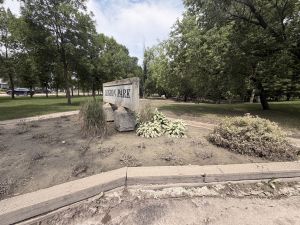
Many of the local parks within the Town of Swan River have had severe impacts in the aftermath of the recent flooding. For safety reasons, the town has closed a few of the parks due to flood damage.
“At this time, the town has closed both Swan River Legion Park and Swan River Rotary Park to the public due to flood damage,” said Town of Swan River Director of Recreation Danielle Gordon-Broome. “Barricades have been placed at all public entrances to both parks. These closures are in place for public safety, and we ask residents to respect them until the parks can be safely reopened.”
The damage in some of the parks goes beyond just a few fallen trees and a buildup of debris. Some of the infrastructure has been compromised by rising water.
“Legion Park experienced significant impacts from the flood,” said Gordon-Broome. “A large amount of garbage accumulated throughout the park, much of it originating from full recycling bins that were awaiting pickup before being swept away by the floodwaters. A thick layer of muddy sediment remains on portions of the pathways, and the concession building, storage area, and south washroom facility all received approximately two feet of water.
“As a result, cabinets, appliances, and interior wall finishes will need to be replaced.
The electrical panels serving both the stage and Jack Brown Diamond were submerged, requiring electrical inspections before these facilities can safely be put back into service. In addition, several trees were damaged/fallen, with some requiring removal due to safety concerns.
“Rotary Park has only recently dried enough for staff to begin a full assessment,” said Gordon-Broome. “The park sustained considerable damage to its trail system, with sections of gravel washed away and other areas covered by thick deposits of rock, sand, and sediment left behind by the floodwaters. There are also numerous trees that have been damaged and will require assessment and cleanup.
“Restoring the pathways will involve bringing in contractors to remove sediment, regrade the trails, and install new gravel. The timeline for reopening Rotary Park will largely depend on contractor availability and the extent of the work required.
“At this time, we have no concerns regarding bank erosion or slope stability at either Legion Park or Rotary Park,” said Gordon-Broome. “The closures are primarily due to flood damage, cleanup activities, damaged trees, and the need to ensure park infrastructure is safe before reopening to the public.
“Elsewhere in our park system, the soccer fields sustained little to no damage and are expected to return to use quickly. Most playgrounds also fared well; however, one playground experienced significant damage.
“Overall, the majority of the park infrastructure withstood the flood remarkably well,” said Gordon-Broome. “The most significant infrastructure damage occurred at Dvorak Park on Duncan Crescent. In addition to large amounts of rock and debris being deposited throughout the playground and surrounding green space, the swing set was uprooted and buried under debris, and the slide was twisted beyond repair.
“Due to the extent of the damage, Dvorak Park will require substantial restoration, and we do not anticipate reopening that playground until 2027.”
Town crews have been working around the clock to restore the damage done by the flood. It’s going to take some time to have things cleaned up, and even more time to restore and repair damages.
“Town staff have made significant progress in the initial cleanup efforts,” said Gordon-Broome. “Crews have removed large amounts of garbage, pressure washed the stage, benches, and other park fixtures, and cleaned out the concession building in preparation for repairs. A contractor has been engaged to assess damaged trees and address any safety concerns, and the Town is continuing to explore additional contractor support to accelerate restoration efforts.
“We anticipate reopening Legion Park in early August. Rotary Park will require more extensive restoration work, and a reopening date has not yet been determined.”
Hospital rehabilitation is underway, but complicated

Getting Dauphin Regional Health Centre back up and running is not as simple as plugging in a generator and firing up the x-ray machines.
Prairie Mountain Health CEO Treena Slate said all systems in the hospital are intertwined and operating such a facility requires a significant amount of power.
“The medical gases, for instance, so the oxygen, the suction and the gases that are required in the operating room and obstetrical care, they alone require probably the most significant amounts of power. All of the diagnostics services in the building require a significant amount of power,” Slate said.
“Those two systems have to be in place before we can do anything in the building. We need to have our electrical infrastructure in place before we can power up the HVAC systems and the mechanical structures in the building. It’s not as simple as hooking up an external generator and turning everything on. The building requires so much power that that’s not an option. We do need to have that electrical infrastructure and the mechanical infrastructure in place before we can resurrect services.”
Slate added, as the building is a clinical space, ensuring the hospital is safe and healthy for occupation is essential.
“Safety guides all of our decision-making as we move through this process,” she said.
“This is a clinical space. It is not a residential space. We need to ensure that everything is safe.”
The DRHC was closed at the beginning of July due to extensive flooding affecting the basement of the facility. Recent indications are that it will take months to get the hospital back functioning fully.
However, the health region is working hard to restore as many services as possible, as quickly as possible, with the focus currently on establishing a functioning emergency department and diagnostic services, said Dr. Abdi Sokoro, the chief operating officer of Provincial Diagnostic Services.
“The work is continuing as a priority for diagnostic services, basic diagnostic services in the community,” Dr. Sokoro said, adding the focus is on services for non-urgent, non-symptomatic patients, who are less likely to need physician interventions.
“Patients who are ill are advised not to be seeking these services. For those patients, we continue to urge them to report to the nearest emergency department which has the appropriate diagnostics.”
Again, safety takes the wheel when it comes to identifying a space in the community to house such services, Dr. Sokoro added, citing the Health Standards Act as a guiding piece of legislation.
“Which means that the facilities in which we operate has to meet the safety requirements of infection prevention control stability, but also are not a source of harm to the patients,” he said, adding work is underway to provide phlebotomy services - the medical procedure of puncturing a vein to draw blood - as well as an EKG service and X-ray options.
“It is our priority and we hope to have those in the next while. We don’t have an exact concrete timeline, but that is something we’re working on with PMH and government, as well.”
Slate added PMH and Shared Heath staff are also working to provide dialysis and oncology services in the community as soon as possible. Possibilities under consideration include vacant buildings in Dauphin and the surrounding area, or even mobile options.
“We are looking at every possible option. We have to consider safety first and ensure that we’re meeting clinical standards by providing those services. It is not as simple as moving equipment over to a building in Dauphin,” she said.
“So much work and clinical experts are involved in that planning.”
In the meantime work will continue on properly assessing the damage at DRHC to determine a more concrete timeline for the return to normalacy.
Slate said a restoration company is evaluating the damage as it cleans the space. Photos of each room and an inventory of items to be replaced through insurance are being compiled as the work progresses.
“Really painstakingly working to clean spaces in a way that we can access the electrical and mechanical equipment and the clinical equipment that was damaged during the flooding,” she said.
“One of the main barriers to getting that completed is they can’t yet access the crawl space. It s still full of water and silt and so they are working to remove that so they can fully evaluate the wiring and the infrastructure in those spaces to understand the degree of damage.”
Slate added PMH and its engineers are eagerly awaiting that report so reconstruction work can begin.
The rodeo that wasn’t
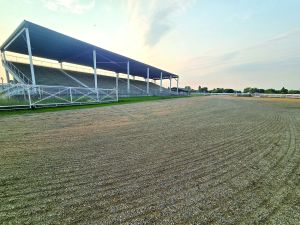
Things seemed relatively quiet around Swan River last weekend, considering the NorthWest Round-up and Exhibition didn’t take place. The annual event was called off this year by the Swan River Valley Agricultural Society due to the ongoing natural disaster recovery around the Swan Valley as a result of the historic flooding this spring and summer. It remains to be seen whether the grandstand and rodeo arena will see any use in the summer of 2026.
Huddle Satellite in Russell: A place where youth can find support, connection, and hope

What began as a new partnership between Huddle Brandon and the Park West School Division has become a growing resource for youth across our region. Since opening as a satellite site in October 2024, Huddle has been connecting young people with mental health supports, wellness programming, and community resources—while building relationships that help interested youth and young adults feel supported, valued, and hopeful.
Huddle is a free, youth-focused organization that provides trauma-informed and culturally safe health and wellness services for young people aged 12 to 29. Russell is proud to be the first rural community in Manitoba to pilot the Huddle model as a satellite of Brandon, working in partnership with Huddle Brandon, the Park West School Division, and provincial and federal governments to make mental health and wellness supports more accessible in rural Manitoba.
At its heart, Huddle's mission is to meet young people where they are, listen to their needs, and help connect them with the right supports. Sometimes that means arranging counselling. Other times it means helping someone obtain identification, access employment or literacy supports, connect with health services, or simply provide a safe space where they know someone cares and they are not alone.
A Growing Rural Resource
Huddle Brandon first launched a satellite site in Russell in October 2024, and it has continued to grow as more youth, and families learn about the supports available. The program currently serves young people from communities throughout the region, including Russell, Rossburn, Birtle, Binscarth, Inglis, Waywayseecappo, and surrounding areas.
Today, the Huddle satellite in Russell includes a full-time Service Navigator, a part-time Peer Supporter, and a counsellor who provides three hours of counselling each week. Provincial and federal funding has been secured through April 2029, allowing the team to continue building services that respond to the unique needs of rural youth. Additional funding/grants are pursued from businesses, foundations and individuals to enhance programming by bringing in mental health professionals, providing meals and snacks, purchasing program supplies, and expanding wellness opportunities for youth and families.
What Happens at Huddle?
Every young person who would like to access our Huddle services begins with a brief, approximately 20-minute intake meeting with the Service Navigator. This conversation helps identify each individual's goals and needs so they can be connected with the most appropriate supports. The intake isn't a test or assessment—it's simply an opportunity to get to know each individual and determine how Huddle can best support them. There are no membership fees or costs, and services are available to any youth aged 12 – 29 who would like to participate.
Huddle offers a variety of services, including:
•Individual service navigation and goal planning
•Free counselling by appointment
•Weekly and monthly wellness programming throughout the school year
•Mental health education and peer connection
•Employment and literacy support
•Referrals to community resources and specialized services
•Help obtaining identification and navigating government or community systems
Programs continue to evolve as community needs change. This coming school year, Huddle plans to continue Wednesday after-school wellness programming for Grades 9-12 in Russell, while also introducing a monthly support group focused on anxiety and depression, facilitated by mental health professionals. Monthly wellness programming also continues for students at Rossburn Collegiate and counselling will continue Mondays by appointment.
Intrigued? Pick up the latest copy of the Russell Banner and turn to page 7 to find out more.
Outdoor Fun at Tim Hortons

Kids from around town enjoyed the games and activies as Russell’s Tim Hortons held their annual Camp Day on July 15th.
Camp Day is Tim Hortons' biggest annual charitable event, where 100% of the proceeds from all hot and iced coffee sales are donated to the Tim Hortons Foundation Camps, which is a non-profit charitable organization founded in 1974 by Ron Joyce to honor his late friend Tim Horton.
For over 50 years, Tims Camps has been a leader in youth development programming, helping young people from underserved communities gain the skills and confidence to rewrite their stories for a brighter future, through experiences both at camp and in the classroom, youth build resilience, leadership, and responsibility, empowering them to thrive in school, work, and life.
Across North America, Tims Camps has provided life-changing experiences to nearly 350,000 youth – at no cost to them or their families.
This is made possible through the generosity of Tim Hortons Restaurant Owners, guests, corporate sponsors, donors, and community partners.
These funds help send youth from underserved communities to multi-year, camp-based development programs.
Strong Turnout for "Walk for You"

Elizabeth Fingas put on the Walk for You in memory of her mother Karen in Inglis a couple of weekends ago. She was absolutely thrilled with the turnout and the response to her efforts right from the time she announced her plans.
She had this to say:
“People were eager to donate and help those in need immediately after I had started advertising. Family and friends not only donated but also offered to help with anything I needed.
My family was the biggest supporters. They took the weekend off to make sure they could come and help plan the night prior, set up in the morning, make sure all things went smoothly and helped clean up afterwards. My family consisted of Aunties, Uncles, Cousins, Grandparents and so so many others. I am beyond grateful for their help and support as the event would not have turned out as good as it had.
Also huge thanks towards the community and all those who donated, participated and showed their support.
As of right now, we have fundraised roughly $6,000 for the Community Cancer Care Centre in Russell and still have a few donations coming in. I am beyond in shock and so grateful for the outcome. $6,000 is truly jaw dropping and I am so glad that we are able to help those in need.”
Golf course board reaches out

Golf here has never been just golf. It has been coffee or supper with neighbours, leagues that double as reunions, and a course that, at its best, has drawn visitors from across the Parkland to see why Roblin calls itself the Jewel of the Parkland.
This is why what happened to our golf course this summer matters to every one of us, not just the golfers among us.
Find out what you can do to help in this week’s Review.
DRHC closure: Mazier critical of PMH response to “serious situation”
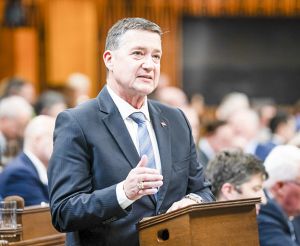
Riding Mountain MP Dan Mazier is concerned about Prairie Mountain Health’s response to the situation at Dauphin Regional Health Centre.
In a letter to Uzoma Asagwara, Minister of Health, Seniors and Long-Term Care, Mazier indicated as the federal representative for the area, he has been effectively stonewalled in his attempts to tour the facility and assess the damage for himself.
“Despite repeated efforts by myself and my office, Prairie Mountain Health failed to respond in a timely manner or facilitate a visit. Instead, they offered a Microsoft Teams meeting nearly two weeks later,” Mazier said in the letter, adding a virtual meeting weeks into the closure of a critical regional hospital is insulting to the seriousness of this situation and demonstrates an unacceptable lack of urgency.
“This is particularly troubling given that Premier Wab Kinew and members of the media were permitted to visit the facility, suggesting that political considerations may be influencing what should be a non-partisan response.”
While he continues to work with his federal counterparts on a response to the crisis, Mazier indicated the community, which expects all levels of government to work together, should not have to wait for PMH to engage their elected representatives.
“Even more concerning, health care professionals raised serious concerns with me about the lack of timely information and visible attention from Prairie Mountain Health’s senior leadership,” Mazier continued, indicating it is unclear whether PMH CEO Treena Slate has personally visited the facility.
“Leadership cannot be exercised from a distance during a time of crisis. Frontline workers are operating under extraordinarily difficult circumstances while being left without adequate updates or clear direction.”
Mazier indicated he has also heard concerns about the temporary triage clinic established in the wake of the closure, including a lack of medications, equipment or clinical capacity required to treat patients who arrive with a medical emergency.
“Physicians have proposed practical temporary solutions, including a mobile medical unit, yet I am advised that these proposals have received no meaningful response from either your department or Prairie Mountain Health,” Mazier wrote.
A lack of communication between PMH’s senior leadership, physicians and other health care professionals has frontline workers operating without consistent information or a co-ordinated plan.
“These reports require immediate investigation and a clear public explanation from your department and Prairie Mountain Health,” Mazier said.
The community is facing uncertainty when it comes to health care and a lack of communication is further eroding their confidence, Mazier wrote.
Regular communication with health care professionals and the public, providing clear information on the plan and timeline for restoring hospital services is crucial, Mazier indicated, adding he has been actively advocating with the Minister of Emergency Management to ensure the federal government understands the severity of the flooding and the urgent needs facing the region.
“I have also called for targeted federal assistance to support the restoration of hospital services. However, delayed responses and absent leadership undermine that co-operation and our ability to support affected residents,” Mazier indicated to Asagwara.
“Every level of government should be working together to support the people of the Parkland region.”
Police seek public’s assistance in ATM theft

On July 13, at approximately 4:50 a.m., RCMP responded to a commercial alarm that was triggered at a business on the 1400 block of Main Street South in Dauphin.
Officers went to the scene and learned two individuals had driven up to the business in an orange utility task vehicle (UTV) and smashed a window.
They pried the business’ door open by connecting a strap to the UTV, then hooked the strap to an ATM inside and dragged it out. The suspects then left the scene.
Police are looking for the public’s help in identifying the two suspects, whose images were captured on surveillance video, and tracking down the UTV, which had been stolen a night earlier from a nearby Main Street business.
The UTV is a 2012 Kubota RTV 900XT, Alberta license plate UTZ62.
One suspect was wearing a black sweater with a hood and a white Reebok triangle logo on the front.
The other suspect was wearing a full-face covering ATV helmet with what appears to be a “V” or “VH” written on the side.
They were wearing dark-coloured masks and gloves.
Anyone who can help identify the suspects, or provide information on the incidents is asked to contact Dauphin RCMP at 204-622-5020, Crime Stoppers toll-free at 1-800-222-8477 or to provide a secure tip online at www.manitobacrimestoppers.com.
Future flood fights: City council explores mitigation options

The City of Dauphin is looking for ways to mitigate the damage if the flooding experienced in the community at the beginning of July should ever happen again.
At their regular meeting July 13, Dauphin councillors discussed ways to lessen the effects of the Vermillion River on the community in the future and passed resolutions calling on the province to aid them in those efforts.
Among the discussions was the need for better monitoring of the river upstream of Dauphin, and within city limits, and improved riverbank elevation data, along with the possibility of developing a river diversion project.
When it comes to river monitoring, there currently is just one station upstream of Dauphin at the Vermillion dam, and one downstream where the river crosses Hwy. 20 north of the city.
Additional monitoring, when combined with accurate and comprehensive riverbank elevation data can go a long way to forecasting potential flooding, identifying vulnerable areas, and implementing timely mitigation measures, city manager Sharla Griffiths told council.
In this latest incident, when city administrators were looking for information about river levels, the capacity of the Vermillion River within city limits and how close the river was to spilling its banks, that information was not readily available.
“We didn’t know where to look for that. We assumed it was there and it was on us that we hadn’t found it,” Griffiths said.
“Unfortunately, it’s not there. There is no Vermillion River monitoring upstream of Dauphin except at the Vermillion Dam, there’s nothing in Dauphin and it’s at Highway 20 on the other side.”
Realtime information on river flows and water levels is used to great effect when it comes to flood preparations in other communities, she added.
“We see people in other communities, sandbagging certain areas to different levels and stuff like that,” Griffiths said, citing Brandon as an example of a community
“It's the province who monitors the river levels. They have a whole hydrologic department that runs scenarios based on those levels and it alerts them what when things are happening. So we want to be part of that monitoring system.”
While some communities might get two to three weeks of notice about potential flooding, that would not be the case in Dauphin, given the topography of the area.
“Just doing some really quick and dirty analysis with EMO, we would get 24 to 48 hours notice of something happening,” Griffiths said, adding advance warning would help improve flood forecasting, emergency preparedness, and long-term flood resilience..
“We do have to get that information, be proactive, learn what those levels are so that we can mitigate, and there might be have to be some more permanent mitigation measures put in because we wouldn’t get that (lengthy) heads up.”
One of those more permanent mitigation measures being considered is some sort of river diversion infrastructure designed to reduce flood risks, protect homes, businesses, and essential public infrastructure and improve long-term community resilience.
On the recommendation of Griffiths, councillors passed a resolution calling on the province to undertake the necessary hydrological studies, engineering assessments, planning, design and construction of a potential Vermillion River floodway in collaboration with the city and neighbouring municipalities to reduce future flood risks while avoiding adverse impacts on surrounding municipalities.
“I really only knew of like the Winnipeg floodway or the Portage diversion. It seemed like it had to be something massive that was protecting a lot of things. However, in talking to EMO, there’s communities that have 78 residents that the river is diverted if it goes up above certain levels,” Griffiths said.
“When we look at Dauphin being a city, and it’s the largest urban concentration in the Parkland, I think it’s valid for us to ask the Province to entertain a discussion about this.”
It is important that any such project would not cause problems further downstream, she added.
“The last thing we want to do is cause more flooding downstream at the cost of saving the city. However, there has to be a trade-off and it would be in consultation with our neighbours.”