The Valley has once upon a time been home to many who have written and published books. Award-winning journalist, freelance writer and now author, Rosalie I. Tennison, has launched her memoir Naomi’s Houses. The story talks about Tennison’s experience growing up in the Valley, under less than ideal circumstances.
“It wasn’t until I moved to Winnipeg, about seven years ago, that this memoir popped into my head,” said Tennison. “I have a half finished novel that I’ve abandoned, because there is so much focus now on lived experience instead of the creativity of one’s imagination. I felt that readers wouldn’t appreciate it because it was not based on my lived experience.
“Even though I have written some short stories and never published them, I found myself reading a lot of memoirs and liked the genre. I had an idea for a memoir, but even then, it wasn’t this exact idea. Although this is my memoir and it is all about me, in the end, it really also is about my mother.
“I once recall hearing a writer being asked why they chose to write about a particular character and make them the focus of their book when there were three other strong characters to choose from,” said Tennison. “The author explained that sometimes when writing a book, a character can come out more than others and the book becomes focused on that character. This is what happened to me. I was writing my memoir, but it became a tribute to my mother. It’s not what I thought when I started out.”
Tennison added a personal touch to her memoir and included entries from her mother’s diaries that spanned over several years. It took her some time to finalize the creative process of incorporating her mother’s diary entries, but she felt it was an important part of the book.
“I used my mother’s diaries in the book to introduce the various chapters,” said Tennison. “Originally, I put Naomi’s Diary and then the date before each chapter. That was how I did the whole book. I had four drafts of the book before it went to a publisher. Then I hired an independent editor to help me with the structure and layout. I honestly can’t see it being any other way now.
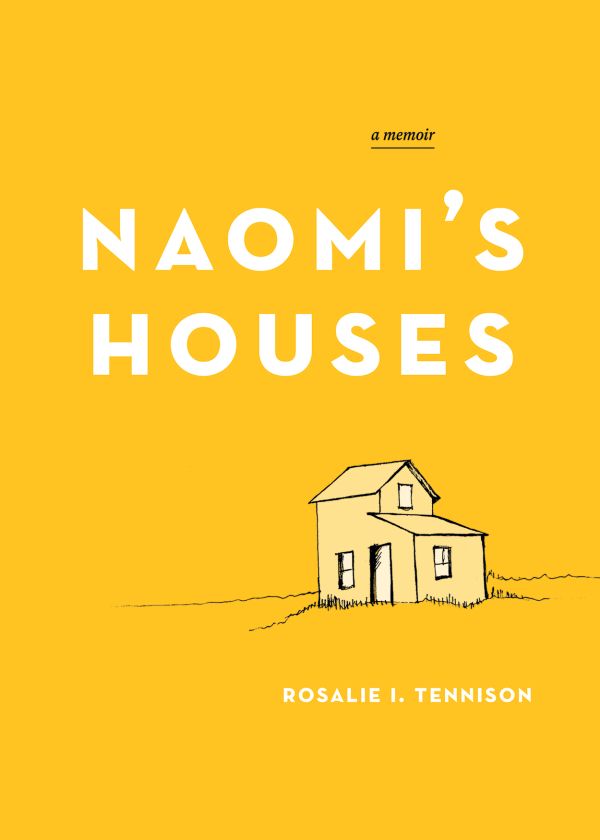
“The publisher, Heritage House, had asked me for ideas of what I would like to see on the cover and I shared those with them. In the end, the cover was nothing like I imagined, but I quite like it. I had to trust the experts when it came to this.
“We are in a different world today,” said Tennison. “Back when I pitched a story, you had to sit down, type out a letter and mail it. Maybe two weeks later, you would receive a letter indicating whether or not they were interested in your story. Now there are all these tools such as the Internet, email and form letters. All publishers have to do is type in an address, and they don’t even do that anymore. It should be so much easier to politely reject people’s submissions, but it’s not. Instead, publishers take the stance that if a writer hasn’t heard from them in six months, they can assume they don’t want the book.
“I had to create a table with all the publishers that had the date I submitted, what their criteria were for submissions, and when they stated to respond. I would go back to check and once it got to six months, I would assume they didn’t want the book.
“Heritage House only accept submissions in January and the only reason I didn’t submit to them earlier was because I missed the deadline,” said Tennison. “Eventually, I did send them my memoir, and they came through for me.
“It took a year before they said they would publish it, so I think it wasn’t so much what I learned about myself, but instead this whole process confirmed who I am. I’m not a quitter, and I come from some pretty sturdy farming stock who plotted along and did what they could for survival. I had a mother who instilled that in me.”
Tennison’s story is one that reflects on what it is like to grow up in poverty and the struggles that come with it.
“My family’s experience growing up in the Valley was very difficult,” said Tennison. “We were very poor, but I had good parents. My maternal grandparents were heavily involved in the community. My maternal grandmother was a leader in the Women’s Institute and my maternal grandfather started the local branch of the Farmers’ Union. They were highly and well-respected people.
“My paternal grandparents didn’t stay in the Valley very long. They left and also left my father to stay in the Valley. From there, my parents met and married. They struggled with poverty and then my father died.
“We were plunged into deeper poverty,” said Tennison. “We had to leave the farm we lived on outside of Bowman and move to Swan River. We ended up in a rundown house in Swan River and our family continued to struggle. Due to our financial circumstances, a lot of the time we felt unwelcome and it was really hard growing up.
“My mother did the best she could given her circumstances. Her focus was to ensure that her children did not end up in a similar situation that she had. She pushed us to get educated and find good jobs, to get out of poverty. It certainly wasn’t a life that she had pictured for herself. The truth of the matter is, one never knows when their circumstances might change. Poverty doesn’t play favourites and it’s colourblind.
“We were a family experiencing poverty,” said Tennison. “We were invisible. We had a really tough time. Fortunately, there were some people in Bowsman who helped us out from time to time, and I’ve never forgotten that.
“I did a book signing in Calgary in the middle of April, and a woman I grew up with in Bowsman and our parents were family friends, had her daughter drive her from Carstairs, Alberta, to see me. I was shocked and burst into tears. This woman told me how she remembered our family and that when her family was getting ready to head into Swan River on Saturdays, her mother had them fill a cardboard box of produce from the garden to give to my family to survive.”
Looking back at Tennison’s story and life experience of growing up in poverty, she feels that although she has survived this chapter in her life, poverty still impacts many people today in ways that most people can’t imagine until they have gone through it.
“The book touches on how people think we’ve come a long way and things have changed since then, but in essence, they really haven’t in the last 50 years,” said Tennison. “There are still people living in poverty and struggling, but the difference is that there are more social safety nets now than there were back then.
“We didn’t have a lot of those tools growing up.”
Tennison has matured and lived other life experiences that have helped shape the person she has become, but writing this memoir also helped her to gain a better understanding of just how much her mother did for her family despite having the odds stacked against her.
“I think it’s not so much that I learned much about myself when writing this memoir as it was about how it reinforced who I am, because I’ve always struggled with imposter syndrome at times and a lot of self-doubt, but I had a mother who said I could do whatever I want,” said Tennison. “That has always been at the back of my mind. So, when the going gets tough in life, which it often does for all of us, I hear her voice and think to myself that I can do this.
“Writing a book has always been something I wanted to do. I didn’t have a type of book defined at that time, but it ended up being one that was a memoir and a tribute to my mother. That positive reinforcement of being able to do this floated through the book as I wrote it. It took five years from the time I started writing to almost the day when I was standing in front of a crowd at McNally Robinson launching the book.
“A lot of people would be deterred by that length of time, but I kept persevering through dealing with different editors and maintaining my voice,” said Tennison. Then going through the submission process can be very off-putting and demoralizing. I was just about done, and only had three Canadian potential publishers left who may be potential possibilities, and then Heritage House wanted to publish my memoir.”
Tennison will be in the Valley for the Swan River Museum’s Heritage Day in August to promote and sign her memoir and to take a photo with her father’s car that was donated to the museum. Naomi’s Houses is available to purchase online from McNally Robinson, Indigo Chapters and Amazon.
Print this page
Journalist pens memoir about growing up in the Valley
Published in Swan Valley Star and Times Community
Published in
Swan Valley Star and Times Community
Tagged under