

Shawn Bailey
Sobering kept busy settling in to new role
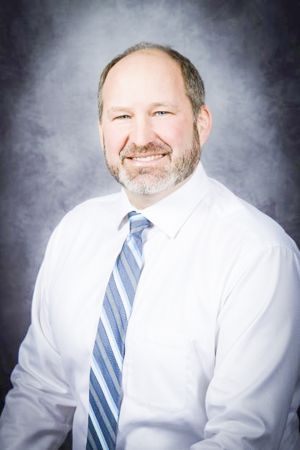
It has been a whirlwind for the City of Dauphin’s new mayor since he stepped into the job following the Oct. 28 election.
Steve Sobering said his days have been filled with meetings with City staff and getting a feel for the top job at city hall.
“The first week we basically did training. We didn’t have our first (planning and priorities) meeting and now the very next week is going to be Brandon, everyone’s going to the Association of Manitoba Municipalities. And we’ve been working a lot on going through all the committees, deputy mayor, that kind of stuff,” Sobering said.
“Then we’re settling right into budget, which means we sit down and we talk about what projects we want to tackle this year and multi-year.”
As a result, Sobering said he has not had an opportunity to sit down with council for some behind the scenes planning for the coming term.
“With scheduling, with all the meetings that were already committed to, we didn’t have a chance before, but I want to sit down with the council new and old and do a whiteboarding for projects - and it doesn’t always have to be capital - but just get a sense of what everybody desires out of their next four years,” Sobering said.
“What do they want to do this year, what they want to do next year. Just try and start writing things down.”
Sobering said he hopes to get a feel for why councillors, new and old, committed to serving the next four years,
“What do you want to do next or what do you think we need? And try and keep it specific, around something you can measure, not just saying ‘let’s address crime’, but ‘I want to reduce the number of bike thefts by implementing this exact thing’,” the mayor said.
“I want to see specific actionable items, so that we can look back at the end of the year and say, ‘Yeah, this was accomplished. We’ve got some momentum, but we still have work to do.’ Because we always seem to get lost in the momentum. You start your council year and you start working on stuff and there’s lots of stuff going on.”
For his part, Sobering would like to see an emphasis on tourism, not just pushing tourism out of city hall, but bringing together stakeholders from across the community for a concerted effort to attract visitors to the area.
Sobering is actively working on a plan he can present to council for consideration.
“With economic development, it is going to be a busy year. We’ve got developments. We’ve got the justice center, we’ve got the craft district, we’ve got Northgate, we’ve got a lot of economic development, we’ve got a lot of developers,” he said.
“Maybe our focus is increasing our visitors. We didn’t have our Ukrainian festival this year, we delayed our street fair this year. And you can tell when you don’t have those things. You can definitely tell it’s a different kind of summer. So, what can we do throughout the year to increase the amount of visitors, and not just how do we bring in conventions? How do we bring in concerts? How do we support festivals? How do we do sporting events? How do we track it and then how do we grow it? That’s one of the things I want to start with, because it’s already something we’re working on and I think it’s a bigger opportunity.”
Also on Sobering’s radar is the City’s relationship with the provincial government. Over the last four years, he said, former mayor David Bosiak fostered a close and productive working relationship with the government of Premier Wab Kinew, one that Sobering would like to continue and grow.
Sobering had the opportunity to meet with Kinew at the ceremonial groundbreaking for the Dauphin Centre for Justice immediately after being sworn in and he said it went well.
“It was a good meeting. I’m looking forward to working with the province. I think that relationship is really strong. I know mayor Bosiak had a really good relationship and I think I’ll have the same,” Sobering said.
Provincial priorities will benefit the Parkland, says Kostyshyn
The fourth session of Manitoba’s 43rd Legislature got underway last week with the Kinew government’s speech from the throne laying out provincial priorities leading up to next fall’s provincial election.
Themed “Stronger Today, Stronger Tomorrow”, the speech revolved around improvements to the province’s health care system and measures targetting affordability, highlighted by the planned reopening of the emergency room at Victoria Hospital in Winnipeg and a “mega” tax deduction for Manitoba families.
“We have come a long way together in just three years, but we know there is more work to do to make Manitoba even stronger,” Premier Wab Kinew said.
“In the next year, Manitobans will see new emergency rooms open, a mega deduction to help families with the cost of living and a sharp focus on shipping more critical minerals out of the Port of Churchill to grow our economy. Manitobans know the province is stronger today under our government and we will keep working with communities across the province to build an even stronger tomorrow.”
Other highlights from the speech include:
• taking the next steps to rebuild ERs at Seven Oaks and Concordia hospitals, which were closed by the previous government;
• opening the Eriksdale hospital ER in the fall of 2027;
• making the shingles vaccine free for seniors beginning next summer;
• introducing legislation requiring stores to display unit prices;
• creating an independent provincial disability advocate;
• matching the federal government’s mega deduction to help businesses grow;
• hiring industry expert Stacy Kennedy as the province’s chief mining officer to help reach the goal of tripling mineral production;
• investing in renewable energy through a battery-storage pilot project to support the province’s clean-energy grid;
• hiring more Crown attorneys and creating a new unit to fight white-collar crime;
• banning AI in real estate; and
• lowering costs for producers by freezing Crown land leases for a fourth year in a row and restoring the path to lease renewal.
For Ron Kostyshyn, Manitoba Agriculture minister and Dauphin MLA, the Crown land commitment is an important piece of an extremely positive throne speech.
“I feel so confident about it. We had a $2 billion deficit and we’re going to shoot for that balanced budget come next spring. The opportunity of trying to address the health care system and the justice system and agriculture, this throne speech, I think, has somewhat silenced the negativity (about) the positive that our government is really pushing for,” Kostyshyn said.
“Overall the health care system, the importance of the education system are all so key right now in rebuilding. The tariffs created a little bit of challenges for all of us. But at the end of the day, I think we’re moving in a positive movement for betterment throughout the province and Canada.”
Throne speeches outline a government’s plans for the coming legislative session and Kostyshyn said this particular one builds on past success, especially those realized in the Dauphin area.
“We fought hard for that justice facility to be built and the people in Manitoba, in the area, got an early Christmas gift of the announcement of the justice facility,” he said.
“With 240 people employed there, economic growth is going to happen in the Parkland area . . . it’s a reset of economic growth that we lost when (the Conservative government of the time) closed the jail.”
The ongoing recruitment of health care professionals has also benefitted the area, Kostyshyn said, adding the provincial systems boasts a net increase of 4,725 new health care professionals, including 500 new doctors.
“Some of those new doctors are coming into the Parkland. I just heard there’s one in Winnipegosis, a new doctor. I believe Grandview has a new doctor coming in and Ste. Rose. New health care workers and doctors are very key,” he said, adding making the shingles vaccine free for seniors is another important health care advancement.
“Health care, cost of living, economic opportunities for growth, that’s what we need. We need that social car to drive the economic growth.
“There’s so many things that are logistically moving. We’ve got opportunity of economic growth and I’m glad that Grandview, Ste. Rose, all those other programs that we brought in are working well.”
Details on these initiatives will be announced in the coming months, the premier noted.
Manitobans can read the full text of the speech from the throne at www.gov.mb.ca/thronespeech/index.html.
Fire chief waiting anxiously for word on Manitoba GRO application

Dauphin fire chief Cam Abrey is anxiously waiting to find out if a grant application to the Manitoba Growth, Renewal and Opportunities for Municipalities (Manitoba GRO) program is successful, so much needed renovations to the Dauphin Fire Station can get underway.
The application to the program, which covers 50 per cent of costs of shovel ready projects, was made around a $3 million budget meant to complete the first of three phases of the renovations.
“We had applied for the firetruck a few years ago and were approved, so we’re hoping that we can get something out of (Manitoba GRO) for the station renovations,” Abrey said.
The need for the redevelopment arose after engineers and architects were contracted to assess the existing building, constructed in 1970, which has seen two additions in the 1980s and a major renovation in the 1990s when the fire department took over the space from the RCMP.
“We wanted to know, is this building sufficient and will it handle another addition onto it. The engineers and architects came in said we have a great solid base,” Abrey said, adding he also wanted to determine if the department was housed in the proper location in the community.
“Being on an access to the highway right here was great and to the downtown area. So the location of the hall was extremely suitable.”
In the end a Class C estimate was provided outlining overall project costs of $5.5 million to $6.5 million.
“Knowing that we don’t have that money at this point in time, we worked with the architects to come up with a phased approach,” Abrey said.
With a leaking roof threatening possible structural damage to the building, it was identified as a priority for phase one, Abrey said, adding a new roof requires modifications or and installation of a new HVAC system. The roof will also house new communications equipment improving dependability of critical radio traffic.
“Right now we just have a short antenna. So from fire station to the truck in our protection area is not a problem. But when we’re outside of the truck with portable radios, we have communication issues and getting back to the fire station. We can talk to everybody on scene, but we can’t get back here,” he said.
“So the architects have also worked with one of the radio companies and, because it’s going up on the roof, they had to work that anchoring system in with their modifications there.”
Electrical upgrades were also included in phase one of the project as the numerous additions and renovations throughout the years has resulted in a disjointed and piecemeal system with panels and subpanels at several locations throughout the facility.
The HVAC work and communications upgrades demanded the electrical upgrades be a priority, Abrey added.
“We don’t have any backup power supply to this building right now. We’ve pulled generators off the trucks and run extension cords outside in order to keep our communications running, but we can’t fill air bottles for the SCBAs if our power is down. So, they’re looking at putting in the backup system, as well, with an emergency generator,” he said.
Finally, as the decision to apply to Manitoba GRO was made, Abrey said they decided to top up their ask with the addition of insulation work on the building by means of insulated panels applied to the exterior.
Abrey is expecting to hear a decision on the application in late February or early March 2027 and is hoping for some positive news.
“The thing is, there’s only so much money in the pot and I know of several fire departments that have applied for the GRO grant for fire trucks. So government has to make their decisions, as well. But fingers are crossed they pick us, too,” he said, adding getting half of the project completed with provincial government support would be “a big step.”
“And it is a shovel ready project. We have the blueprints in hand. They’re concept drawings, not the stamped engineered drawings, but everything’s there to be done. Hopefully that makes a difference.”
Abrey added an application to another funding source identified by the Canadian Association of Fire Chiefs has been made.
The new federal Climate Ready Infrastructure Service is offering funding to enhance climate readiness and low-carbon opportunities for new build or retrofit projects.
“I sent them all of our plans. They’re in receipt of everything that the architects have given us so far,” Abrey said.
“So, they’re taking a look at everything.”
Future phases
Phase two of the project involves adding to the footprint of the building with an addition squaring off the northwest corner of the station allowing for relocation of the kitchen, board room and fitness centre, as well as an expansion of the existing classroom and the addition of a storage area.
The third and final phase will involve the development of a decontamination area and clean room/locker room in the existing kitchen and boardroom.
Those changes will get firefighter gear off the apparatus floor, allowing more room for operational equipment currently being stored in a separate building.
City’s new mayor is ready to get back to work

After a challenging campaign, Steve Sobering is looking forward to setting the City of Dauphin on a course for four more years of progress and prosperity as its new mayor.
Sobering earned the top council job in the Oct. 28 municipal election with 1,136 votes, or 57.4 per cent of votes cast, ahead of challengers Keith Durston with 752 votes and Carter Taylor-Luke with 91 votes.
“We have a great community. We have businesses relocating here. We have population growth. We have people moving here,” Sobering said
“So I think there’s always those things that every community would like to improve, but we’re definitely in a great position in the City of Dauphin.”
With some new faces around the table, Sobering is looking forward to sitting down with his council to reaffirm priorities and discuss issues which he heard a lot about while campaigning.
Sobering heard from a lot of people leading up to election day and they were very clear about the issues they felt were important.
Crime, safety, homelessness and addiction and affordable housing were always a main topic, he said, and the City will continue to make those issues a focus of their operations.
“Every conversation always ended with that,” Sobering said.
“But there were also a lot of people who were just really excited to see some of the hopeful projects that are moving forward.”
A lot of that hope centres on building the tourism industry in the community and the area through partnerships with groups like Northgate Trails and businesses in the Second Avenue Northwest Craft District.
“There’s always room for improvement in everything we do,” Sobering said, adding he is excited for the City to get started on the Craft District project
“I’m looking forward to seeing us break ground on that. And then on to the next project. We have lots of potential here.
“I’ve also been talking to the organizers about getting a tour of the development at Northgate. Sounds like a lot of work has been done in carving out the trail network, and I want to make sure we do a good job of taking advantage of that project, tying it into our tourism, and just our overall making Dauphin a great choice for livability.”
When it comes to the Craft District, Sobering is a little confused about the strong opposition to the project among some groups.
Boiled down, he said, the concept is basically a sidewalk renewal, which would cost the City about $400,000 for a simple remove and replace. The budget for the project was set at $700,000, he said, with a contingency of $200,000, so if cost overruns materialized there would not have to be another round of council approvals stalling work.
People took that “possible” $900,000 budget, rounded it up and used the $1 million figure to fuel their opposition.
“But in reality it’s a $200,000 to $300,000 add-on to probably a $400,000 spend, which we would spend anyways if we’re doing curbs and sidewalks,” he said, adding the scope of the project pales in comparison to the Justice Centre, the Prairie Park Place Early Learning Centre or the Northgate development.
“Yet it’s probably going to have one of the biggest impacts, the best bang for our buck, out of all of those projects as far as the city is concerned.”
It’s all part of making Dauphin the best community it can be, full of opportunities and proud residents.
“My dream, if I looked at Dauphin 10 years from now, what I’d love to see is, when you drive in from the south, all the buildings are full on Main Street. We have a prosperous commercial district. All the buildings are in good shape and look attractive and inviting,” he said.
“There’s a multi-use path system that connects everywhere. So if you’re just a mom pushing a stroller for a newborn, or an elderly person zipping around on your mobility scooter, or just somebody out there enjoying a beautiful sunny day, you can get to wherever you want in the city safely and in a way you can enjoy. You’re going to find an attractive little tourist hub of our downtown. It won’t be a scary place to go, it’ll be an exciting place to explore.
“You’re going to have recreation. Whatever it is that means to you, you’re going to have it.”
Such lofty goals cannot be realized by one person, or seven around the council table, Sobering said. It will take the effort of the entire community pulling together so Dauphin can realize its potential.
“I would really encourage people, now that the election is over, people that were making posts on Facebook and really engaged in stating their opinion, positive or negative, just to get out there. If there’s something they’d like to see in Dauphin or something they don’t like in Dauphin, get involved and help out,” he said.
“There’s always groups looking for people to contribute. The food bank could always use more volunteers, more donations, more help filling those shelves. We have groups that are trying to do what they can for the people that don’t have homes and need care. We always have projects on the go, like Maamawi Park, they’re doing a next phase that you could get involved in. Northgate’s always taking on volunteers to help trail build. There’s so many things. Whatever it is that people are excited about, just go out there and contribute.”
Temporary hemodialysis unit opens
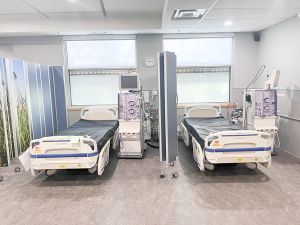
Area renal patients are once again able to access treatment in Dauphin thanks to the opening of a temporary hemodialysis unit in the Community Health Building in Dauphin.
The unit began serving patients yesterday (Nov. 2).
“We are so happy to welcome the patients back to Dauphin and staff back to Dauphin. We are optimistic that both will appreciate the new space, or the temporary space, where the dialysis unit will be housed,” said Prairie Mountain Health CEO Treena Slate, adding the unit will boast six stations, the same number as the regular service prior flooding in June, which forced the closure of the Dauphin Regional Health Centre.
While she has not yet received feedback from patients as of yet, Slate said staff are “very happy to be home.”
With winter approaching, Slate said it was important to have dialysis services available in the region once again.
“We don’t want people driving more than they need to, and it was my goal right from the beginning of this to get dialysis back there as soon as we could. So, really happy for this, and I would expect that patients and staff will be as well,” she said.
“It’s such a tremendous pull on your life to be on dialysis, three or four times a week, and having to commit to that. And then to add excessive travel onto that is . . . I can’t even imagine the impact that had on people. So I’m really happy that we’re able to have this back in Dauphin.”
In terms of the big picture, cleanup restoration work is continuing, Slate said, adding that during a recent tour of the DRHC’s lower level she was encouraged to see new hoses and cable hanging, capped off and waiting to receive new pieces of mechanical and electrical infrastructure when they become available.
“They’re having to do abatement in part of the basement still, so that work is continuing. But excellent progress has been made,” she said, adding that although there is no firm timeline in place, she expects things to progress quickly once equipment starts to arrive.
“Once the pieces start arriving, we can get systems back online. Then I’m hoping that getting the air-handling units in place, and enough airflow in the building, and heating, and the medical gases.
“I think we’ll start to see things open up in quick fashion.”
As for what services might be next to come online, clinical teams are providing input on “ what is dependent on what.”
Diagnostic services have expanded recently with the return of stress testing and ultrasound is back in its usual location.
“It would be nice to get our usual CT scanner room back up and running, just so that we can make some space for some of the other trailers that have to arrive,” Slate said.
“And we’ll see what else is possible in the coming months around some of the other services on that main floor, like endoscopy, and maybe moving cancer care back to Dauphin sooner rather than later.”
Ultimately, Slate will be pleased with the addition of any services back to the DRHC.
“Having any more beds open would be great, but we know that we need other things in place before all of that can happen,” she said.
“So we’re trying to be patient. I think we are. But it is very exciting when we tour to see the advancements that they’ve made. It’s just tremendous.”
Outgoing mayor wants to clear the air about Craft District project

With the voting in Manitoba’s municipal election looming, Dauphin’s outgoing mayor is worried some Dauphin residents may be considering casting their vote based on misinformation about the City’s Craft District vision for Second Avenue.
“I’m worried that it has become a wedge issue,” mayor David Bosiak said, referring to recent social media posts being shared claiming malfeasance on the part of members of council and City staff throughout the process.
“At no point in the planning or approval process was coercion, improper influence, or any attempt to circumvent policy or established municipal procedures involved. All decisions were made through the City’s required public processes, with council exercising its authority independently. I can state unequivocally that neither councillor Steve Sobering nor Economic Development manager Martijn van Luijn exerted any undue influence over the development or approval of the plan. Any claims otherwise are simply false.”
The concept of a Craft District emerged through community consultations undertaken in 2022 and 2023 as part of the development of the City Plan, a process which involved not only the current council, but also its predecessors, with the assistance of consultants from Urban Systems. The resulting City Plan was unanimously approved by council.
As a result of that work, Dauphin’s Economic Development Committee - which Bosiak chaired - recommended the development of a downtown revitalization plan, an initiative which received unanimous support from council, Bosiak said.
Urban Systems was once again contracted to lead the process following a request for proposals issued by the City.
The consultants undertook a planning process, which ran for more than a year and a half, Bosiak said, and included consultations with council, city administration, businesses, and the public at large, along with considering best practices and approaches taken in other Manitoba and Western Canadian communities.
As a result of that process, Urban Systems presented council with the Craft District concept, which was unanimously approved.
“Funding associated with the initiative was included in two municipal budgets, both of which were subject to the City’s public budget process,” Bosiak said.
“While there were questions, there was no indication of public disapproval at that time.”
The idea of a craft district is related to a broader vision of tourism, he added, and offers an important opportunity for promotion of the community. When coupled with other attractions, such as the Northgate Trail System, could mean big things for the local economy.
“A whole bunch of people are coming to Clear Lake already. How do we get them up to Dauphin and Northgate for a day or for a day and a half? What do we need to have besides a bike trail system? Maybe a funky little bakery, an artisan meat shop, a brew pub, a couple of neat restaurants, maybe a couple little stores on Main Street,” Bosiak said.
“Dauphin has that and it’s attractive to tourists.”
It is also attractive to people looking relocate to Dauphin permanently, he added.
“To young professionals like lawyers, doctors, nurses, lab techs and other people that we need here. People that want to work in the justice center, people that want to work in the treatment center. They can fill their weekends right here,” Bosiak said, adding he has heard feedback to that effect from young RCMP officers, who have recently come to work in the city because of what it has to offer and because of its potential.
“Dauphin right now is top of the list in Manitoba of where young officers want to go.
“Our issues are very similar to other municipal issues in Manitoba and across the country, but our opportunities are very unique. We need to act on them.”
Progress is being made at DRHC, says Slate
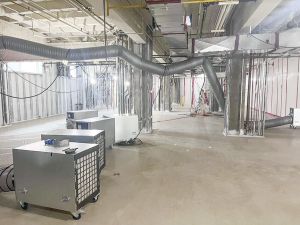
While there is still no timeline in place for the complete reopening of Dauphin Regional Health Centre, Prairie Mountain Health CEO Treena Slate was in Dauphin, last week, meeting with engineers and contractors trying to nail down something more definite.
“We’re meeting with our clinical folks, the engineering company, and our construction company, and working on developing a schedule and a set of priorities based on what the clinicians see are the priorities,” Slate said, adding all options are being explored should systems such as HVAC and other infrastructure or medical gases become available.
“So we are hoping for some overarching, high-level timelines or estimates in terms of what the public can expect in the coming months. But with what we know right now, we want to try to plan with what systems we have, so we can open sooner rather than later.”
Slate added some announcements are expected soon around cancer care, hemodialysis and the expansion of lab services to support patient care.
“Around some of the tests that will be offered. That’s important. We want to make sure that we’re supporting physician practice and clinic practice,” Slate said, adding more lab services will also benefit the public in tangible ways.
“Because people are right now having to travel for some of those tests, and we want to limit that as much as we can.”
With the emergency department open and other services increasing, the need to get more support departments up and running is more urgent.
“We are working on also getting some mobile trailers in to support some of the services that are going to be shut down for a long period of time. We’re not going to have a sterilizer for a long period of time. We’re not going to have a pharmacy for a long period of time,” she said.
“So we’re working on getting some mobile supports for those services in, so that we can get things up and running as soon as we can.”
Those services which can be offered, such as emergency medical services, have been operating well and have been busy, Slate added.
“The volume, the number of patients we’re seeing in the Dauphin emergency room, are pretty close to what we normally saw in the Dauphin emergency room. So that’s a good sign that people are accessing that service,” Slate said, adding PMH is constantly looking to tweak operations to make things more streamlined.
(The ER) has actually been working okay. I mean, it’s not the same as it always was, so we’re working on improving accessibility to spaces in the emergency department. Those are things that we can expand sooner rather than later in the emergency department to get it a little bit more functional and accessible.”
From the beginning, much of the remediation work has focussed on the hospital’s crawl space, which houses many of the mechanical systems and was completely filled with silt from the flood waters. Meaningful progress on that work has been made, Slate said.
“They’ve done a tremendous job of cleaning out that silt. After that’s cleaned out, they still have to do soil testing and some remediation work in there, and then they can at least get at some of the infrastructure to start replacing it and get working on that,” she said.
“It’s not completely done, but they’ve made really good progress on it.”
Throughout it all, feedback has been positive, Slate said, from the public and from PMH staff.
Patients and staff are pleased things are getting closer “normal” and ensuring critical services such as cancer care and hemodialysis back close to home before the snow flies is really key, she said.
“The staff that can be home and working, I think are, for the most part, happier to be here. But really, everybody wants everything back up and running just as it was. We want that, too, of course,” Slate said.
“We just have to work with the project teams on getting things done as soon as we can, and making sure that the clinicians and the frontline staff are involved in that planning, so that they can inform what makes sense in terms of their workflows and providing the most appropriate care for patients.”
Province injects $100,000 in Maamawi Park
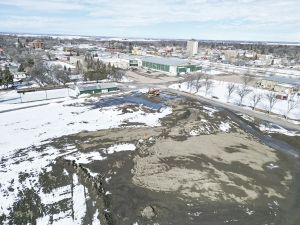
Development of Maamawi Park in Dauphin is being advanced by a $100,000 gift from the Province through the From the Ground Up - Safe Healthy Communities for ALL program.
The money is earmarked for the third phase of the project aimed at developing a new learning and activity centre promoting healthy recreaton, inclusion and reconciliation in the region.
“Strong communities are built around places where people can gather, learn, play and connect,” Municipal and Northern Relations Minister Glen Simard said in announcing the grant, last week.
“Our government is proud to support Maamawi Park, because it creates a safe and healthy community space for everyone in Dauphin. This investment will provide new opportunities for families, children, elders and visitors to enjoy the outdoors, while deepening understanding of Indigenous history and culture in the Parkland region.”
This phase of the community-led project will expand recreation opportunities, while creating a safe, healthy and welcoming space for residents of all ages. The goal is to establish the first of four planned learning and story stations.
The activity station will be themed “the north” and will feature interactive play and exploration areas, Indigenous storytelling elements, public art, educational signage, landscaping and gathering spaces developed in collaboration with Indigenous partners.
Planned features include a bear tunnel play structure, cedar groves and shelters, musical play elements, Indigenous artwork and storyboards, as well as native plants and landscaping.
“This project reflects what makes the Dauphin area such a great place to live - people coming together to build something that benefits the whole community,” said Agriculture Minister and Dauphin MLA Ron Kostyshyn.
“By investing in Maamawi Park, we are creating more opportunities for children and families to be active, supporting reconciliation through learning and understanding, and helping ensure Dauphin remains a safe, healthy and welcoming community for generations to come.”
The free and accessible learning centre is expected to serve not only the City of Dauphin and the Rural Municipality of Dauphin, but also the broader region and neighbouring First Nations communities.
“Maamawi means together, and that spirit has guided this project from the beginning,” said Larry Budzinski, a member of the Maamawi Park Steering Committee.
“The next phase will create a unique space where people can gather, play, learn and celebrate Indigenous culture together. We are grateful to the Manitoba government and all our community and Indigenous partners for helping bring this vision to life.”
The project is being led by Dauphin Recreation Services in partnership with the Anishinaabe Nations in Treaty 2 Territory, the Northwest Métis Council, the Dauphin Friendship Centre, the City of Dauphin, the Rural Municipality of Dauphin and other local organizations.
Dauphin Recreation Services is a non-profit organization led by a board of directors, funded jointly by the City of Dauphin and the RM of Dauphin. It manages facilities and parks that serve both municipal regions, including 11 parks inside the city and four parks in the rural municipality.
The From the Ground Up - Safe Healthy Communities for ALL program provides up to $100,000 to help non-profits, municipalities and northern affairs councils fund community revitalization, youth programs and capital improvements that strengthen local infrastructure and support vibrant community life.
Candidates set for October vote

The candidate list for the Oct. 28 general municipal and school board election has been set and ballots are being printed.
City of Dauphin
In the City of Dauphin, three people are vying for the mayor’s chair left vacant by the retirement of David Bosiak. Hopefuls include current councillor Steve Sobering, along with Keith Durston and Carter Taylor-Luke.
There are 10 people attempting to secure six council seats on the next City council. Incumbents Christian Laughland, Devin Shtykalo, Ted Rea and Randy Daley are all seeking relection and will be joined by new candidates, including Amanda Novak, Michelle Nyquist, Jason Alf, Michael Winters, Scott McCallum and Richard Mitchell.
RM of Dauphin
Voters in the Rural Municipality of Dauphin will not have to make any decision regarding the municipal council as all candidates are acclaimed.
Ernie Sirski will return for a second term as reeve, while incumbent councillors Ken Plustwa, Ken Shewchuk, Tammy Koshowski, Todd Boguski and Midge Sametz are also all acclaimed.
The RM will be short one councillor, however, as no one stepped up to take the seat left vacant with the retirement of councillor Ron Ryz.
MVSD
The creation of a new board of trustees for Mountain View School Division will involve elections in three of four wards.
Incumbents Floyd Martens and Scott Lynxleg have been acclaimed in Ward 1, while Ward 2 will see Kyle Lylyk and Mindy Rickards compete for one seat on the board.
In Ward 3, five candidates are hoping to secure one of two seats on the board. They include incumbents Sonia Blanc, Gabe Mercier and Jason Gryba, along with newcomers Wanda Sime and Matthew Bayduza.
With four seats open in Ward 4, incumbent Jarri Thompson is joined on the ballot by Dan McKay, Rigby Devos, Michelle Smigelski and Rodney Juba.
Lakeshore
In the Rural Municipality of Lakeshore, Richard Kachur has been acclaimed reeve and three councillors - Cherie Robertson, Diana McIntyre and Michael R. Brunen - have been acclaimed in Ward 2.
Voters, however, will have to choose three councillors in Ward 1 from a list of candidates, which includes Claude Hykawy, Crystal Charlebois-Fiddler, Teddy Sraybash and Rick Paradis.
Ste. Rose
In Ste. Rose, Robert Killam has been acclaimed as mayor, but there will be an election for council with six people looking to fill four seats.
Candidates include Shari Maillard, Julie Peloquin, Darrel Deslauriers, Joey Frobisher, Steven Hopfner and Ivan Worrall.
Mossey River
Mossey River Municipality will see elections held for reeve and urban council positions, while three rural councillors - Greg Boyko, Alden Zurba and Leon Bergen - have been acclaimed.
Reynold Sahulka and John (Jack) Fleming are vying for reeve, while Justin Barsewsky, Angel Johnson, Rodney Grahn, Sherry (Harrison) Lytwyn, Roger Pilon and Ivan Fleming are squaring off to become urban councillors.
Gilbert Plains
Election interest in the Gilbert Plains Municipality is high with numerous candidates in the running.
James Manchur and Larry Malowski will square off for the reeve chair, while council positions will be contested by Raymond Rodgerson, Craig Von Bargen, Carsten Dykun, Aaron Klepak, Lyall Bates, Kristen Rubeniuk, Brett Ewanyshyn, Charles Jeffers, Leanne McKay, Grant Pope, Aaron Dykun, Drisen Harapiak and Vern Ellis.
Ethelbert
Voters in the Municipality of Ethelbert will have some choices to make on polling day with a full slate of candidates seeking election.
Mike Semeniuk and Kevin Boese are seeking to become reeve, while hopeful councillors include Bruce Podolsky, Greg Woytkiewicz, Cory Chymy, Dusty Rushinka, Debbie Jodouin, Wayne Pitura, Richard Evans, Randy Hancharyk.
Voting day in the 2026 general municipal election is Oct. 28.
CCC successful in secure much-needed funds
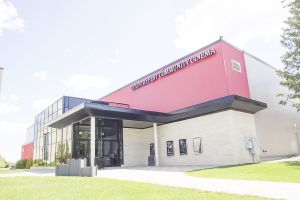
A successful fund-raising campaign has brought Countryfest Community Cinema back from the brink of financial disaster and has the organization excited about the future.
With customers slow to come back after the pandemic Countryfest Community Cinema launched a plan to raise urgently-needed capital, through a GoFundMe effort and a corporate fund-raising campaign, raising about 80 per cent of its $100,000 goal, said board chair Ron Hedley.
“We again got such good support,” Hedley said.
“I just appreciate how people have come and stepped up to help with the theater every time we ask.”
Hedley said the theatre has paid off in excess of $1.4 million from it’s mortgage in the 15 plus years it has been open, however, pandemic restrictions meant the organization had to drain its reserves to stay afloat during COVID. Getting the crowds back to not only cover operating cost, but to also build those reserves back up has been difficult.
“This is the second time where we said we’re kind of desperate right now,” Hedley said.
“It’s a tough market. We’re pretty self-sufficient, but we also know that we’re at the mercy of Hollywood and the movie quality. It’s going to be a struggle for a while, but we are holding our own.”
To help shepard the organization through the rebuilding, a new manager has been hired.
Angelena Neely brings a wealth of experience in the service industry, with staffing and running businesses.
“She’s been incredible so far,” Hedley said.
“So that combination, along with her excitement, has us feeling good.”
That does not mean the organization is resting on its laurels, Hedley said.
Although plans are still being worked out, Countryfest Community Cinema is planning a membership drive, selling monthly subscriptions to the theatre.
“Ask people to step up. That won’t be any big fund-raising campaign, but more about the same way you pay for Netflix or Amazon or whatever. That would be $20 to $25 a month that goes to the theater,” Hedley said, adding he would hope to sign up 200 to 300 people.
“I think it’s very attainable, because people have always stepped up to help.”