

Shawn Bailey
Monthly RCMP stats show downward trend
The Manitoba RCMP West District, which includes the City and Rural Municipality of Dauphin, reported a decrease in calls for service in November compared to the same time period last year.
Calls for police assistance in the district dropped from 5,002 in 2021 to 4,821 this past November, a decrease of eight per cent.
The results were part of a provincewide trend which saw calls in the East District drop 11 per cent from 6,615 to 7,048 and the North District report a nine per cent drop from 6,389 to 5,862 calls for service.
Overall, the Districts’ occurrence counts combined decreased by 10 per cent from 15,651 in 2021 to 14,153 in 2022.
During November 2022, West District reported an increase in crimes against a person, which was up by 16 per cent, while crimes against property decreased by 17 per cent, over the same period in 2021.
The following increases and decreases were highlighted in the statistics released, last week.
Common police activities - Overall, there was a decrease of 11 per cent from 544 occurrences in 2021 to 486 in 2022. The largest decrease occurred in people reported missing, which was down by 42 per cent from 81 reports to 47. That was followed by suspicious person, vehicle or property which dropped by 24 per cent from 193 calls in 2021 to 147 in 2022. The largest increase was in the wellbeing check subcategory, which was up by 29 per cent from 84 to 108, and breach of peace, which increased 13 per cent from 106 to 120.
Crimes against a person - Crimes against a person increased overall by 16 per cent from 270 calls in 2021 to 312 in 2022, with increases occurring in forcible confinement which was up 200 per cent from three to nine. Robbery, extortion, harassment and threats reports were up 20 per cent from 76 to 91 and sexual offences were up 18 per cent from 22 to 26.
Crimes against property - Crimes against property decreased 17 per cent overall, from 708 calls for service in 2021 compared to 588 this year, with notable decreases in break and enter which was down by 35 per cent from109 to 71, followed by arson which was down by 31 per cent from 13 to 9. Theft over $5000 increased minimally by eight per cent from 48 to 52 occurrences.
Drug enforcement - There was a 10 per cent increase overall in drug enforcement from 30 occurrences in 2021 compared to 33 this year, with possession up 100 per cent from five to 10. Trafficking was down by 25 per cent from 20 to 15.
The complete statistics can be found at www.rcmp-grc.gc.ca/mb/stats/index-eng.htm.
For a listing of the communities served by each District, visit www.rcmp-grc.gc.ca/mb/stats/districts-eng.htm.
Giving Challenge a boon for community foundation
Dauphin District Community Foundation (DDCF) is $172,381.93 richer thanks to this year’s Endow Manitoba Giving Challenge.
As part of the annual campaign, Nov. 14 to 20, gifts to Manitoba community foundations’ undesignated funds were “stretched” by a maximum of $4,000 thanks to The Winnipeg Foundation and the Manitoba government, that each provided a maximum of $2,000 in matching funds per foundation.
During the week, DCF received 247 gifts totalling $168,381.93 which earned the maximum donation from the province and the Winnipeg Foundation.
Provincewide, community foundations received gifts totaling more than $1.68 million during this year’s Endow Manitoba Giving Challenge, the most raised during the nine-year history of the challenge.
“Community foundations are built by citizens working together to ensure their local communities have access to reliable and stable funding for their charitable activities,” Alan Goddard, director of Endow Manitoba, said.
“Manitoba is the most generous province in Canada, and we have the most community foundations, per capita, in North America. The growth and success of the Giving Challenge is one of the many ways we show that we care for our communities, now and for future generations. Gratitude to all our donors, volunteers, and event partners - including the Manitoba government - for the stretching gifts made to each community foundation during the Giving Challenge.”
Endow Manitoba Giving Challenge 2022 highlights:
• $1,684,041.75 raised;
• $1,492,538.83 total gift value;
• $191,502.92 total stretch value;
• 2,828 gifts made; and
• 39 community foundations received maximum stretch.
Community foundations are charities, built by communities for communities.
Gifts are pooled and permanently invested, and the interest earned is granted to local initiatives each year. Since the capital is never spent, gifts support the community forever.
Every year, community foundations invest millions of dollars into a wide range of local charitable projects, helping ensure Manitoba communities are vibrant and thriving.
Endow Manitoba represents the network of the province’s community foundations. An initiative of The Winnipeg Foundation, Endow Manitoba works with the province’s 57 community foundations to increase their impact and to advance the movement.
Christmas joy
West Region Treaty 2 and 4 Health Services Jordan’s Principle program made things festive in Dauphin Sunday, as it hosted its first ever Christmas celebration for off reserve Jordan’s Principle families at the Parkland Recreation Complex.
The Aspen Lodge and Curler’s Lounge were filled to the brim with children and their families enjoying a turkey dinner and visits and pictures with Santa Claus.
The afternoon was filled with free movie passes, gifts for the children, some superb door prizes and a whole lot of Christmas spirit.
Jordan’s Principle makes sure all First Nations children living in Canada can access the products, services and supports they need, when they need them. Funding can help with a wide range of health, social and educational needs, including the unique needs that First Nations Two-Spirit and LGBTQQIA children and youth and those with disabilities may have.
Jordan’s Principle is named in memory of Jordan River Anderson. He was a young boy from Norway House Cree Nation in Manitoba.
Last minute ideas
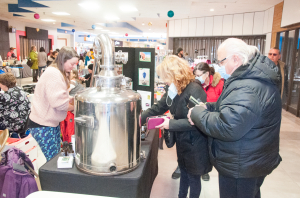
Essential oils were just one of the last minute gift ideas available at Dauphin Market Place Mall over the weekend as crafters and home based businesses gathered in the concourse for the Winter Global Market.
All booths in the centre of the mall were doing a brisk business Saturday afternoon.
MVSD invites input into budget priorities
Mountain View School Division (MVSD) invited the community into its budgeting process through a 2023-24 Pre-Budget Consultation, Dec. 5.
The evening provided an opportunity for MVSD trustees and staff to get a sense of the community’s priorities as it embarks on setting out the numbers.
“The establishment of the school division budget is indeed a significant part in our role as trustees,” board chair Floyd Martens told those assembled in person at the division office and on online.
“In many ways it sets the direction or vision for the school division by putting resources where our priorities are.”
Martens stressed input from the public is crucial to ensure the direction set by trustees is lined up with community priorities.
“It’s important to hear, and have as many opportunities to hear from community members as we can when it comes to developing the budget,” he said.
Get the full story in this week's Herald!
Frances Chartrand awarded Queen Elizabeth II Platinum Jubilee Medal
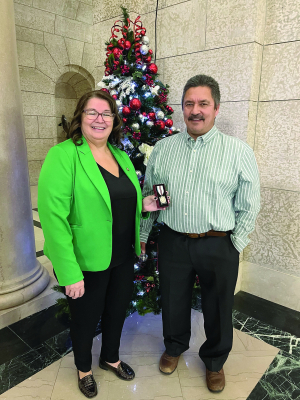
Frances Chartrand is a huge supporter of the British Royal Family. And, that support makes her recent receipt of a Queen Elizabeth II Platinum Jubilee medal, that much sweeter.
“It feels great. I got a letter from the Leg. in the first week of November,” Chartrand said, adding she was nominated to receive the medal by several people, with the one recognized in the correspondence coming from NDP leader and MLA for Fort Rouge, Wab Kinew.
“I’m a big fan of the Royal Family and I just love Canada and I love the Northwest Region and I love Parkland,” Chartrand added, displaying the kind of passion that got her nominated for the recognition.
“I want to thank my nominators, it was a huge honor and I want to thank the Province of Manitoba for recognizing the Queen’s commitment and her 70-year reign.”
The vice-president of the Manitoba Metis Federation based at the Northwest Metis Council Inc. office in Dauphin received the medal at a special ceremony at the Manitoba Legislature, last week.
Premier Heather Stefanson and Lt.-Gov. Anita Neville handed out the awards to commemorate the 70th anniversary of Queen Elizabeth’s accession to the throne in 1952.
“As recipients of the platinum jubilee medal, each of you brings the spirit of public service to life,” Neville told the recipients during the ceremony.
“Each of you leads by example. Each of you takes responsibility for making your community, your province and your country a better place.”
Queen Elizabeth, Canada’s head of state and the longest-reigning British monarch, died, Sept. 8 at Balmoral Castle in Scotland.
“In fact, I was in Scotland when the Queen passed away,” adding she had tried to earlier visit Balmoral Castle and was not allowed entry.
“But we went to Edinburgh, So we were on the Royal Mile and we were having dinner at five, well before five, I guess, and they made the announcement. Then some of the staff came and told us the queen passed away, so they started shutting down the Royal Mile. So we went to her palace and put flowers and paid tribute to her before we left the Royal Mile. So that’s a real piece of history.”
Manitoba was one of five provinces which decided to provide medals for their residents after the federal government opted out of offering medals for the Queen’s Platinum Jubilee.
Chartrand is appreciative of the recognition as it raises awareness about the work of the Manitoba Metis Federation in the Northwest Region and across the province.
“It’s a recognition, I believe. People think that ‘they’re way up there’ and they don’t understand and recognize what we do at the local level and the community involvement we have in the programs and services we’re able to bring to our citizens,” Chartrand said.
One hundred and forty Manitobans have received the medals so far, with a total of 1,000 selected to receive the honour. The remaining medals will be awarded at future ceremonies throughout the province.
Chartrand selected for Queen Elizabeth II Platinum Jubilee Medal
Francis Chartrand is a huge supporter of the British Royal Family. And that support makes her recent receipt of a Queen Elizabeth II Platinum Jubilee medal, that much sweeter.
“It feels great. I got a letter from the Leg. in the first week of November,” Chartrand said, adding she was nominated to receive the medal by several people, with the one recognized in the correspondence coming from NDP leader and MLA for Fort Rouge, Wab Kinew. “I’m a big fan of the Royal Family and I just love Canada and I love the Northwest Region and I love Parkland,” Chartrand added, displaying the kind of passion that got her nominated for the recognition. I want to thank my nominators, it was a huge honor and I want to thank the Province of Manitoba for recognizing the Queen’s commitment and her 70-year reign.”
The vice-president of the Manitoba Metis Federation based at the Northwest Metis Council Inc. office in Dauphin received the medal at a special ceremony at the Manitoba Legislature, last week.
Premier Heather Stefanson and Lt.-Gov. Anita Neville handed out the awards to commemorate the 70th anniversary of Queen Elizabeth’s accession to the throne in 1952.
“As recipients of the platinum jubilee medal, each of you brings the spirit of public service to life,” Neville told the recipients during the ceremony. “Each of you leads by example. Each of you takes responsibility for making your community, your province and your country a better place.”
Queen Elizabeth, Canada’s head of state and the longest-reigning British monarch, died, Sept. 8 at Balmoral Castle in Scotland.
“In fact, I was in Scotland when the Queen passed away,” adding she had tried to earlier visit Balmoral Castle and was not allowed entry. “But we went to Edinburgh, So we were on the Royal Mile and we were having dinner at five, well before five, I guess, and they made the announcement. Then some of the staff came and told us the queen passed away, so they started shutting down the Royal Mile. So we went to her palace and put flowers and paid tribute to her before we left the Royal Mile. So that’s a real piece of history.”
Manitoba was one of five provinces which decided to provide medals for their residents after the federal government opted out of offering medals for the Queen’s Platinum Jubilee. Chartrand is appreciative of the recognition as it raises awareness about the work of the Manitoba Metis Federation in the Northwest Region and across the province.
“It’s a recognition, I believe. People think that ‘they’re way up there’ and they don’t understand and recognize what we do at the local level and the community involvement we have in the programs and services we’re able to bring to our citizens,” Chartrand said.
One hundred and forty Manitobans have received the medals so far, with a total of 1,000 selected to receive the honour. The remaining medals will be awarded at future ceremonies throughout the province.
Adopt-A-Family halfway to it goals, more donors needed
Laverne Hudson is about halfway to where she wants to be.
The long-time organizer of the Catholic Women’s League-run Adopt-A-Family program said 94 families needing hampers this Christmas season have been adopted through the program so far.
“I’m hoping to be at least over last year. I was at 165, so I would like to beat that,” Hudson said. “It takes the pressure off of the food bank and the Angel Tree.”
Currently 238 families have registered for a Christmas Hamper this year, up about 20 from 2021. With the state of the economy right now, Hudson thought that number might be higher.
“It doesn’t jump drastically, we thought maybe it would. It’s up a little bit this year, but it hasn’t been outrageous,” she said. “There’s a lot of people in need and maybe they’re just struggling to get by on their own. The food banks are very busy, but maybe they didn’t think of applying for a hamper. That’s possible.”
Anyone wanting to adopt a family can phone Hudson at 204-572-4677, or Blanche Lefebvre at 204-638-5980. Contact can also be made through email at This email address is being protected from spambots. You need JavaScript enabled to view it..
Get the full story in this week's Dauphin Herald!
City and RM representatives attend AMM
Dauphin’s new city and RM council attended its first Association of Manitoba Municipalities (AMM) convention and city mayor David Bosiak thinks it was a worthwhile endeavour.
Last week’s meeting, he said, provided a needed opportunity for newly-elected officials to network with provincial officials and bureaucrats, as well as other elected representatives new to municipal politics.
“What was most interesting, I’ll be honest, was sitting in and meeting the others in the Cities Caucus. Of that group of 10 of us, six have new mayors. So there’s a fairly significant level, 46 per cent overall this year, of new councillors or mayors, which is one of the highest levels AMM has ever experienced. So there’s a significant turnover of people,” Bosiak said.
Bosiak also found interesting the diversity of election experiences across the province with some municipalities having their entire council acclaimed and others, such as the City of Dauphin which had near record levels of participation, driven by philosophical differences.
“That really struck me, that disparity,” Bosiak said, adding that seemed to drive the overall feel of the convention. “This is my first AMM as an elected person, so I can’t say that this hasn’t happened previously, but there seemed to be a priority from AMM to share information and encourage good behaviour. There was a couple of speakers that were talking about governance and democracy and how to try and maintain good governance and have a democratic process,” Bosiak said. “There was a couple of specific points made about the conflict of interest guidelines that the province has now established that all councillors and elected heads of council have to participate in. So I think that was probably a historic undercurrent of recent disfunctions in some municipalities that is being addressed by AMM. Overall, I think that that’s their message.”
When it came to interactions with the province, Bosiak said there was a good showing of cabinet ministers who were quick to announce new programming, Bosiak said, adding AMM members were more concerned with the seven year freeze on municipal operating grants and the promise of a number of previously announced programs which have yet to be funded by the province, such as the Community Safety and Well-Being Planning Pilot Project on which Dauphin has been waiting.
“There were 29 resolutions at this conference, most passed, and many were about the province loosening the purse strings and helping municipalities,” Bosiak said. “The one thing that I knew before, but it was made crystal clear to me was the federal and provincial governments can run deficits, municipalities can’t. They talk many times about how municipal governments are closest to the people, yet we have very limited abilities to defer expenditures that are imposed upon us or alternate abilities to generate revenues.”
That relates directly to another of the major issues, Bosiak said, which was the debt looming over communities related to the RCMP’s first collective bargaining agreement and the retroactive pay associated with it.
“The real sticky point there for municipalities was we weren’t around the table during the negotiations,” Bosiak said, adding the city’s director of finance, Scott Carr, has indicated the issue is the biggest financial matter facing the community. “If we can get some relief on that retroactive pay amount, our ability to manage is much better. But will be really squeezed if we’re forced to find that retroactive pay and submit it to the RCMP.”
While City representatives did not have an opportunity to meet one-on-one with provincial ministers, Bosiak said meetings with RCMP representatives and provincial bureaucrats, as well as informal conversations with elected officials made him feel as if they are being heard.
All in all, he is pleased with the experience and the fact the entire council, with the exception of councillor Devin Shtykalo was able to attend.
“We did a lot of listening and we met a lot of other council members and leaders from around the province,” Bosiak said. “So I think it was a very worthwhile effort for us.”
Meanwhile, Ernie Sirski, the new reeve of the Rural Municipality of Dauphin, attended his first Association of Manitoba Municipalities meeting, last week as well.
Sirski had no expectations going into the meetings and was hoping to just learn as much as he could.
“I think I know what my role is as a reeve. I think I’ve got that figured out. But it’s more to try and figure out where we sit in the bigger picture of the municipalities of Manitoba and, hopefully, what we can accomplish and how we move this province forward,” he said. “That’s the big one. Because we don’t operate in a vacuum. We operate along with a whole bunch of other people.”
There were some training sessions for newly-elected reeves, mayors and councillors, as well as other information regarding other organizations they have to deal with.
“It was okay. It was alright,” he said.
Sirski was able to re-establish contact with people he has known for years, but hasn’t seen in a long time.
“It’s a really small province that we live in when you add everything up. When I say it’s a small province, I saw people that I’ve known for 30 years, that I haven’t seen for 20,” he said. “And then I met a whole bunch of new people, as well. It was a great opportunity.”
In meetings such as this, Sirski feels, ‘you get out what you put into them,’ so he was out meeting and connecting with people.
“I guess the thing I’m looking forward to is working with staff, whether it’s administration or public works in our rural municipality. I’m hoping that we can move this municipality forward in co-operation and collaboration with other organizations and municipalities in our area to make the Parkland something that people can come visit. That farmers can continue to practice their best practices for farming and to make sure that agriculture remains a strong and vibrant business in this area,” he said.
Stay fire safe through the holidays, the rest of winter

Winter is nearly upon us and, whether through festive holiday lighting, fireplaces, electrical heating units or cooking for family gatherings, the winter months frequently provide opportunity for exposure to fire hazards.
This week is the Canada Safety Council’s National Home Fire Safety Week, centering on the theme of being proactive and freeze out winter fires.
“One of the big things that we go to on a regular basis with the Dauphin Fire Department are those vehicle fires from your extension cords,” Dauphin fire chief Cam Abrey said. “The continual use of them, people folding them up and crimping the wires and throwing them into the back of their vehicle and pulling them out. We have to watch that we replace those cords on a regular basis. Make sure that you’re checking them, that there’s no bare wires.”
With everyone preparing for Christmas and decorating their homes, inside and out, using CSA approved decorations in a proper application, Abrey said. Inspect those devices for bare or frayed wires and ensure you are not overloading circuits.
“We don’t want to be Clark Griswold of Christmas Vacation, overpowering the home of what it can actually handle,” Abrey said.
Symptoms of an overloaded circuit can include flickering or dimming lights, blown fuses, a tripping circuit breaker and a burning smell. Cooking can be a cause of fires at anytime of the year, but can be an even bigger concern through the holidays with extended family and other guests in the home, Abrey added.
“We’re cooking extra food, more than normal, so keeping an eye on your cooking is important. Don’t leave your cooking unattended,” he said. “It’s the same messages that we promote throughout the entire year.”
Finally, with the colder weather, home heating appliances deserve special attention, Abrey added.
“Whether you have electric heat or natural gas or you’re using wood heat, all of that can also have some incidents if you’re not doing regular inspections,” he said.
For fireplaces and other wood-burning appliances, ensure chimneys are cleaned on a regular basis, Abrey added. For electric and natural gas furnaces, regular maintenance performed by a qualified technician is a must.
“Also remember to have carbon monoxide detection in the home if you do have any kind of a fuel burning appliance,” Abrey said. “It’s more than just the fire safety, it’s people’s general safety that we’re concerned for.”
This heightened exposure to fire hazards during colder months unsurprisingly leads to more fatalities. According to Statistics Canada, between 2011 and 2020, the four highest average incidents of accidental fire-related fatalities by month occurred in January (210), March (195), February (180) and December (165). Additionally, residential properties accounted for 92 per cent of all unintentional fire-related fatalities in that same time period.
Avoid becoming a victim in your own home - ensure your residence is equipped with working tools including smoke alarms and a fire extinguisher, and ensure that you and your housemates have an established and practiced escape plan.
“Never forget that you want to plan and practice your home fire escape plans and make sure that your smoke alarms are actually working,” Abrey said. “And do have a functioning fire extinguisher in the home, as well.”