

Jennifer Laviolette
Every life has value: blind cat turned movie star
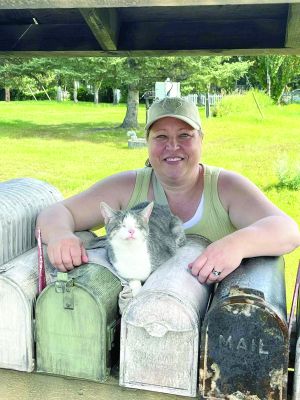
Sometimes people and animals are born with challenges that may impact the way they live. For some, it can be debilitating and for others, an opportunity to overcome adversity. Former Valley resident Michelle (Gerhardt) Neufeld had dedicated her time and energy to rescuing and saving animals, to find them a loving home.
“My family lived in the Valley around 1979, when my father managed the Macleods hardware store,” said Neufeld. “We stayed until about 1982 or 1983 and became close friends with the Hagglund family, who we remain connected with to this day. Since 1988, we have called Steinbach our home.
“I’m the president of Steinbach and Area Animal Rescue, which I founded in 2013. Today, we are one of the largest animal rescues in Manitoba outside of Winnipeg and Brandon. Each year, we take in hundreds of animals and help them find loving homes. We operate a brand-new facility in Steinbach, built in 2024, and continue to rely heavily on our incredible network of fosters and volunteers.”
One cat in particular has found its way into Neufeld’s heart and home. This cat was born with a birth defect, but is one of the most remarkable pets Neufeld has ever been in contact with.
“Dory the cat was found about nine years ago with her two siblings when they were only three weeks old,” said Neufeld. “All three were suffering from severe eye infections. Sadly, it was soon discovered that Dory’s eyes had never developed and she was completely blind. Our family fell completely in love with her and decided to adopt her. Her sisters were adopted by other families.
“Despite her disability, Dory’s personality is unlike any other cat. She is truly remarkable. She’s friendly with everyone she meets and thrives on physical affection. When someone greets her, she often rises onto her back legs and wraps her front paws around them. People are always curious about this behaviour, and I explain that since Dory is blind, physical touch is how she sees people. Combined with her sharp hearing, her blindness has made her even more affectionate and deeply connected to those around her.”
Dory has been like a mascot for animal rescue. Her story teaches students and people the importance of pet safety and how an animal with a disability can provide a truly loving and amazing experience as a pet.
“Dory is the official ambassador for Steinbach and Area Animal Rescue,” said Neufeld. “Together, we’ve visited schools and daycares, teaching children about animal care, how to approach stray animals safely, and the importance of spaying and neutering. Children are naturally drawn to Dory because of how interactive she is. We also share an important lesson with them: although Dory is blind, she still experiences the world fully—just in a different way. Her story helps kids understand that being different is beautiful.
“Over the years, Dory has become a recognizable face for our rescue. She appears on many of our posters and is even featured on a large billboard outside of Steinbach promoting animal rescue and spay/neuter awareness. Her life is a testament to resilience. She could easily have been discarded as a kitten because of her disability, but instead she has found her purpose by enriching lives and showing the world that being different doesn’t limit what you can accomplish.”
Dory has not only found her way into people’s hearts, but is now on the big screen as well.
“In the summer of 2023, we were approached by our rescue colleague, Courtney Voth, who trains animals for movies,” said Neufeld. “She asked if Dory might be interested in being cast in the upcoming film The Long Walk, based on a Stephen King novel. We sent in her headshot, and the director immediately loved her look. Soon after, Dory was officially cast.
“Filming took place just outside Winkler, in La Rivière, the Pembina Valley of southwestern Manitoba, during August. It was a one-day shoot, and the film crew went above and beyond to ensure Dory’s comfort. They provided us with a hotel in Winkler so we wouldn’t need to travel early in the morning, shaded our van from the summer heat, and created a special setup for her. They were incredibly attentive, allowing breaks whenever she needed them. Dory’s role was to sit on a custom-built mailbox for her scene.
“Being on set was an amazing experience,” said Neufeld. “As her handler, I got to witness the incredible effort that goes into filming even a single scene, shot repeatedly from every angle. Everyone loved Dory: the director himself came over to pet her, and several actors stopped by to meet her. It was truly a once-in-a-lifetime experience.”
Neufeld has cherished her experience with Dory and hopes it helps everyone to realize that being unique is worth love and acceptance.
“And through it all, Dory continues to inspire,” said Neufeld. “She’s living proof that every life has value, that challenges can become strengths, and that being different is something to be celebrated.”
OCN’s Rhonda Head releases new album

Opaskwayak musician and singer Rhonda Head has pieced together another album and released it late last month. Her new album, Iskwaywuk, features a collaboration of other musicians as well as a strong family connection.
“I’m always writing and wanting to record another album,” said Head. “I’ve been working on this album for over a year.
“My inspiration to get this album done stemmed from losing my sister, Elizabeth Head, and I’ve dedicated the album to her. There are five songs on this album. I collaborated with Darin Anderson, Al Walser did some background vocals and Chris Burke-Gaffney did some composing. Also, my nephew, Rylan Fourre-Cook, wrote the song Searching For You.
2025 Opaskwayak Indigenous Day Princess and Reigning Court

The 60th Annual Opaskwayak Indigenous Days (OID) Princess and Reigning Court consists of OID Senior Princess Lexi Bercier, 1st Princess Jersey Young and 2nd Princess Kimberly Flett.
“It was such a surreal experience,” said 2025 OID Senior Princess Lexi Bercier. “Throughout the week, it never really hit me that I was actually doing it. From the fashion show to pageant night to the judges’ interview, it still didn’t feel real. Even in the moment when they were about to announce the crowned princesses, I couldn’t believe I was sitting there, because normally I would be on the sidelines, watching and dreaming of that moment.
“But what made this experience even more memorable was running alongside all the amazing, beautiful girls. I’ll never forget the time we shared together! Given the chance, I’d do it all over again without a second thought.
Are you the next NMTF Fur Queen?
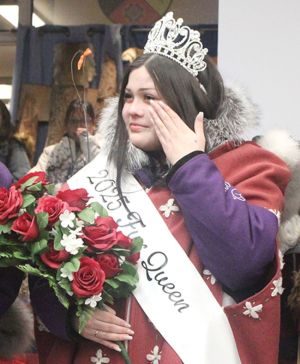
Snow isn’t on the ground yet, but that isn’t stopping the Northern Manitoba Trappers’ Festival (NMTF) from planning for their upcoming events. The NMTF Fur Queen Pageant is putting out a call for local young women to enter to be crowned the next NMTF Fur Queen.
“You must be between 18 to 24 years old, not be married and not have a criminal record to submit an application,” said NMTF Fur Queen Director Krista Tooley. “Something else to note that I would consider a requirement is that each contestant is required to find a sponsor, but they are not required to have a sponsor to submit an application.”
There is a time commitment one must be aware of before deciding to run in the NMTF Fur Queen Pageant.
Manitoba Hydro provides hands-on look at employment

If you are interested in a rewarding career that involves working with your hands, Manitoba Hydro has some excellent trades-related careers they are training and hiring for. Manitoba Hydro Trades and Technology Hands-On Day will be held in The Pas next week and give people an opportunity to try a trade as a Power Electrician, Mechanical Technician and Power Line Technician.
“Hands-on days are recruitment-led events,” said Manitoba Hydro Diversity, Equity and Inclusion Advisor Erica Jacobson. “This means we are opening our doors to the public to provide an opportunity to try out some of the trades we recruit for and looking for qualified candidates to apply for. This is an opportunity to try the tools, meet the technicians and experts in those trades areas, to try out regular daily tasks and have conversations about what the trades look like.
A whole new world of experience

Editor’s note: Last week, the Star and Times ran part one of Suejee Quon’s story. This is a continuation of that story.
Life for the Quon family had changed as they started a different business venture in the Valley, and for Suejee, she embraced her independence.
“In 1966, I left Swan River to go to Winnipeg for university,” said Quon. “Shortly after, my dad started the Sporting Goods Store. My sisters tell me that they took turns working the till. The tiny shop was packed from ceiling to floor with everything sports-related. Dad was an avid fisherman and hunted every year. He knew all the hot spots and the newest hooks that were biting.
“People would come in to just find out the latest. He often took all the kids after work to go fishing; that was how we survived. Our freezer was always filled with fish. A few of us would pile into his 16-foot yellow boat with him, and the rest of us would just wait on shore, along with mom and her food offerings. It was easy to occupy ourselves in those days.
‘In Swan River, we lived a tight family life, all five girls crammed into one room with a bunk bed for three and a large bed for two others,” said Quon. “We had to make everything and then share it among the growing family. So, arriving in Winnipeg, I still remember that emotion, free to be myself. What typified this emotion was the first night in Winnipeg when I ordered a pizza. I still feel that awe. I could eat this pizza all by myself and not have to share with anyone.
“My first year was at United College. It was the last year before it became the University of Winnipeg. I spent that first year in residence, Spence Hall. I shared a room, but it seemed spacious and liberated compared to what I always had.
“It was in 1976, when mom and dad made that decision to sell the Sporting Goods Store and move to B.C.,” said Quon. “He had an offer to buy his store and thought it was a good time to move to a bigger area.”
Suejee found a passion for photography and turned it into a fine art. It led her to explore more of her creative side.
“My passion for photography has continued to grow over 45 years,” said Quon. “I bought my first enlarger when my daughter was born in 1978. Back then, night was the best dark room. My love for photography grew in the small bathrooms with small trays and a tiny enlarger, watching the miracle reveal itself in the developer.
“My photos are diverse and span from inanimate objects to anything in a garden to beautifully lit people. However, the style I relish is my work in digital layering. My 1993 Giclée prints from the China Exhibit look like the digital prints of 2023. Back then, I produced the layers by printing layers of large-format negatives. Even then, I was seeing stories within stories within stories.
“Shooting professional theatre, weddings and corporate portraits was not fulfilling enough, and I looked to grow further,” said Quon. “At the age of 40, I entered and completed a degree program in Commercial Photography and Business at Brooks Institute in Santa Barbara, California. As a professional photographer, my life evolved from corporate photography into business marketing.
“After over 30 years of marketing, I have returned to my original passion and the love of producing large format digital imagery. I’m committed to speaking through my photos, art with a message. I am looking forward to publishing books and a return to exhibiting.
“I also published a book last year, Laugh Often,” said Quon. “It is filled with my photography and also many stories that I hope will put a smile on people’s faces. One of the stories is of my mom and how she turned a Kmart in B.C. around. She worked in the cafeteria there, hired to just clean. She changed the whole place and became the best employee during her ten years there. The story tells of her time in Swan River and how she learned to cook at the C.V. Café under the tutelage of Mrs. Soloway.”
Suejee, her mother and sister, Sue Ying, returned to Swan River during the time of the Northwest Round Up and Exhibition. It was a perfect time for them to reconnect with people they once knew and look at how Swan River has changed since they resided there and ran a family business.
“My dad, Chuck, died last year,” said Quon. “We talked often that this was the year he wanted to go back and retrace his steps and see the changes. In a way, we are honouring his wish. However, his passing also made me realize that mom was the last of the Quons who still had memories.
“My mom and dad have never returned to Swan River. This year’s visit would be the first time back for my mom. My last time back was for my class reunion, which was in 1998, the same year as the 100-year centennial celebration of Swan River.
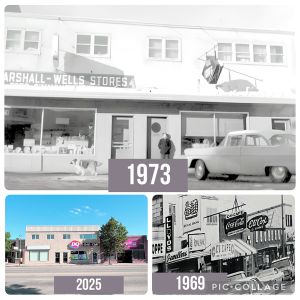
“I was astounded that Swan River has advanced so much,” said Quon. “There is a McDonald’s, a Tim Hortons and an A&W. Many buildings have changed, and the town feels like it has grown. I drove around and around and tried to remember, but too much has changed. The town feels like it has come into the 21st century. Stores are larger. In place of the Cycle and Sporting Goods store now stands a new building housing a Dollar Store, which is so popular today.
“Mom and I sat on the street in front of where the C.V. Cafe once was. It was nice to see Lloyd’s Jewellers was still there. Dairy Queen has now replaced the C.V. Cafe. The moment I walked through their front door, I knew it was the same building. The front till, where I spent lots of time looking out at Main Street, was right at the front.
“I hope to have a new book based on our Quon stories,” said Quon. “This return is to document every memory I can find, hoping that mom will tell me more. Swan River would activate more memories for her. It was also the 50th class reunion for my sister Sue Ying. That was what started the whole idea.
“I placed an ad in the Star and Times, hoping to find other people who would have memories. Several people did contact me, and I have new friends and discovered old ones. We met with a few friends who connected with me through the ad. We wanted to pay homage to my grandfather, King Quong. The Town of Swan River found his spot at the cemetery. I brought incense with me to burn, my grandfather’s grave site. Mom said some prayers.
“While there, I connected with Robert Barrow, who has been trying to organize the archives of the town,” said Quon. “A good day was spent with Gordon Hornbeck touring the history museum. When Henry Rasmussen offered to take us fishing at Wellman Lake, I could not say no. I have not caught a fish since I left Swan River. I spent time at the library and Rosemary was very helpful. I gifted some of my books to the library, so they can sell them and use it to help with funding.
“I think of the people I knew in Swan River, the ones who are gone now and the ones who are still with us, and I feel warm and wonderful. They were an integral part of my life and may have shaped who I am. I’m proud to have spent my younger years in Swan River.
“I remember the teachers, Mr. Majeski, Mr. Yarrow, Mr. Orchard, and Mrs. Erickson,” said Quon. “I would have to say that I enjoyed the people of Swan River the most. After this trip, I can say that it is still the feeling. I really like the small community ties, the ability to know everyone and offer assistance because you can. Living in a large city most of my life, I have still not found that communion of a community.”
Connecting with one's roots in Swan River
Editor’s note: This story will have a continuation featured in next week’s Star and Times.
Long-time former resident Suejee Quon made a trek back to Swan River, where her childhood in Canada began. Many will remember her father, Chuck Quon, who took over the C.V. Café from his father and later on, owned the Sporting Goods Store.
“My father had returned for an arranged marriage with my mother in 1947,” said Suejee Quon. “In those years, Mao Zedong’s Communist Party was taking over the country and the family perceived this as an imminent threat to his returning to Canada, so he returned before I was born in 1949. I never met him till we landed in Winnipeg in 1955.
“My grandfather and his two brothers stayed together during their time with the railway. They chose to stop when the line stopped in Swan River. They worked at Minitonas Cafe first. Then my grandfather built the C.V. Cafe. He had several other Chinese men who worked there. Among them was Lyn Tip’s father, Wing Tip, who was the cook. Dick from Dick’s Cafe started at the C.V. as well.
“We drove up directly to Swan River, where Chuck, my dad, was to work at the C.V. Café,” said Quon. “My mother was a young 25-year-old with a 5-year-old in tow. My grandfather King Quong was one of three brothers who built the cafe, but he passed away in 1953 before we could meet.
“We lived in a two-story white house with a large, enclosed yard surrounded by trees and a short wire fence. This house was on the corner of what is today the parking lot of the Coop. The roads were all gravel and rough. I remember being colder than I have ever been. The kitchen had a water pump and every day it was our chore to pump up the daily water. The outhouse was down a lane, far from the house.
“In those days, the Chinese were not welcomed or understood,” said Quon. “It was a Canadian national effort to prevent Chinese immigration. I have memories of kids chasing me, throwing rocks and calling me names. In the same breath, Mary Snelgrove, who was the grade two teacher then, recounted how she watched out the window of Taylor School and saw how children fussed over this small Chinese girl.
“After 1955, when we arrived in Swan River, mom had a couple of difficult pregnancies, but after that, they had more children, with Sue Ying, who was born in 1958. Then Don Chan was born in 1959, Sue Len was born in 1960, Sue Shirley was born in 1961, Kerry was born in 1962 and the baby of the family, Sue Fawn, was born in 1965. All of them were born in Swan River.”
Growing up in Canada was different for Suejee, as she was tasked with keeping her Chinese traditions alive, but learning to live life as a Canadian. The C.V. Café played a huge part in her growing up and was the centre hub for the family.
“My mother was very strict, and she was always concerned with teaching us to be Chinese and to not lose our culture,” said Quon. “When we were not at school, we were kept busy in the restaurant. All of us worked. My younger sisters waited on tables.
“My task was to do laundry every Saturday. Downstairs was an old ringer washer. Every week, there were always loads and loads. Never an idle moment, as I waited for the cycle to complete, I also cut potatoes in the chip slicer for the French fries. We all had different tasks. Since we did not participate in sports or after-school activities, working was all we knew.
“The restaurant business was everything, and it was the priority in our lives, so we were there all the time,” said Quon. “In the very early days before the C.V. was rebuilt, we would hold a big banquet every year. I think it was for the New Year’s Eve celebration. It was all the Chinese food you could eat. Everyone came, the mayor, the police chief, the store owners and all their wives. There was a lot of laughter.
“Then there were some favourite customers that I remember. Mr. Gold came in every day for his lunch. His first name was Stewart, but we called him Mr. Gold because he worked at the jewelry store. He was a quiet, gentle man and always had a smile. Whenever he came in, we made sure he had something special added to his order.
“It may sound like hard times, but we never complained or thought of not complying,” said Quon. “Today, I am grateful for those days. I believe my work ethic evolved from these family commitments. I have lots of good memories.
“I made very good friends with Linda Cox and Ruth Card. Although we were the wallflowers of our high school group, the three of us had a fabulous childhood. We drove Mr. Card’s old Dodge down country roads. A bit of freedom, random activities unsupervised, was a great feeling.
“My parents and Bill and May from Dick’s Cafe would play Mahjong at the Sporting Goods Store,” said Quon. “They would play day and into the night.”
Suejee remembers her time in school and cherishes those innocent childhood memories of growing up.
“My memories of Duncan School consisted of an old building with kids running up and down the stairs,” said Quon. “I remembered that we learned to print and write cursive with the MacLean method of cursive writing. The best memories are sliding down the hill behind the cottages every winter. Recess was never long enough. We slid on everything, and cardboard was the best and easiest to glide down. The trick was to get as many runs as possible before the bell rang. We never knew the cold; the adrenaline kept us warm.
“Attending high school was another change. It’s hard to believe that I walked to school every day, even in the blinding snow of winter. I was lost in the larger population, but thankfully, we had home rooms, so being part of a group before dispersing to different classes seemed less strange.”
Suejee left the Swan Valley area to pursue her post-secondary studies in Winnipeg.
Following in his father’s footsteps

Most often, when a parent coaches their children in a sport, they foster a love of the game that they pass on to the next generation. This is something that Keith Guay Sr. has done with his sons. Back in Keith Guay Sr.’s time, he coached two teams that won two Manitoba Provincial A Championships back to back. Now his son, Keith Guay Jr., has coached a team to win provincials as well.
“I coach a team out of Winnipeg, which is the Strikers, who play in the AA level,” said Keith Guay Jr. “We played in two provincial tournaments. The one we went to back in June is called the Double A Showcase and it brings all the AA teams across the province, which was around 12 teams.
“I played fast pitch up in The Pas as a youth and my dad, Keith Guay Sr., was my coach. I played up until I was 19 years old. Then I moved to Winnipeg when I turned 18, to attend university, but I came back when I was 19 years old to play another year of ball because I just loved the sport.
Getting ready to display culture in the tri-community

Every year, the tri-community brings together and celebrates cultural diversity through Culturama. The week-long event has a series of culturally influenced workshops, presentations and displays that the community can participate and engage in.
Currently, the committee for Culturama is looking for submissions to enhance the event. There are four categories in which people can be a part of Culturama.
“Culturama celebrates the rich cultural diversity of our tri-community through traditions, performances, and food,” said Tri-community Culturama Planning Chair Akech Mayuom. “There are so many ways to get involved at Culturama, which means there is something for everyone. People can register to participate through the categories established. “The first category is live performance, which includes playing musical instruments, dancing, spoken words, or theatre. Performances should reflect cultural heritage and traditions. Then we have a volunteering category, where we are looking for volunteers to help with a variety of roles, which include greeting and welcoming guests, managing admissions and ticket booths, assisting with setup and teardown, and much more.
The spirit of Ukrainian dancing is strong in Benito
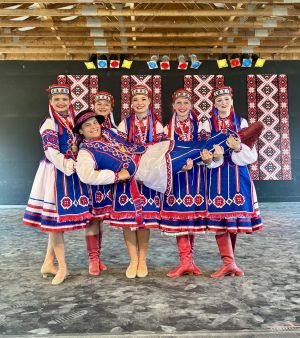
When it comes to Ukrainian dancing in the Valley, the Benito Vesselli Ukrainian Dance Club keeps the tradition alive and achieves new accolades as its season unveils. For the second time in a row, Benito Vesselli Ukrainian Dancer Kemi Bulycz, has attended the Spirit of Virsky Seminar in Edmonton last month. The Spirit of Virsky Seminar is a Ukrainian dance workshop hosted by the Ukrainian Dance World and instructed by former Virsky Ensemble dancers.
“This was my second time attending the Spirit of Virsky Seminar,” said Kemi. “In a few ways, this year was different. The instructors who came from Virsky were all different compared to those who instructed last year. This year they focused more on ballet technique, arm and foot positions, and we learned two full famous Virsky dances.”
Kemi has found that each time she has attended the Spirit of Virsky Seminar, she has learned a lot of different techniques and dances. She uses this knowledge and learning to bring back to share with the Benito Vesselli Dance Club.
“I really enjoyed that we focused on ballet technique and jumps, along with multiple turn combinations, specifically obertoss turns,” said Kemi. These are skills that will help me grow as a dancer and also skills I can bring back to my club, Benito Vesselli.
“We learned two complete and famous Virsky dances, which were Khmil and Hopak. They were a lot of fun. Khmil is a dance about the female dancers playing tricks on the male dancers, who may have enjoyed a few too many adult beverages. Hopak is the most famous Ukrainian dance, showcasing tricks, fast footwork, and spins. It was a true honour to not only learn these dances but be taught by the professionals themselves.”
The seminar was instructed by world-renowned Ukrainian dancers and brought in students from across Western Canada. The classes focused heavily on style and technique for Ukrainian dancing.
“Dancers from all across Canada, mainly Manitoba, Saskatchewan, Alberta and British Columbia were in attendance,” said Kemi. “Some who perform with amateur groups like myself and some who dance in professional ensembles.
“We had four Virsky Instructors, Frolov Kostiantyn, Anna Frolov, Masha Bodyan and Dmytro Bodyan. These four instructors are the best in the world. They performed with Virsky in Ukraine and have multiple years of experience. Watching them dance with grace and elegance was a pretty amazing feeling. They shared a lot of information with us that I will take with me forever.
“The seminar took place at Shumka Studios in Edmonton, Alberta, from July 14 to July 19,” said Kemi. “Classes started at 9 a.m. and ended around 4 p.m. with a lunch break in between. The mornings focused mainly on ballet, jumps and leaps, spins and tricks.
“In the afternoons, we would split and the male dancers would go with the male instructors, and the females would stay with the female instructors. This way, each group could focus on steps and techniques specific to them. We would meet again at the end of the day to learn choreography before leaving for the day. The six hours of instruction would fly by, and although my legs and body would be tired, I could have stayed longer. Every day was a lot of fun!
“On the last day, we performed a showcase for parents and guests,” said Kemi. “It was exciting to show a piece of what we were taught that week and receive a standing ovation.”
Attending the Spirit of Virsky is always a highlight for Kemi. It not only creates some long lasting memories, but it also gives her a chance to grow as a dancer and fulfill her dream.
“I’m able to bring back everything I was taught to my hometown clubs, Benito Vesselli and Liliya Ukrainian Dance,” said Kemi. “I often assist our instructors, Ms. Amanda, who is my mom, and Mr. Austin, and learning new skills helps me teach and show younger dancers the art of Ukrainian dance. Attending the Virsky seminar also helps me as a performer, it strengthens my skills, arm and foot positions and helps me feel more confident.
“Attending the seminar helps me build new connections to professional dance groups. I plan to audition for a group after high school and attending helps me create connections, build friendships and sharpen my skills. The seminar is in Edmonton, Alberta, which has multiple professional Ukrainian dance groups, so it’s fun to meet the dancers and artistic directors and expand my Ukrainian dance community.
“I have been in Ukrainian dance for 14 years; next year I will graduate and complete 15 years of Ukrainian dancing,” said Kemi. “My future goals are to audition and hopefully join a professional Ukrainian dance ensemble.”
The Benito Vesselli Ukrainian Dance Club also had another major highlight this summer at Canada’s National Ukrainian Festival. The club has competed in various competitions over the years, but never at the stage of CNUF.
“The 2025-2026 Dance Season marks 43 years for the Benito Vesselli Dance Club,” said Benito Vesselli Ukrainian Dance Instructor Amanda Bulycz. “Vesselli dancers have attended CNUF in the past, but haven’t attended in many, many years. Last summer was Vesselli’s first year returning to the Talent Stage at CNUF.
“The Talent Stage Competition at CNUF runs similarly to any other Ukrainian dance competition, with a few differences. The competition is held outside on one of the side stages and anyone can register to compete. This year, the competition ran three days with adjudicator Kaitlyn Kruk from Ukraine, originally from Canada. Performers may enter solos, duets, trios, small or large group dances of any region and any age.
“Competitors perform within sessions and at the end of their session receive a mark and either a bronze, silver or gold medal,” said Amanda. “At the end of the competition, the adjudicator picks the top performance from two categories. This year, there was one winner from the solos/duets/trio category and one winner from the small and large group category. The adjudicator decides on the winners by who she feels deserves the grand prize, based on a few factors such as choreography, overall performance, technique, etc. This year, the grand prize was $750 plus the opportunity to perform on the main grandstand during a main stage performance at next year’s CNUF.”
The Benito Vesselli Ukrainian Senior Dancers competed this year at CNUF’s Talent Stage. Amanda worked closely with the dancers, as well as chose the music and choreography for the competition.
“The Vesselli Seniors Grace Keller, Kemi Bulycz, Megan Woytkiw, Quinn Barker, Katie Hunt and Laryssa Mychalchuk performed Volyn at the talent stage competition,” said Amanda. “I’m Vesselli’s choreographer and head instructor, and I actually had this piece of music picked out years ago, waiting for the opportunity to use it with a group of dancers. The piece has many tempo changes and is an upbeat traditional piece, so I’ve been waiting for the chance to use it and create choreography to match.
I was excited when, in the very first class last year, I played it and the dancers shared my excitement to want to perform to it. We had a lot of fun trying new tricks, lifts, jumps, turns, and combinations while I worked through the choreography. The seniors first performed this dance at Vesselli’s Malanka in January and it was then that I knew they would continue to succeed with this dance. The crowd was clapping, cheering and enjoying the performance as much as we had enjoyed creating and learning it.
“At competitions this year, they brought home multiple gold medals and even a scholarship for this piece,” said Amanda.
The competition this year was tough at CNUF’s Talent Stage, bringing Ukrainian dancers from all across Canada and showcasing the best in the country.
“The Benito Vesselli Ukrainian Dancers have not won the CNUF Talent Stage Competition before,” said Amanda. “This is our first time. There were 34 clubs from all across Canada entered, and over 160 dances total competing in the competition.”
The heart, determination and spirit of the Benito Vesselli Ukrainian Dancers not only took the stage at CNUF, but the hearts of the judges as well, as they won gold for their performance.
“The reaction was priceless and one I will forever remember,” said Amanda. “The seniors, alongside their parents, were gathered patiently waiting for the announcement of who won. We did not expect to hear our name called, but when the adjudicator dropped hints, I could see the excitement and joy in the dancers’ faces build.
“The adjudicator started by saying the dance winning the $750 prize and the opportunity to perform on the main grandstand stage at the 2026 CNUF was a Volyn dance, mixed group, and 16+ years. At this point, I could see the dancers all smiling and holding hands, wondering if they would be called. Then the adjudicator said, ‘They performed this morning…….Benito Vesselli Dance Club, and the dancers screamed, cried, hugged, and jumped up and down. It was a moment I am sure will stay with them forever.
“As their instructor and as a mom of one of the dancers, I was equally as excited and proud of their huge accomplishment,” said Amanda. “They worked hard all year, but especially the month leading up to CNUF. We spent many summer nights practicing and perfecting combinations. Their hard work paid off.”
With fall and back to school right around the corner, the Benito Vessell Ukrainian Dance Club is already preparing for the start of their upcoming season, with registration taking place next month.
“Our season begins the third week of September and registration will open the last week of August,” said Amanda. “Registration details are posted on our Facebook Page, Benito Vesselli Dance Club, or people can contact me. If anyone is interested in hearing more about our club and/or joining, we would love to have you and welcome all. The first two weeks are free to try.
“Our other instructor, Austin Spencer, and I have been busy planning practices, workshops, choreography and more as we enter what might be one of our biggest seasons yet!”